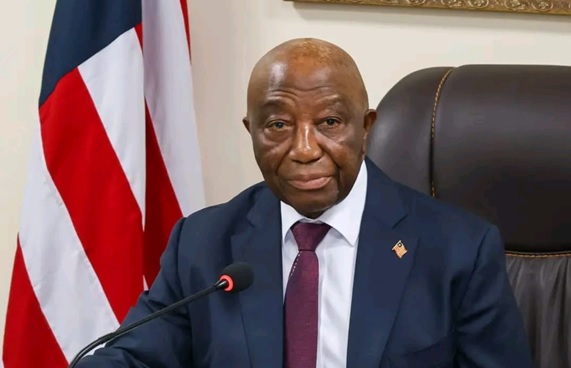
Last week, Liberia’s Minister of Education, Dr. Jarso Maley Jallah, delivered a statement reaffirming the government’s commitment to advancing girls’ education. Her words were timely and inspiring, acknowledging the critical role that educated girls play in the nation’s development.
Yet, as we applaud her vision, we must confront an uncomfortable truth: policy promises, no matter how well-intentioned, are not enough. Liberia’s girls deserve more than rhetoric—they need real, sustained action that transforms their daily lives and prospects.
We know that despite years of advocacy and policy reforms, many Liberian girls still face daunting barriers to education. Enrollment rates for girls, especially in rural areas, lag behind those of boys. Dropout rates remain stubbornly high, with girls often leaving school due to early marriage, pregnancy, domestic responsibilities, or the need to contribute financially to their families.
Cultural attitudes and gender norms continue to undervalue girls’ education, while inadequate infrastructure—such as a lack of safe bathrooms and menstrual hygiene facilities—further discourages attendance. These challenges are not abstract; they are daily realities for thousands of Liberian girls.
To its credit, the Liberian government has made notable strides. Partnerships with organizations like UNICEF and the Educate HER Coalition have brought resources and attention to the issue. Initiatives have provided scholarships, built girl-friendly schools, and launched advocacy campaigns. Yet, despite these efforts, progress remains slow and uneven. Too many girls are still left behind, and the promise of equal education remains unfulfilled for many.
Liberia’s National Policy on Girls’ Education (NPGE 2021-2026) serves as a comprehensive roadmap for change. Its provisions include ensuring free and compulsory education for all girls, addressing gender-based violence in schools, and improving the quality of teaching. Notably, Sections 4.2(b)-(f) of the policy lay out clear mandates, including enforcing anti-discrimination measures, providing scholarships, and establishing safe reporting channels for abuse. These are not mere aspirations—they are actionable commitments that, if fully implemented, could transform the landscape of girls’ education in Liberia.
But policies are only as strong as their enforcement. Too often, well-crafted strategies remain on paper, undermined by weak implementation and lack of accountability. The NPGE’s Section 4.2(b)-(f) spells out what needs to be done, but without rigorous monitoring and consequences for non-compliance, progress will stall. The Ministry of Education must move beyond announcements to measurable action—tracking enrollment, reducing dropout rates, and ensuring that every school is safe and inclusive for girls.
Government action, while essential, cannot succeed in isolation. Communities, families, and local leaders must play an active role. Changing entrenched cultural attitudes requires engagement at the grassroots level—through awareness campaigns, community dialogues, and the involvement of traditional and religious leaders. When families and communities champion girls’ education, barriers fall and girls thrive. The challenge is to turn policy into a movement that reaches every village and household.
Liberia can draw lessons from international experiences. The United States ‘No Child Left Behind Policy set ambitious targets for educational inclusion, holding schools and districts accountable for every child’s progress. While the policy faced criticism and challenges, its core principle—that no child should be excluded from quality education—resonates powerfully in the Liberian context. Liberia’s NPGE must be more than a statement of intent; it must become a binding contract between the government and its girls, with clear benchmarks and accountability at every level.
Dr. Jallah’s statement has set the tone, but the time for speeches is over. We urge the Ministry of Education to match words with deeds—by fully enforcing the NPGE, investing in monitoring systems, and fostering partnerships that empower communities. Policymakers should allocate sufficient resources, educators must be trained to support girls, and civil society should hold authorities accountable. Most importantly, every Liberian must see girls’ education not as a privilege, but as a right and a national necessity.
The future of Liberia depends on the education of its girls. When girls learn, families prosper, communities grow stronger, and the nation moves forward. Let us honor Dr. Jallah’s vision not just with applause, but with action—so that every girl, in every corner of Liberia, can claim her right to learn and lead. The time to act is now.