By Staff Writer | Smart News Liberia
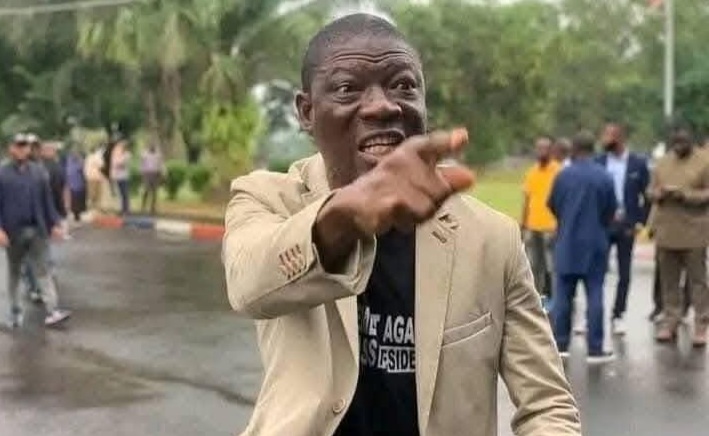
MONROVIA – The unfolding controversy surrounding Montserrado County District #10 Representative Yekeh Kolubah has triggered more than political debate, it has generated a national conversation about responsibility, patriotism, and the dangerous weight of words spoken by elected officials. At a time when Liberia is delicately navigating border tensions with Guinea, Kolubah’s remarks have landed like a spark in a room filled with dry fuel.
According to credible sources, the House of Representatives, led by Speaker Richard Nagbe Koon, is preparing to reconvene for a special sitting to consider possible impeachment proceedings against Kolubah. That alone signals the gravity of the situation. Impeachment is not a routine legislative tool, it is a constitutional response reserved for actions perceived as threatening to the integrity of the state.
Kolubah’s statement, suggesting that a disputed area in Lofa County rightfully belongs to Guinea, raises serious concerns. When a sitting lawmaker publicly questions or appears to concede national territory, it is no longer mere political rhetoric, it enters the realm of national security. Such a claim, whether informed or reckless, risks undermining Liberia’s official position in an already sensitive border dispute.
What makes this situation particularly troubling is the timing. Liberia, under President Joseph Nyuma Boakai, is actively engaged in diplomatic efforts to ease tensions with Guinea following recent incidents along the border. The high-level talks in Conakry involving regional leaders were aimed at preserving peace and stability. Against this backdrop, Kolubah’s comments appear not only contradictory but potentially disruptive.
His allegations that the government is exploiting the border situation to “loot” public funds further complicate matters. While scrutiny of government spending is a legitimate duty of lawmakers, framing such claims in the context of an active security situation risks eroding public trust in national institutions. It also feeds into a narrative that could weaken Liberia’s negotiating position.
The question must therefore be asked: what does it mean when a sitting lawmaker makes such statements? It suggests either a profound lapse in judgment or a deliberate attempt to provoke political attention, both of which carry consequences. Lawmakers are not ordinary citizens, their words carry institutional weight and can influence both domestic perception and international interpretation.
In Lofa County, where the border tensions have been most felt, citizens are already grappling with fear and uncertainty. Reports of troop movements, disrupted trade, and community anxiety have dominated recent days. For residents in these areas, Kolubah’s remarks do not exist in isolation, they add to a growing sense of instability and confusion about the government’s stance.
At the same time, developments across the border in Guinea signal a contrasting posture. The visit by Sennah Camara to key frontier zones underscores Guinea’s seriousness about territorial defense. While Liberia leans on diplomacy, Guinea is visibly reinforcing its military readiness, creating a delicate balance between dialogue and deterrence.
Interestingly, both countries have recently taken steps toward de-escalation. Reports from Guinea’s Ministry of National Defense indicate that normal activities are resuming along the border, with markets reopening and social interactions returning. This fragile calm reflects the success of regional diplomacy, particularly under the Mano River Union framework.
Yet, it is precisely this fragile peace that makes Kolubah’s statement so consequential. In moments of tension, unity of message is critical. Any deviation, especially from a national lawmaker, risks sending mixed signals that could be misinterpreted by neighboring states or exploited in negotiations.
The potential impeachment proceedings therefore go beyond punishing an individual, they represent an attempt by the Legislature to reaffirm national unity and protect Liberia’s sovereign stance. It is a signal that certain lines, particularly those touching on territorial integrity, cannot be casually crossed.
This episode also exposes deeper issues within Liberia’s political culture. It highlights the need for greater discipline, strategic communication, and a clear understanding among public officials of the broader implications of their statements. In an interconnected world, local remarks can quickly become international talking points.
Kolubah’s comments have done more than stir controversy, they have tested the resilience of Liberia’s institutions and the maturity of its political leadership. Whether through impeachment or internal accountability, the response will shape not only the fate of one lawmaker but also the standard by which public discourse is judged.
Liberia continues its relationship with Guinea, one lesson stands clear in matters of national security and sovereignty, words are not just words, they are instruments of policy, perception, and power.