MONROVIA – The controversy surrounding the reported US$10 million construction project in President Joseph Nyuma Boakai’s hometown of Foya, Lofa County, has refused to subside, despite repeated assurances from the Executive that the initiative is not for his personal benefit. Instead of easing public concern, the President’s explanations and the government’s shifting narrative have deepened questions about transparency, accountability, and governance under his administration.
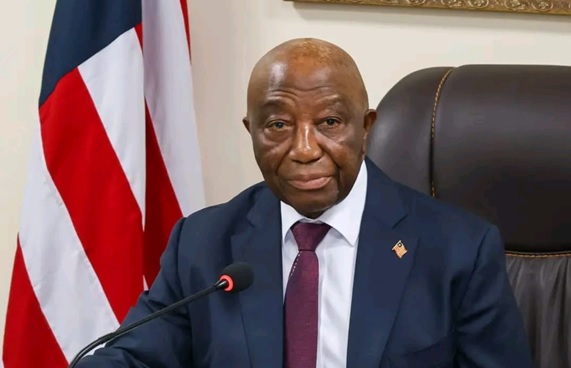
Appearing on state radio ELBC on Friday, December 19, 2025, President Boakai categorically denied that the project was intended as a retirement home or private residence. “I don’t need a retirement home built for me with public funds,” the President said. “God willing, I intend to retire in Foya. I already have a house there, which Samaritan’s Purse used for years, and I plan to rebuild that house for my retirement.”
The President stressed that the development currently underway in Foya has no connection to his personal residence or private interests. “I have never taken government money for any personal use,” Boakai insisted. “The project in Foya is for peacebuilding in the sub-region. It is an international project intended to prepare Foya as a place where crises can be resolved and where international meetings can also take place.”
Boakai further distanced himself from the initiative, claiming it neither originated from him nor bears his name. “It is not a Joseph Boakai project. In fact, it started without my knowledge. You can go there; there is nothing in my name,” he said, adding that funding would come through regional cooperation. “The project will be funded under the Mano River Union,” the President stated.
Pressed on why the project initially proceeded without public disclosure, Boakai acknowledged that the lack of transparency was deliberate. “They knew very well that I would have resisted it at the beginning because I did not want anything done in Foya that could be interpreted as being for me,” he explained, while reiterating that the initiative was not private. He concluded by stating that funding would be shared collectively among Mano River Union member states.
However, nearly three months after public exposure of the project, the President has continued to defend it amid mounting contradictions. On Tuesday, December 16, 2025, Information Minister Jerolinmek Matthew Piah rebranded the initiative as the “Mano River Union Presidential Center for Regional Peace and Development,” describing it as a strategic national asset to enhance Liberia’s regional leadership role.
According to Minister Piah, the proposed facility will include a 500-seat conference hall and nine secure residential units on seven acres of land in Foya, designed to host high-level sub-regional, regional, and international meetings. He argued that the center would advance peace, security, and economic integration across the Mano River Basin.
Yet critical questions remain unanswered. If the project is genuinely an MRU initiative, why was it launched in secrecy without formal announcements, joint communiqués, or documented approvals from MRU member states? Liberia’s own records of legitimate MRU undertakings, such as the Phase Three MRU Road Project, show that regional initiatives are transparent, multilateral, and publicly communicated from inception.
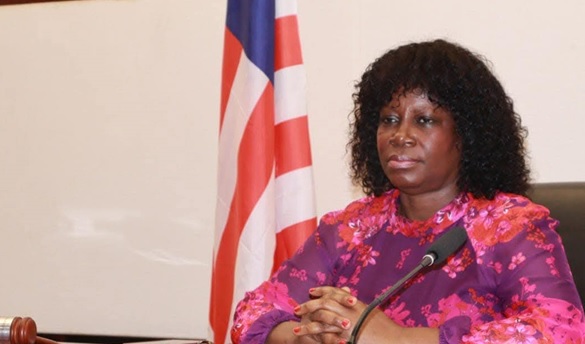
Public skepticism deepened after earlier comments by Deputy Information Minister Daniel Sando, who linked the project to the MRU during a Punch FM appearance on September 29, 2025. Those claims were later contradicted by the MRU Secretariat, which confirmed that it was not involved in constructing presidential villas. MRU Secretary General Ambassador Simeon Moribah reaffirmed that the organization’s mandate centers on trade, security, and human development, not the construction of presidential estates.
The contradiction is stark. The MRU label emerged only after public scrutiny intensified, raising doubts about whether the regional framework is being invoked as a shield for an otherwise private or politically motivated luxury project. This inconsistency has become a defining feature of the controversy confronting President Boakai’s administration.
Funding details have also remained opaque. Minister Piah has suggested that the project’s financing, estimated at approximately US$6.1 million, will come from a mix of national, regional, and international sources. Yet no documentation has been provided to identify these partners, confirm approvals from the Public Procurement and Concessions Commission, or explain how funds are being monitored and disbursed.
The choice of contractor has further fueled concern. The project is reportedly being executed by MUSNS Groups Incorporated, headed by Joe Mulbah, an associate of President Boakai, with Edward Yamba serving as chief engineer. The close personal and political ties involved raise questions about conflicts of interest, procurement integrity, and oversight.
Adding to the unease is the heavy deployment of State Security personnel around the construction site in Foya. If the project is a public, regional facility, the extraordinary level of security appears excessive. If it is private, the use of state security resources raises serious ethical and legal concerns about the misuse of public assets.
At the heart of the controversy lies a fundamental issue of priorities. Why commit millions of dollars to a presidential facility in a district where residents continue to struggle with inadequate schools, limited health services, poor roads, and unemployment? Many Liberians question whether such resources could have been better invested in projects with direct and immediate benefits to citizens.
Criticism from civil society voices questioning the logic of a luxury construction in an underserved region has been dismissed by the government as politically motivated. This response has reinforced perceptions of deflection rather than engagement and accountability, further eroding public trust.
The absence of publicly available blueprints, procurement contracts, and budgetary allocations has compounded the controversy. Transparency, a cornerstone of good governance repeatedly promised by President Boakai, appears absent in the handling of this project.
Minister Piah’s assertion that the facility is a strategic national asset has not addressed these ethical and governance gaps. Strategic assets are typically embedded in national development plans, subjected to rigorous oversight, and implemented through inclusive stakeholder engagement, not introduced amid secrecy and shifting explanations.
The timing of the project has also intensified criticism. Liberia’s national budget under President Boakai is strained, with critical sectors such as education, health, and infrastructure underfunded. Against this backdrop, a multimillion-dollar presidential facility appears disconnected from the daily realities of ordinary Liberians.
Ultimately, the Foya project has become a test of President Boakai’s leadership and commitment to transparency. Whether framed as a peacebuilding initiative or a regional center, the lack of clarity, documentation, and consistent messaging has fueled suspicion and undermined confidence in the administration.
As questions persist, Liberians are demanding more than assurances. They are seeking evidence, openness, and accountability. Until clear answers are provided, the Foya project will remain a symbol not of regional peace and development, but of unresolved contradictions and contested priorities under President Boakai’s watch.