A cocaine seizure worth more than US$19 million has become a referendum on the credibility of Liberia’s government — and a mirror of the case that helped end the last one. Nearly six weeks on, unanswered questions about who is being protected, and why, are doing more damage to President Boakai than the drugs themselves.
By Rodney D. Sieh, rodney.sieh@frontpageafricaonline.com
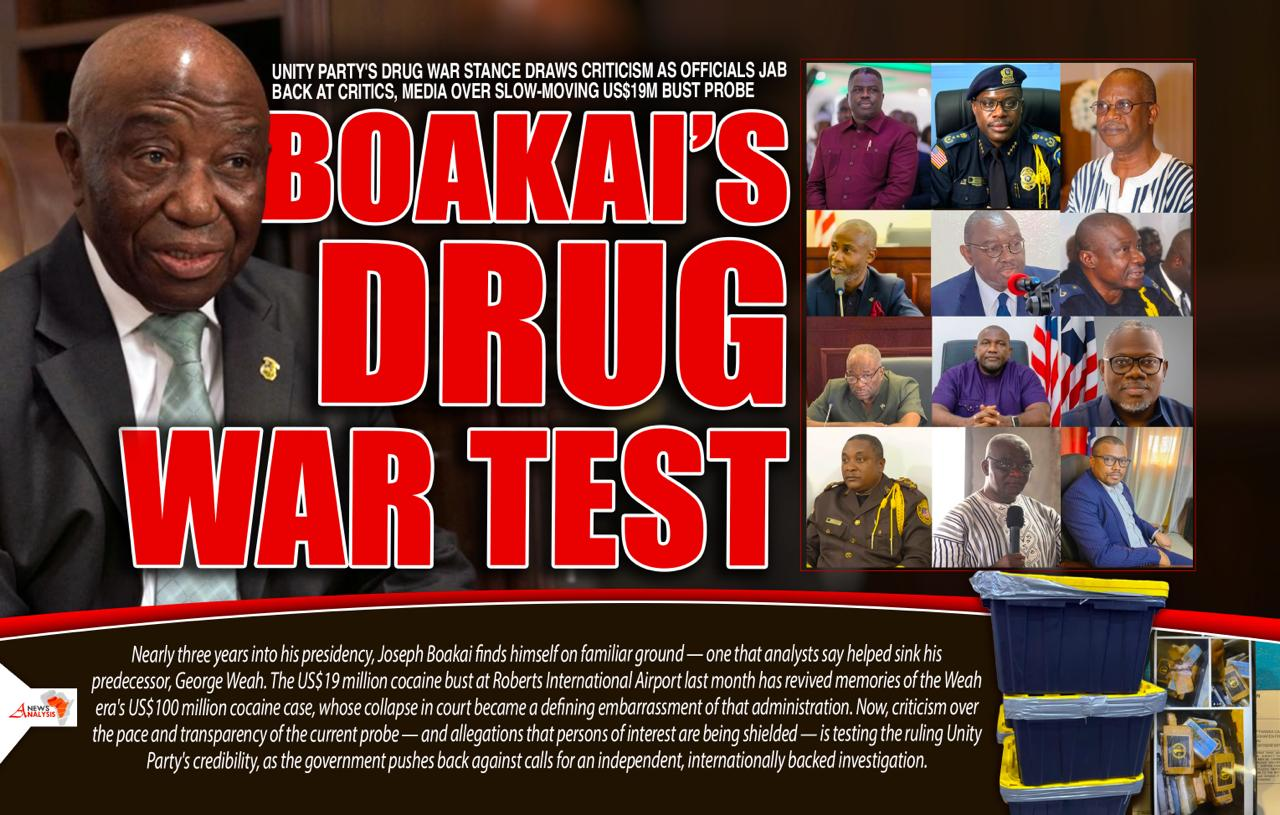
MONROVIA — Nearly three years into his presidency, Joseph Boakai has stumbled onto familiar ground — terrain that analysts say helped sink his predecessor. The US$19 million cocaine bust at Roberts International Airport last month has revived memories of the Weah era’s US$100 million cocaine case, whose collapse in court became a defining embarrassment of that administration. Criticism over the pace and transparency of the current probe, and allegations that persons of interest are being shielded, is now testing the ruling Unity Party’s credibility — even as the government pushes back hard against calls for an independent, internationally backed investigation.
Addressing the seizure publicly for the first time, President Boakai called it a stark reminder that transnational criminal enterprises continue to view West Africa as a transit corridor for dangerous drugs and illicit proceeds. He directed that the investigation be carried out by the National Joint Security under the authority of the National Security Council, coordinated by the Liberia Drug Enforcement Agency and the Liberia National Police, with support from the National Security Agency, the Executive Protection Service, the Financial Intelligence Agency, the Liberia Immigration Service, Customs Authorities, Airport Security, the Ministry of Justice and other relevant security institutions.
“This investigation will follow the evidence wherever it leads,” Boakai said. “No person will be untouchable. No institution will be shielded from scrutiny. No criminal network will escape justice.”
The seizure on June 8 — 237.6 kilograms of cocaine with a street value exceeding US$19 million — was hailed at the time as one of the largest drug interdictions in Liberia’s history. That pledge is now the standard by which his government is being judged, and by most accounts, it is struggling to meet it.
A Slow-Moving Probe
Nearly a month passed before the Liberia National Police brought charges — five individuals and one logistics firm — a delay that opposition figures and lawmakers have seized on as evidence of a government either overwhelmed by the case or unwilling to pursue it to its natural conclusion. Alexander Cummings, leader of the opposition Alternative National Congress, has been the most vocal critic, describing the investigation as slow, secretive and compromised, and calling on international partners to help audit the process. Members of the Senate, including Amara Konneh and Edwin Snowe, have pushed for an independent inquiry, with Snowe going further to allege that individuals connected to the president’s family occupied offices in a building linked to the case — an allegation the administration has not fully addressed publicly.
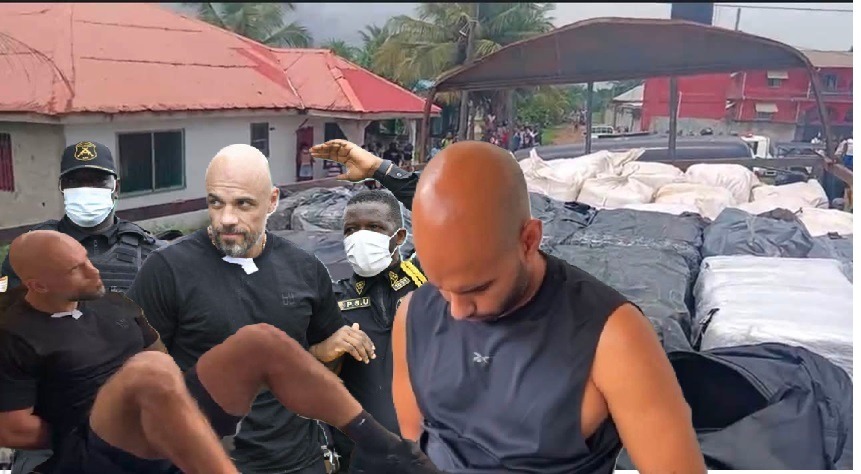
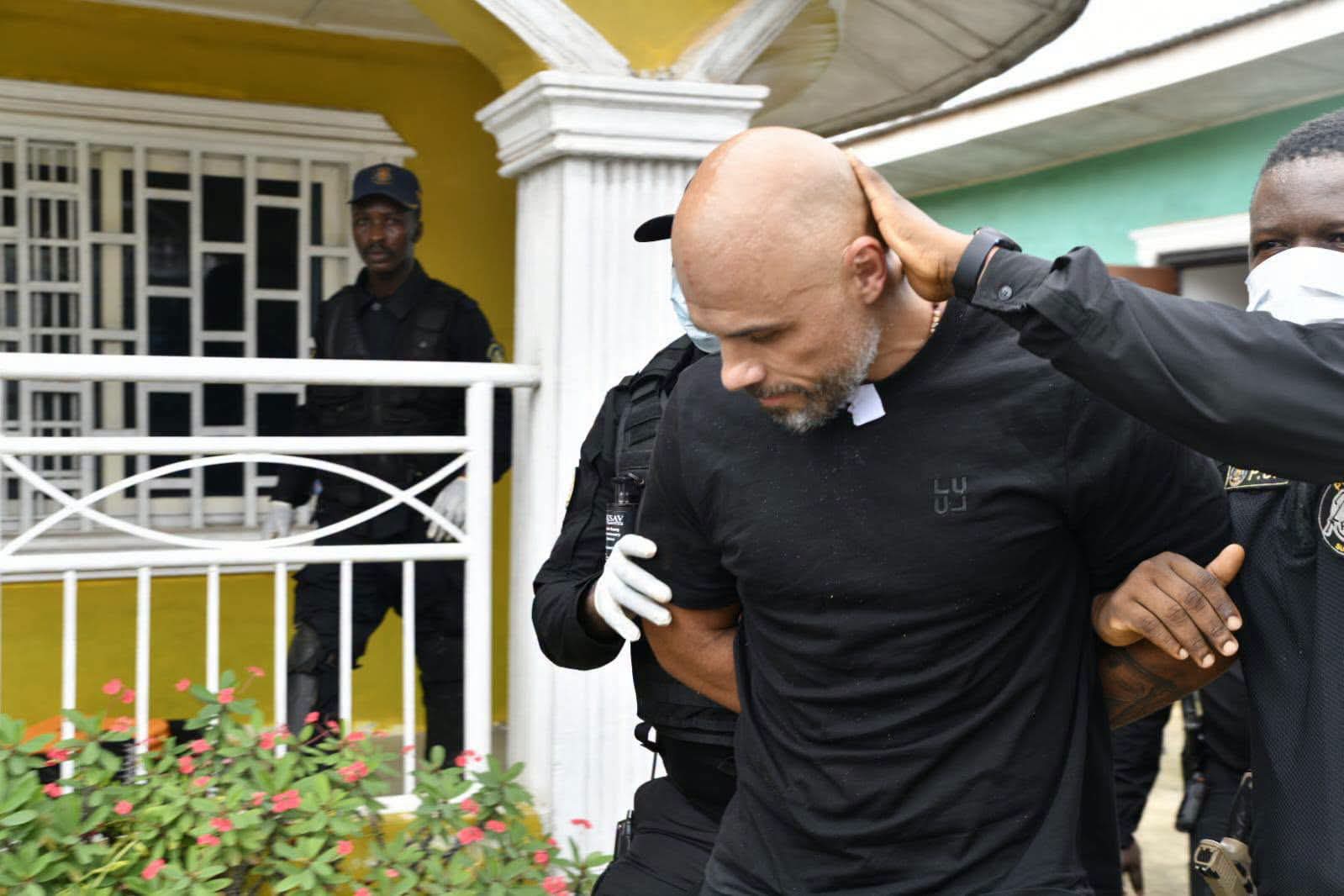
Investigators have since disclosed that suspects attempted to bribe security personnel to recover the shipment before it could be seized, and police have suggested the consignment may be linked to an earlier, undetected shipment — details that point to a trafficking network with reach inside Liberia’s ports and logistics chain, rather than a single opportunistic smuggling attempt.
Much of the texture behind the official narrative has come from FrontPageAfrica’s own reporting, tracing alleged phone-record links between a figure long known in Roberts International Airport circles by the alias “US Marshall” — identified as Michael Browne — and another suspect using a separate alias, and reporting that Browne remained in Monrovia for weeks after the seizure before crossing into Sierra Leone. Separately, FrontPageAfrica reported obtaining a confidential intelligence assessment said to have been submitted to President Boakai in September 2025 — nine months before the RIA seizure — warning that Liberia was drifting toward becoming a “narco-state” due to institutional compromise and porous borders, a disclosure that raises pointed questions about whether warnings were available, and ignored, long before this case broke.
Slamming Criticisms
The government’s response to scrutiny has itself become part of the story. Officials have publicly dismissed criticism from opposition figures as political theater, and the administration’s reported push to have the European Union’s ambassador recalled after she raised concerns about transparency and governance has fed a narrative — voiced even by a former Boakai ally — that the government is less tolerant of outside criticism than its early promises suggested.
Last month, the government’s chief spokesman, Information Minister Jerolinmek Piah, rejected the notion of Liberia being labeled a “diplomatic pouch for drugs,” calling such claims misleading and warning they risk damaging the country’s international reputation. In a pointed jab at the former Weah government, Piah argued that the Boakai administration has been working to restore Liberia’s image on the global stage, saying that effort is gaining diplomatic recognition after years of reputational damage. “What the past administration destroyed, this government is working hard to rebuild,” he said. “We will not allow false narratives to set us back.” Piah went further, suggesting that the network implicated in the seizure has itself turned to media manipulation and AI-generated disinformation to muddy the investigation — a claim the government has not supported with public evidence.
That posture sharpened further after FrontPageAfrica’s coverage of the case, drawing public pressure severe enough that other Liberian commentators and press-freedom advocates felt compelled to publicly frame the episode as a test of whether journalists can scrutinize the drug case without becoming targets themselves.
Why the Politics Matter
For Boakai, who took office in January 2024 promising to rebuild public trust in state institutions after years of corruption allegations under his predecessor, the case lands on exactly the terrain he staked his credibility on. His own words — describing the fight against drugs as a national emergency in his first annual message to the legislature — are now being read back to him by critics as a benchmark he has yet to meet.
The risk to his legacy is twofold. First is the question of competence: a shipment of this scale moving through the country’s main international airport, evading detection for what investigators say was a coordinated effort, raises uncomfortable questions about the integrity of Liberia’s aviation security and customs apparatus — institutions his government is directly responsible for reforming. Second, and more corrosive, is the question of impartiality. Charges so far have concentrated on lower-level figures in the cargo, screening and logistics chain, while critics argue that whoever financed and protected the operation at a higher level remains untouched. Should the investigation stall there, it would reinforce a familiar pattern in Liberian politics — one of selective accountability — that Boakai was elected specifically to break.
The stakes reach beyond Monrovia. West Africa has emerged over the past decade as a preferred relay point for cocaine moving from South American producers to European markets, exploiting weak port and airport oversight, thin law-enforcement budgets and, in several documented cases, complicity at senior levels of government. How Liberia handles this case will feed directly into how the United States, the European Union and regional bodies like ECOWAS assess the country’s institutional reliability — a judgment with consequences for aid, trade preferences and security cooperation well beyond the courtroom.
Usman Ali and the Private Bar Link
Part of what fuels that concern is a set of names that, so far, have not led to charges. FrontPageAfrica reported that Usman Ali, a UK-based consignee now charged in the case, attended a birthday gathering at the Private Bar in Paynesville — a venue the outlet has separately reported has become a recurring meeting point in drug-related cases — alongside persons of interest Leroy Harris and Michael Browne. Witnesses told the outlet Ali appeared cheerful but uneasy and avoided being photographed, with both Browne and Harris seen near him throughout the evening. Harris was arrested and questioned briefly; he remains free.
FrontPageAfrica has also reported that Jonathan Momolu, an RIA security officer, left his post for months to work as a driver for the head of the Drug Enforcement Agency. According to the outlet, both Harris and Momolu hold Dutch passports, and Momolu has been described as a co-owner of the Private Bar. He, too, was briefly questioned and remains free.
The most serious claim in FrontPageAfrica’s reporting rests on a single source: an at-large suspect who told the outlet, speaking anonymously and citing fear for his safety, that Harris, Momolu and Browne function as “triangular operators” serving as foot soldiers for Jos Leijdekkers — a Dutch trafficker convicted in absentia in the Netherlands who is reported by Reuters, Euronews and other international outlets to be sheltering in Sierra Leone, said to enjoy a measure of protection through ties to the family of President Julius Maada Bio.
FrontPageAfrica’s reporting also links Momolu to an earlier case: in September 2023, a consignment declared as tea leaves but later found by the Liberia Drug Enforcement Agency, using UNODC test kits, to contain methamphetamine, was intercepted at RIA after being escorted through an unauthorized gate by a team that reportedly included then-Security Manager Samuel Freeman, then-Deputy Security Manager Walker Dixon (alias “Invasion”), and Momolu, then a senior inspector. Investigators at the time questioned why the shipment sat uninspected for twelve days and how it moved through an unauthorized gate undetected. No public action was reported against the escorting officers; Freeman was later removed as security manager, while Momolu and others were reassigned from the Security Department to the Regulatory Department.
That Leijdekkers is entrenched in Sierra Leone and evading international capture is now well documented by multiple foreign news organizations. The claim that specific named Liberians serve as his operatives inside the current case is not — it rests on one anonymous account, and neither Harris nor Momolu has responded publicly to it. That gap between a well-sourced regional threat and a thinly sourced local allegation is itself part of the story: it is exactly the kind of claim the government’s own critics say the investigation has failed to run down.
Historical Comparisons
Boakai’s critics have also faulted him for what they see as a reluctance to remove officials whose oversight failures preceded the bust — a complaint that lands against a long Liberian history of presidents confronting drug scandals inside their own governments, with mixed results.
According to historical accounts, President William Tolbert dismissed several officials over drug-related concerns in the late 1970s, before his government was overthrown in the 1980 coup. A separate scandal in the mid-1980s, involving fraudulent government checks processed through the Ministry of Finance’s Electronic Data Processing section, led President Samuel Doe to dismiss the department’s head and other senior staff. In November 2013, President Ellen Johnson Sirleaf’s government saw the commander of her own presidential motorcade, Perry Dolo, arrested after 297 kilograms of marijuana were found in “Escort 1,” the jeep that led her convoy; Dolo was later dismissed and jailed, then released years afterward in a presidential pardon.
Boakai’s own record on this front has been one of frequent reshuffling rather than narcotics-specific accountability. In June 2024, he suspended and later removed LDEA Director General Abraham Kromah and his two deputies following internal disorder at the agency. In August 2025, he dismissed a second leadership team — Director General Anthony K. Souh and deputies Gwee K. Porkpah and Sebastian Farr — for what the Executive Mansion described as administrative reasons, days after an officer was caught on leaked audio attempting to secure his daughter’s release from custody. An interim team now reports directly to the Ministry of Justice. It is Boakai’s fourth shake-up of the agency’s leadership in under two years — a pace critics say reflects an agency in permanent crisis rather than a problem being solved, and one that, unlike the Sirleaf-era case, has yet to produce a narcotics-related prosecution of any senior official.
What Comes Next
The Senate’s special session and mounting calls for outside audit support suggest this case will outlive its own criminal proceedings. For international observers, it is also becoming a marker of Liberia’s standing on an Atlantic coast increasingly used as a transit corridor for cocaine moving from Latin America to Europe — a corridor that, as the Leijdekkers case shows, already runs through one of Liberia’s closest neighbors.
Boakai came to office promising to be the president who broke Liberia’s cycle of impunity. History suggests that cycle is older and more stubborn than any one administration — but nearly three years in, a plane’s worth of cocaine, and his government’s answer to it, will decide whether Boakai becomes the president who finally broke it, or merely the latest to be measured by it and found wanting.