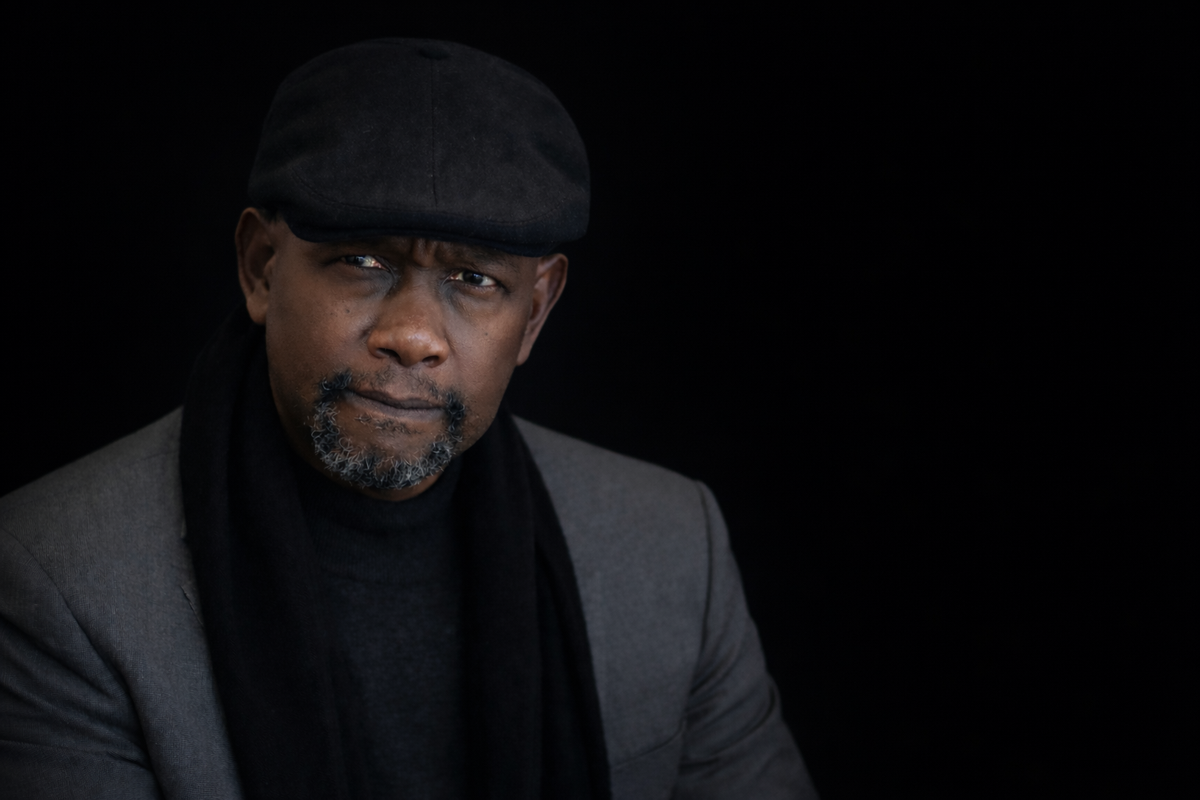
In the heart of Ha ‘Mathata Maputsoe, a 42-year-old mother and teacher is breaking barriers and shattering stereotypes.
Born with a disability affecting her legs and hands, ‘Mamolemohi Ramokotjo is one of the women in Lesotho who have refused to let circumstances define them. Instead, she is using her experiences to advocate for inclusivity and accessibility to healthcare, particularly for children.
Ramokotjo’s determination is fuelled by her love for her two children, ages six and 15. Her younger child, a daughter, was born premature and is completely blind, possibly due to complications from being in an incubator for almost two months.
Despite this, Ramokotjo has vowed to ensure both children receive all necessary vaccinations, navigating partial accessible health facilities and insensitive healthcare professionals along the way.
Her children completed their vaccinations at Queen ‘Mamohato Memorial Hospital and Maputsoe Filter Clinic, respectively.
In some instances, Ramokotjo took her daughter to a mobile clinic in Ha Thetsane, where she is currently staying, for vaccination. However, the mobile clinic facilities have steps that are not conducive for people with physical disabilities, and sometimes she was forced to see health professionals in open spaces, violating her child’s right to privacy.
Ramokotjo is also concerned that some healthcare workers lack love and commitment for their work, and contribute to possible disability.
“As a mother who is determined to ensure my children are fully vaccinated, I have realised that some healthcare workers don’t do their work with passion and love. They’ve no respect for persons with disability. They treat us like we are less women. I also believe that negligence from healthcare workers contribute to disability. With passionate professionals, some forms of disabilities can be prevented,” she said.
She also noted that some people still look at her in a discriminatory way at health facilities and other public spaces, as if there is something wrong with her.
Ramokotjo recalled an incident during which a nurse held her hand up before other mothers at a clinic, implying her hands were in that condition because her mother had used traditional medicines during pregnancy.
“She made fun of me and condemned the use of traditional herbs during pregnancy, as if that’s what my mother had done. I didn’t take it to heart,” she said, swearing to do everything for her children’s health.
People thought they would make me feel less of a woman because of my disability, but I am happy to be who I am and will continue doing my motherly duty, Ramokotjo says.
Her message to other disabled parents is clear: “We are all human; disability doesn’t deny us that. We must ensure children are fully vaccinated to prevent diseases and disabilities, so they grow well physically, mentally, and emotionally.”
Ramokotjo’s story is a vivid illustration of how parents with disability can overcome systemic and cultural barriers to safeguard their children’s health.
Their efforts are being buoyed by the Ministry of Health’s Expanded Program on Immunisation (EPI), which is working to reach vulnerable populations, including those with disabilities.
The ministry is also working with communities to establish outreach programmes and bring immunization services closer to homes through village health workers (VHWs).
“The immunisation data is not disaggregated by disability even for our target population. All children from disabled parents are targeted for immunisation services same way as any other child. In cases where there are some challenges with children with disability, VHWs assist by bringing them to health facilities for vaccination so that they are not left behind,” Ramakhunoane noted.
She indicated that VHWs also track defaulters back to services, ensuring every child gets the necessary vaccinations.
Inclusion Program Officer at the Lesotho National Federation of Organisations of the Disabled (LNFOD), Bwadya Mwanda, highlights their efforts to support children with disabilities and their families access healthcare, particularly immunization.
“LNFOD utilizes focal persons to conduct house-to-house visits to identify and reach zero-dose or under-immunized children. They provide specific training and support to families of children living with disabilities to empower them regarding vaccination and healthcare rights. The organization has also established a mechanism to refer zero-dose children with disabilities directly to vaccination services,” she says.
The organisation ensures accessibility by integrating disability inclusion into the existing healthcare structure.
“This includes collaborating with District Health Management Teams (DHMT) to provide training on disability-inclusive and gender-transformative programming,” Mwanda noted.
They also conduct health facility assessments using gender and disability assessment tools to evaluate and improve inclusivity in prioritized districts. Additionally, LNFOD develops specific training curricula for community health workers and disability focal persons focused on disability inclusion.
Despite these efforts, she says, challenges persist with geographical barriers, such as poor road conditions in districts like Mokhotlong, making it difficult for people with disabilities to reach health facilities.
Lack of data regarding immunization outcomes for infants born to adolescents and those with specific disabilities is also a teething challenge.
“Socio-economic barriers, like multidimensional poverty, leave many children with elderly caregivers who struggle to transport children with disabilities. Communication gaps, including a lack of health workers trained in sign language or accessible information formats, have previously hindered access,” Mwanda adds.
However, notable successes have been attained, such as LNFOD reaching 500 households with children with disabilities with vaccination messaging.
At least five health facilities per district now provide disability-inclusive services.
The organization has also documented and shared “good practices” to be used as case studies for future scaling, and Independent Electoral Commission materials have been converted into accessible formats.
Based on these strategies, Mwanda recommends institutionalizing disability training for Village Health Workers and DHMT members, standardizing accessible formats for all Public Health Emergency and Immunization (EPI) materials, strengthening outreach through mobile clinics, involving Disabled People’s Organizations (DPOs) in policy creation, and improving data collection to disaggregate immunization data by disability status.
A village health worker at Maputsoe Filter Clinic, ‘Mamolefo Lebeko, has seen firsthand the challenges people with disabilities face accessing healthcare.
She says although there are only a few mothers and children with disabilities in her village at Ha Motlalehi, it is not always easy for them to get to the health facility.
Lebeko says they have been working with LNFOD through its vocal persons to get training on disability inclusion, and this has made a big difference.
“We now know how to identify children who might be missing vaccinations and how to support families to get them to the clinic. We have also been spreading word about the importance of immunization, making sure our messages are accessible to everyone,” she says.
Lebeko further indicates that as village health workers, they are trying to be the bridge between the community and the healthcare system.
“We are seeing progress, but we know there is still work to be done. That’s why we’re advocating for more resources and support to make our services more accessible to everyone. We want to make sure no one is left behind, and that every child gets the healthcare they need to thrive,” Lebeko said.
A nurse working at Point Main Health Centre, Moliehi Letlatsa, says sometimes it is the physical barriers, like stairs or lack of ramps, that make it hard for disables persons to get into the clinic.
In some instances, she says, it is communication barriers, especially deaf persons.
“We don’t have sign language interpreters available, or materials in accessible formats to assist mothers or children with deaf disability. This makes it hard for us and them. But we’re trying to do better, she points out.
“It’s moments like those that remind me why I became a nurse in the first place – to help people, regardless of their circumstances. But I know we’re not there yet. We need more resources, more training, and more support to make our services truly inclusive. If we can get it right for people with disabilities, we’ll get it right for everyone. It’s about making healthcare accessible, dignified, and respectful for all. And that’s a goal worth working towards,” Letlatsa noted. (This story was produced in partnership Paballo-ea-Bophelo).