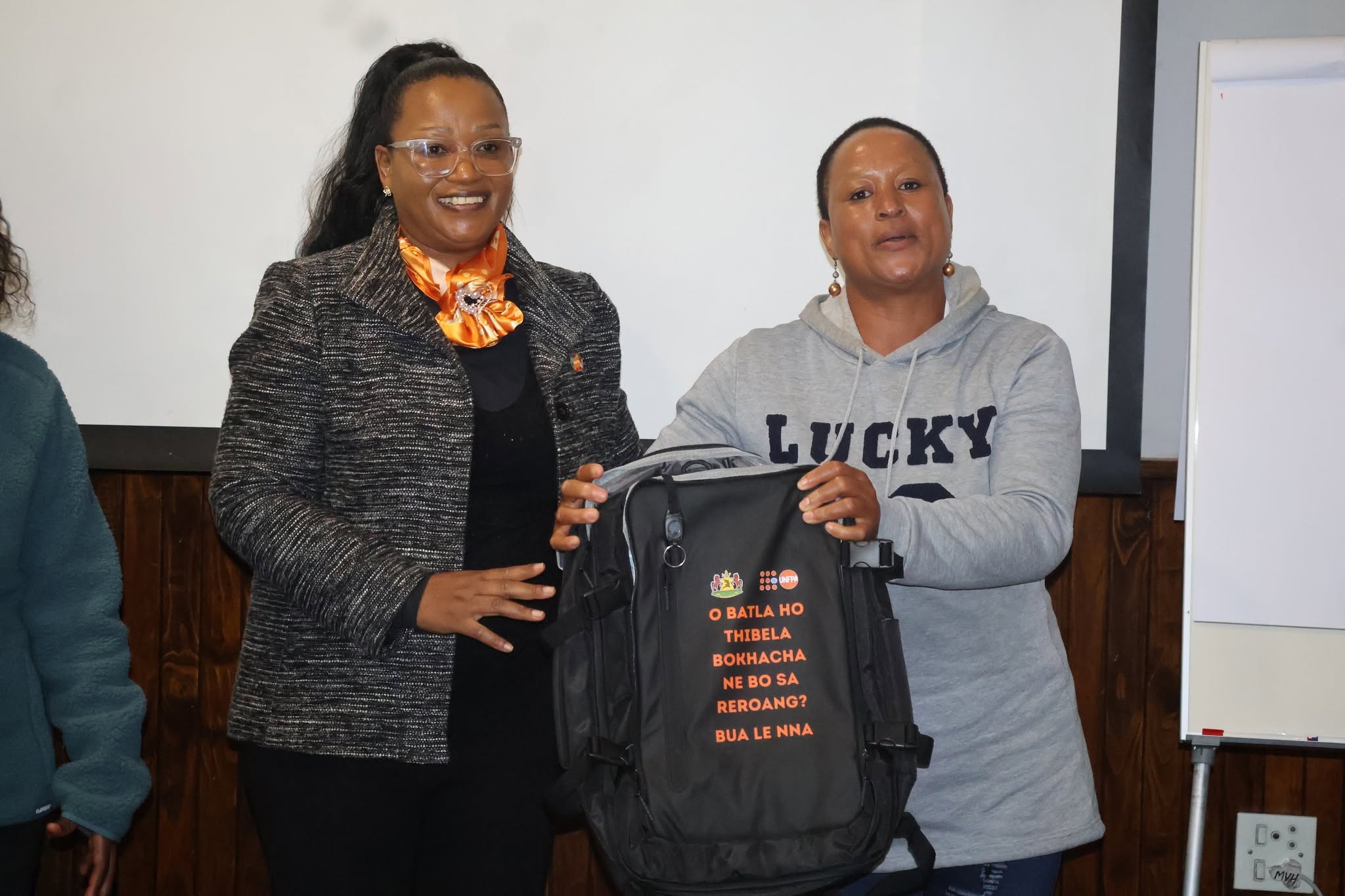
Preventing unintended pregnancies is increasingly being recognised as both a public health priority and an important economic issue for Lesotho. UNFPA Assistant Representative Ms Mot’seli Phakisi has called on Community Based Distributors in Leribe, youth peers and community health workers to continue their efforts to educate communities and expand access to family planning services. These frontline workers play an important role in ensuring that people receive accurate information and can make informed decisions about their reproductive health. Their work can help individuals and families plan for the future while reducing some of the financial pressures associated with unintended pregnancies. Strengthening access to family planning therefore has benefits that extend beyond individual households and can contribute to stronger and more resilient communities.
Ms Phakisi’s call highlights the important role played by community-based health workers in bringing essential information and services closer to the people who need them. Community Based Distributors can help individuals understand available family planning options and encourage people to seek appropriate services. Youth peers can also provide information in ways that are accessible and relevant to younger members of the community. Community health workers often serve as a trusted link between households and the formal healthcare system, particularly in areas where access to health facilities may present challenges. By working directly within communities, these frontline champions can help address misinformation, encourage informed decision-making and promote greater awareness of family planning services.
Family planning can have a direct effect on the financial wellbeing of households. An unintended pregnancy can bring additional expenses related to pregnancy care, childbirth, childcare, education, nutrition and other essential needs. Families that are already facing financial pressure may find it difficult to absorb these additional costs without making sacrifices elsewhere. Helping people plan the timing and spacing of pregnancies gives households greater opportunity to prepare financially for the responsibilities associated with raising children. This makes access to reliable family planning information and services an important part of supporting household economic stability.
The economic impact can also extend beyond individual families to communities and the wider nation. When families experience financial pressure, their ability to invest in education, housing, nutrition and other priorities can be affected. At a broader level, unintended pregnancies can create additional demand for health and social services, particularly when communities already face limited resources. Preventing unintended pregnancies can therefore support more efficient use of household and public resources. Investing in family planning is not simply about preventing pregnancy, it is also about giving individuals and families greater control over decisions that can influence their economic circumstances.
Young people are particularly important to this conversation because decisions made during adolescence and early adulthood can have long-term consequences. Young people need accurate, age-appropriate information that allows them to understand their reproductive health and make informed choices about their futures. Youth peers can play a valuable role because they can communicate with other young people in settings where conversations may feel more comfortable and accessible. Community health workers can complement this work by connecting young people with appropriate health services and reliable information. Supporting young people to plan their futures can help them remain engaged with education, develop employment opportunities and make decisions that align with their personal goals.
Education remains a key part of preventing unintended pregnancies. People need to understand the different family planning options available to them, how those methods work and where they can access services. They also need opportunities to ask questions and receive information from trained and trusted providers. Community outreach can help take these conversations beyond healthcare facilities and into communities where people live, work and study. When accurate information reaches people early and consistently, individuals are better positioned to make informed decisions about whether and when they want to have children.
The work of Community Based Distributors, youth peers and community health workers also demonstrates the importance of investing in people who operate at community level. National health programmes can only achieve meaningful results when communities have trusted individuals who can translate information into practical support. These frontline workers understand the communities they serve and can identify concerns that may prevent people from accessing family planning services. Their continued engagement can help strengthen communication between communities and healthcare providers. Providing them with appropriate training, resources and institutional support can make their contribution even more effective.
Preventing unintended pregnancies can also support young people’s ability to pursue education and employment opportunities. When young people can make informed decisions about pregnancy, they have greater opportunity to plan their studies, develop skills and prepare for the workforce. This can influence their future earning potential and their ability to contribute to their households and communities. For young women in particular, access to reproductive health information and services can be an important factor in making decisions about education and future economic participation. Supporting informed reproductive choices can therefore form part of a broader strategy for human capital development.
The message from Ms Phakisi also places community action at the centre of the effort to address unintended pregnancies. Government institutions, health organisations, development partners and communities all have roles to play in improving access to family planning services. However, the people working directly with families and young people are often the ones who turn policies and programmes into practical support. Their work can help ensure that information reaches people who might otherwise remain disconnected from available services. Continued collaboration among these stakeholders can strengthen family planning programmes and help create an environment where people can make informed choices without unnecessary barriers.
Lesotho’s investment in family planning should therefore be viewed as an investment in the country’s social and economic future. Helping people plan pregnancies can support healthier families, improve household financial planning and give young people greater control over their educational and career goals. Community Based Distributors, youth peers and community health workers are central to this work because they provide information, connect people with services and encourage informed decision-making at community level. Their contribution deserves continued recognition, training and support as the country works to improve access to reproductive health services. By continuing to invest in frontline champions and ensuring that communities have access to reliable family planning information and services, Lesotho can help individuals plan their futures while strengthening families, communities and the wider economy.
Lesotho News WhatsApp Channel | Lesotho News
Join ‘Lesotho News’ WhatsApp Channel
Get breaking Lesotho news — delivered directly to your WhatsApp.
CLICK HERE TO JOIN