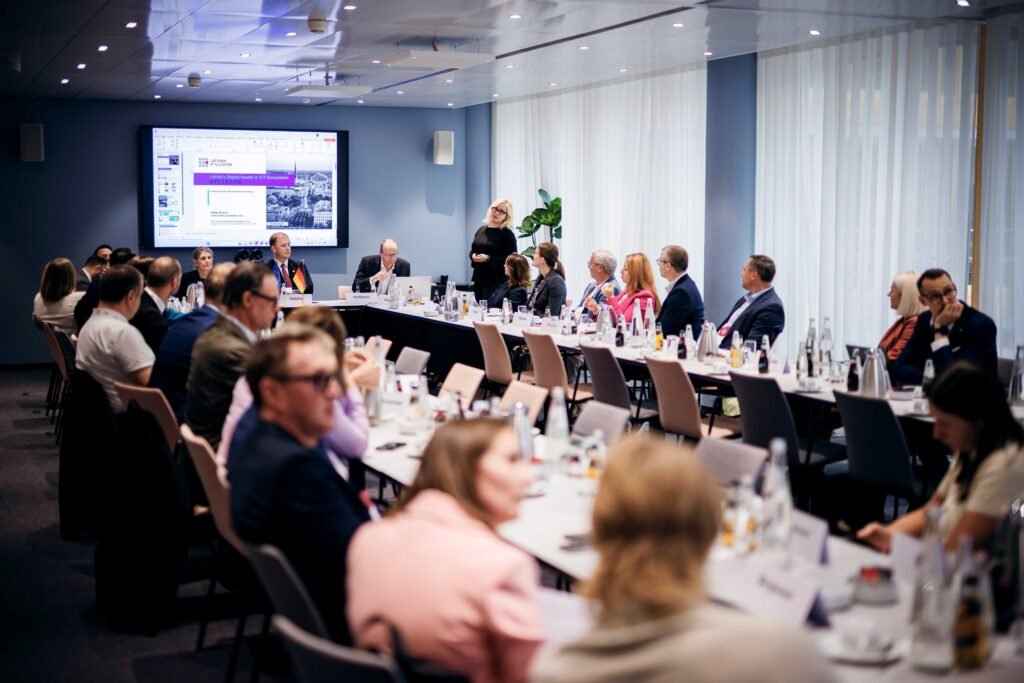
During a trade mission organised by the Investment and Development Agency of Latvia (LIAA), German companies advanced investment projects and explored new cooperation opportunities in Latvia in the fields of energy, defence technologies, autonomous mobility and space technologies. The combined planned value of the two most advanced investment projects exceeds EUR 600 million. The mission brought together 54 Latvian companies and organisations, which met with prospective clients, investors, banks, manufacturers, research centres and healthcare institutions.
The trade mission took place in Berlin from 14 to 17 September. Participating companies represented the information and communication technology, financial technology, life sciences, defence and dual-use technology sectors.
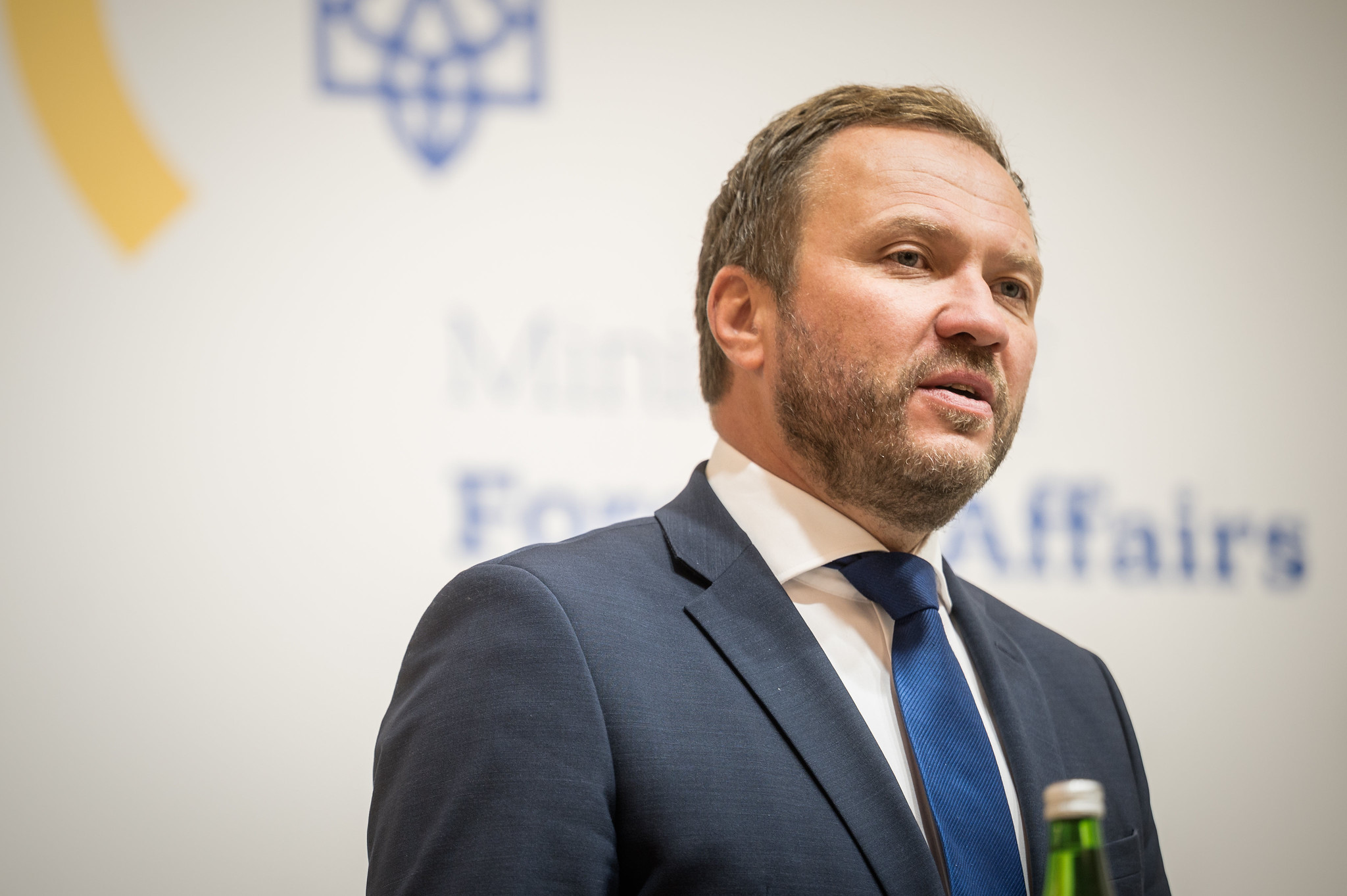
Summarising the results of the visit, Minister of Economics Viktors Valainis said: “Germany is Latvia’s largest export market outside the Baltic states and one of the world’s most important industrial and technology economies. Three years of focused work with German partners have already resulted in concrete investment projects worth more than EUR 600 million. In Berlin, we discussed the continued implementation of renewable energy projects with Notus Energy and the next steps concerning Dynamit Nobel Defence’s planned defence technology production facility in Latvia. Our meeting with Thomas Steffen, State Secretary at Germany’s Federal Ministry for Economic Affairs and Energy, confirmed both countries’ interest in expanding economic cooperation. Our task is to ensure that investor interest translates into production facilities, technologies and jobs in Latvia, while Latvian companies secure increasingly strong positions in the German market.”
Sector-specific events and company visits were complemented by individual business and investment meetings.
“Latvia and Germany are united by successful economic cooperation and a shared vision of what must be done to promote economic growth in both countries and strengthen Europe’s competitiveness. The European Union’s single market is our greatest advantage, while establishing direct cooperation between companies is an essential prerequisite for successful development in the future,” emphasised German Federal Minister for Economic Affairs and Energy Katherina Reiche and the ministry’s State Secretary Thomas Steffen.
From energy projects to autonomous vehicles
During a meeting with the management of Notus Energy, the parties discussed the continued implementation of two renewable energy projects in Latvia. Attention was given to practical matters affecting the projects’ progress, including the conditions for developing wind farms, connections to the electricity grid, permitting and access to financing.
Discussions with German defence technology company Dynamit Nobel Defence continued work on the company’s planned production facility in Latvia. The company and the State Defence Corporation signed a memorandum of understanding in February concerning the establishment of the facility. The Berlin meeting therefore focused on the project’s further development and opportunities to pursue other company initiatives in Latvia.
The Latvian delegation also met with HOLON, which develops fully electric autonomous passenger shuttles for public transport and mobility services. The discussions examined Latvia’s potential involvement in the company’s European development plans, including the production of vehicles and their components, the establishment of supply chains, autonomous mobility testing and technology development.
Berlin-based space technology company LiveEO, which uses satellite imagery and artificial intelligence to monitor power lines, railways, pipelines and other critical infrastructure, was invited to expand its operations in Daugavpils. The company’s Latvian subsidiary has been operating for four years. Opportunities for developing data centres in Latvia were also presented to German companies during a separate seminar.
In Berlin, the minister also met with German Federal Minister for Housing, Urban Development and Building Verena Hubertz, participated in a working lunch with investors and visited Microsoft’s office together with a delegation of Latvian information and communication technology companies.
Four sectors and different routes into the German market
Information and communication technology companies participated in events dedicated to German-Baltic digital cooperation and artificial intelligence, including the international Big Bang AI Festival. Latvian companies presented solutions in artificial intelligence, data processing, cybersecurity and process automation. At the Baltic-German Digital Summit, Viktors Valainis delivered a speech on Latvia’s transition from digital public administration to an economy prepared for the use of artificial intelligence.
Latvian financial technology companies entered the German market with considerable operational experience. Eight investment platforms regulated in Latvia serve more than 800,000 investors abroad, and the total amount invested through them exceeds EUR 13 billion. German investors account for approximately 30% of demand on Latvian investment platforms. In Berlin, Latvian companies met with 20 representatives of institutional investors, family offices and the financial sector to increase the amount of capital raised and expand cooperation with German banks and other financial market participants.
The life sciences delegation included companies alongside Latvian universities, hospitals and research organisations. The delegation visited the Berlin-Buch biotechnology ecosystem, the companies FyoniBio and BIOTRONIK, and Helios Klinikum Berlin-Buch. Latvian representatives approached prospective cooperation partners regarding joint product development, clinical research, technology testing and validation, certification, manufacturing and distribution.
Defence and dual-use technology companies represented a sector in which Latvia has already gained international recognition. Unmanned and counter-drone systems developed in Latvia are already being used in several NATO countries. In Berlin, Latvian companies met with the German Security and Defence Industry Association, a representative of the German Federal Ministry of Defence and German industrial companies. The discussions covered component supplies, supplier qualification, systems integration, electronic warfare, secure communications, counter-drone solutions and autonomous systems.
The delegation also visited Andres Industries AG, a manufacturer of thermal imaging and night-vision technologies. German companies participating in the in-depth industry discussions included Rheinmetall, HENSOLDT, Rohde & Schwarz and Quantum Systems.
Memorandum expands support available to exporters
In Berlin, LIAA, the German Chamber of Commerce and Industry (DIHK) and the German-Baltic Chamber of Commerce (AHK) signed a memorandum of understanding. It will provide Latvian companies with access to the expertise, contacts and services of the German Chambers of Commerce Abroad network at 150 locations in more than 90 countries.
The German-Baltic Chamber of Commerce will establish a dedicated contact point to support Latvian exports. Each year, LIAA and AHK will select two countries and two sectors in each country whose companies will receive particular attention in export development activities.
“This mission demonstrated the value of focused follow-up work after an initial meeting. For some investment projects, we are no longer discussing an initial contact — together with investors, we are advancing specific next steps so that, once the necessary preparatory work has been completed, negotiations can give way to construction machinery. For other Latvian companies, Berlin provided the first discussion with a prospective partner, and the key task now is to turn that contact into the next practical step — securing a technology trial, beginning supplier qualification or progressing towards a contract. Concluding an export deal can take several months, while complex or technologically advanced projects may require several years to implement. The agreement concluded in Berlin with German chamber of commerce organisations will expand the network of contacts and support available to companies. LIAA will continue supporting Latvian companies and advancing the projects discussed in Berlin towards concrete results after returning to Latvia,” said Vita Balode-Andrūsa, Director of LIAA’s Export and Innovation Services Department.
Germany is Latvia’s largest export market outside the Baltic states. Total trade in goods and services between Latvia and Germany reached EUR 5.5 billion in 2025, while Latvian exports to Germany amounted to EUR 2.09 billion.
“This was the third major trade mission by Latvian companies to Germany in recent years, this time bringing together 54 Latvian companies and organisations. Such continuity is important because one visit is not enough to enter the German market. Germany is Europe’s largest market and is located at the economic centre of the continent. Entering and establishing a strong position in this market often opens the way to other European regions as well. German companies are known for their demanding standards regarding quality, deadlines and supplier reliability, so successful cooperation with them significantly strengthens a Latvian company’s reputation and position in international markets. It is encouraging to see German investment projects worth more than EUR 600 million in green energy and defence technologies moving forward, with important implementation matters also addressed during this visit. This clearly demonstrates the scale and importance of the German market to Latvia’s economy,” said Līva Stūrmane, Head of the Latvian Exporters’ Association The Red Jackets.
LIAA organises participation in foreign trade missions under the European Union co-financed Innovative Business Development Programme for Small and Medium-sized Enterprises. The programme is supported by funding from the European Regional Development Fund and the Latvian state budget. Companies may participate in trade missions either for a fee or by receiving support to cover eligible costs.