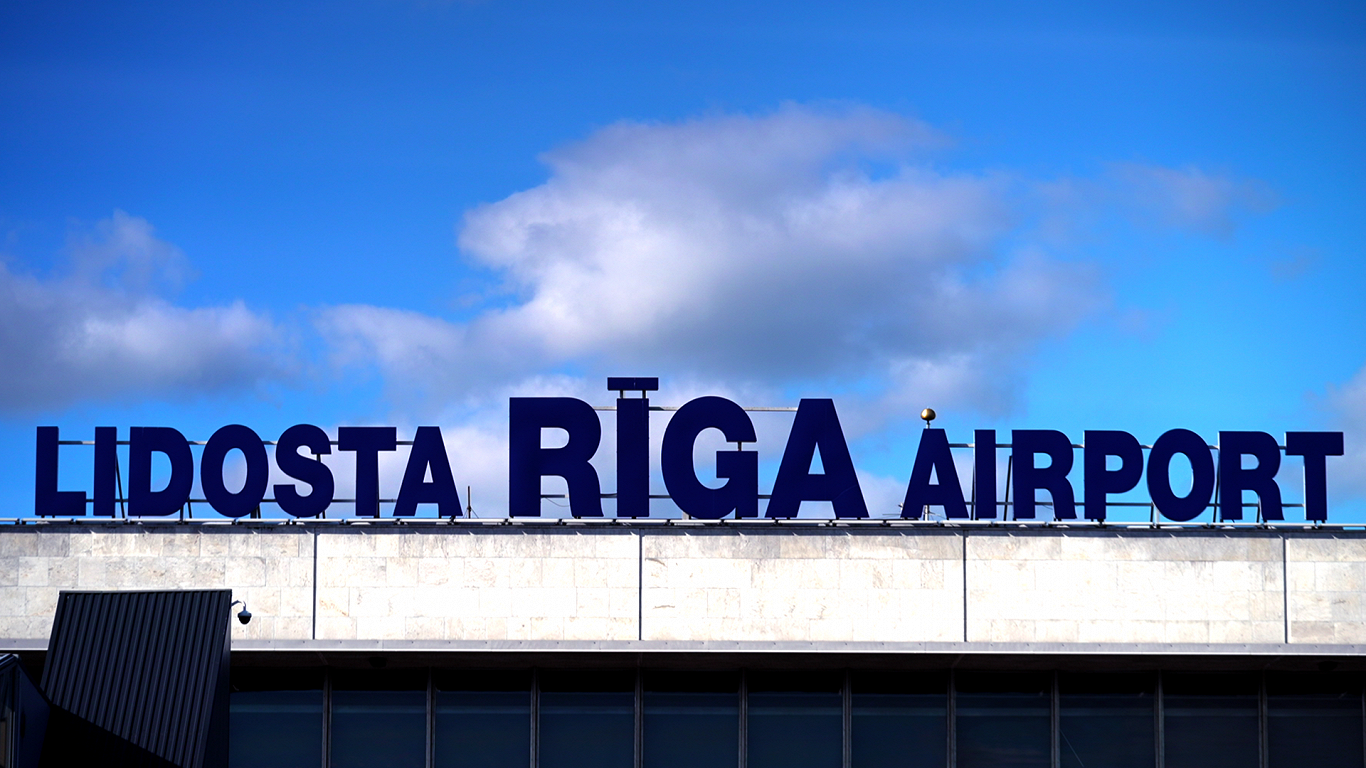
“While passenger numbers at Riga Airport are gradually recovering, the aviation sector continues to face structural challenges. Due to geopolitical disruptions, total passenger volumes have not returned to 2019 levels, mainly because of a significant decline in transit and transfer traffic, which cannot currently be fully restored. At the same time, the point-to-point passenger segment shows positive dynamics, exceeding 2019 levels by 6% since the beginning of the year and by as much as 11% in March,” said a Riga Airport release.
“The enhanced incentive programme is essential for Riga Airport to adapt to the new realities of the aviation industry. While the direct passenger segment continues to perform well, the decline in transit traffic due to geopolitical factors is significantly affecting overall growth. The new framework will enable more targeted development of the route network and strengthen Riga’s role as a regional aviation hub,” said Laila Odiņa, Chairperson of the Board of Riga Airport.
The amendments refine the Airport charges framework by introducing what are described as “more flexible conditions for applying incentives to support the development of new routes and passenger growth, while maintaining transparency principles” – though it was notable that the release contained no financial or pricing information whatsoever.
“Riga Airport offers both discounts for opening new destinations and incentives linked to passenger growth. These measures help reduce the initial risks airlines face when launching new routes or increasing capacity, while fostering long-term traffic development. Discounts for new destinations apply to airlines launching routes not previously served from Riga and are granted for a limited period to support the start-up phase, when demand is still developing and commercial risk is higher. Growth incentives, in turn, are applied when an airline increases passenger numbers compared to a defined baseline period,” said the release, without specifying the size of discounts or the duration of “a limited period”, or the definition of the baseline period.
The new airline incentive scheme will enter into force on 1st April.
Taking a look at the documents discussed by government, it appears that they approved a stepped system of fees for use of the airport and the charges made by the state for each passenger. A typical example states:
“If the carrier has commenced regular flights for a fee by 31 March 2026 in accordance with a published flight schedule and has carried at least 3,500 departing passengers from Riga Airport in a new direction (scheduled flights resumed by the carrier after a break on a route it previously operated, if the break was less than 24 months, are not considered a flight in a new direction) to an aerodrome to which no regular flights are operated at the time of the flight application and which is further than 3,000 km (measured as the shortest distance), the fee for each departing passenger in the new flight direction for three years from the commencement of flights is as follows:
no fee is charged in the first year; in the second year – 1.02 euros ; in the third year – 1.70 euros”.
There is also the ability for Riga Airport to reimburse airlines if a new route becomes established, as in this example: “For the first six months after the start of regular flights in a new direction, the carrier pays 3.10 euros for services for each departing passenger… after the flights have been carried out, if the conditions referred to have been met, Riga Airport shall recalculate the fee and submit a credit invoice to the carrier for the departing passengers carried on the new regular flight route.”
It also appears that in at least one instance the “baseline period” referred to is 2019 – just before the Covid pandemic:
“In the 2nd–4th quarters of 2026 – the fee shall not be applied for passengers exceeding the carrier’s 2019 the number of departing passengers carried in the 2nd–4th quarter (if the carrier did not operate scheduled flights from Riga Airport in the 2nd–4th quarter of 2019, the fee shall not be applied for each departing passenger carried in the 2nd–4th quarter of 2026).”
Seen a mistake?
Select text and press Ctrl+Enter to send a suggested correction to the editor
Select text and press Report a mistake to send a suggested correction to the editor
Tell us about a mistake