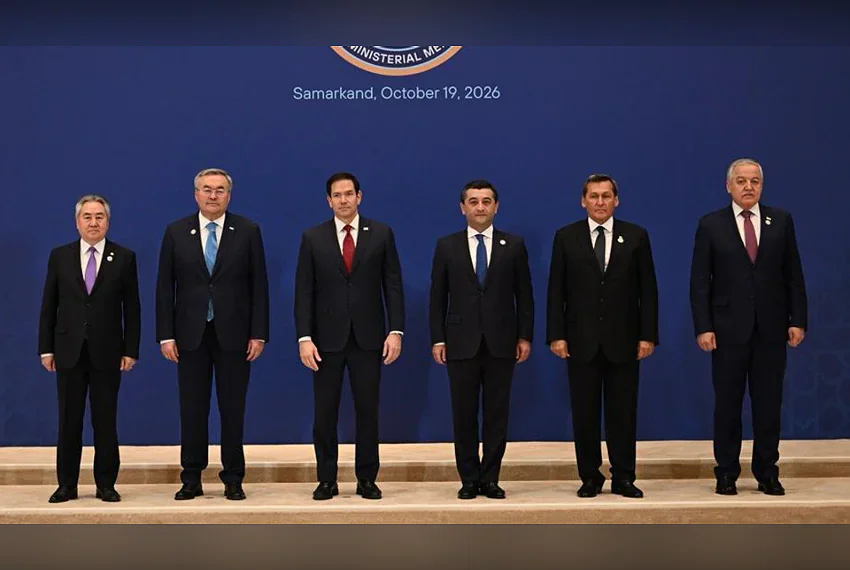
The Foreign Ministers of Kazakhstan, Kyrgyzstan, Tajikistan, Turkmenistan and Uzbekistan, along with the U.S. Secretary of State, reaffirmed their commitment to a strong, long-term partnership between the United States and Central Asia following the C5+1 meeting held in Samarkand on October 19.
The statement notes that the countries are striving for a more peaceful and prosperous future and are committed to the peaceful resolution of disputes.
In the document, the foreign ministers also highlighted economic cooperation between the U.S. and the Central Asian countries.
“We aim for Central Asia to occupy a central place in the global economy. Our joint efforts to further develop the Trans-Caspian Trade Route will contribute to unprecedented growth in bilateral trade and investment between Central Asia and the United States, while opening up new opportunities in fast-growing markets. The thriving B5+1 platform will continue to create new mutually beneficial commercial opportunities for American companies operating in Central Asia. At the same time, our governments look forward to expanding opportunities for Central Asian businesses to invest in and operate within the U. S. market,” the foreign ministers’ statement reads.
In addition, the ministers’ statement includes provisions on strengthening cooperation.
- Energy cooperation: «Each of our countries possesses unique reserves of untapped natural resources; by combining our strengths, we can become a powerful collective driving force for the development of the energy sector in the region.»
- Security cooperation: «Our governments will place particular emphasis on combating terrorism and transnational organized crime, as well as on strengthening border security. Our efforts will contribute to enhancing security, including through cooperation in combating illegal immigration, human trafficking, and the illicit trafficking of drugs and weapons.»
In the context of security cooperation, the statement also refers to the establishment of a nuclear-weapon-free zone in Central Asia and the deepening of practical cooperation in the areas of nuclear safety, safeguards, and the physical protection of nuclear materials, as well as the peaceful use of nuclear energy.
The foreign ministers also expressed their commitment to closer cooperation between law enforcement agencies and cultural institutions to promote and protect the unique history of the C5+1 member countries.
The C5+1 is a cooperation framework between the five Central Asian countries—Kyrgyzstan, Kazakhstan, Tajikistan, Turkmenistan, and Uzbekistan—and the United States. It was established in 2015 to discuss regional security, economic cooperation, energy, and environmental issues.