Farmers in Talas region have proposed expanding safflower cultivation as an alternative to traditional bean production and importing higher-yielding varieties from China and Europe. A local resident made the request to President Sadyr Japarov during a meeting with residents of the region.
According to a farmer Rail from Arashan village, finding alternative crops for Talas remains an important issue. He recalled that the president had previously spoken about the need to diversify agriculture in the region.
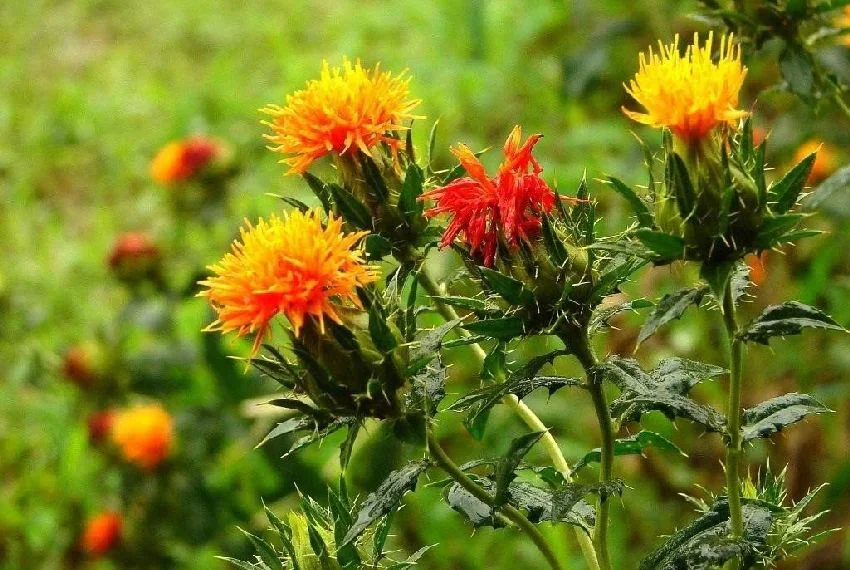
Local farmers have been growing safflower, an oilseed crop used to produce vegetable oil, for the second consecutive year.
However, the farmer said the seeds currently available to local farms produce lower yields than foreign varieties.
«Europe and China have safflower seeds that produce twice the yield of ours. If the Ministry of Agriculture could help us import them, we could grow these varieties and distribute the seeds among other farmers,» he told the president.
According to the farmer, local producers have a cooperative with 80 hectares of land. They are ready to use this area to grow new varieties and subsequently distribute the seeds.
He claimed that foreign varieties could yield up to 7–8 tonnes, compared with 3–4 tonnes from the seeds currently in use. He also said that the oil content of some foreign varieties was 15–20 percent higher.
These figures are estimates provided by the farmer and have yet to be verified by specialists. He did not specify which varieties he was referring to or the conditions under which the results were obtained.
During the discussion, Sadyr Japarov asked ministry representatives to examine the possibility of purchasing new varieties.
A ministry representative said officials would need to establish the seeds’ origin, verify their characteristics and compare them with varieties currently used in Kyrgyzstan.
Japarov offered to help farmers arrange the import of planting material, noting that the initiative should not require significant government spending.
The president also proposed considering the possibility of providing seeds to agricultural producers on credit or through leasing arrangements for a period of three to five years, allowing them to repay the cost after harvesting.