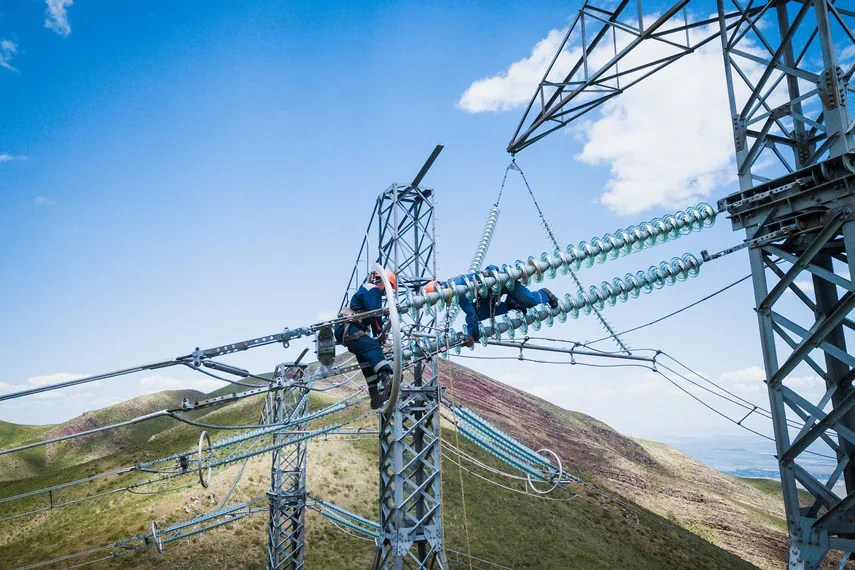
Some power transmission lines connecting Kyrgyzstan with neighboring countries operate above their permissible capacity during periods of peak electricity demand. Demir Kabylbaev, senior analyst at the Eurasian Development Bank’s Industry Analysis Center, said during the presentation of a new study.
Experts analyzed the operation of Central Asia’s unified power system during the autumn-winter period of 2024.
According to their findings, the load on some key sections of the power system reached 105–123 percent of permissible levels.
The problem areas included cross-border electricity links between Kazakhstan and Kyrgyzstan and between Uzbekistan and Kyrgyzstan, as well as other major sections of the regional power grid.
Kabylbaev explained that temporary overloads can occur during emergency operating conditions. However, as regional electricity trading expands, limited transmission capacity becomes a significant obstacle.
In the event of an emergency, insufficient grid capacity could also restrict neighboring countries’ ability to provide emergency assistance.
The EDB believes that key transmission lines need to be modernized, digital control systems developed and coordination between national power dispatch centers improved.
The published figures relate to the specific operating conditions of the power system examined in 2024. They do not mean that all cross-border transmission lines are constantly operating under overload.