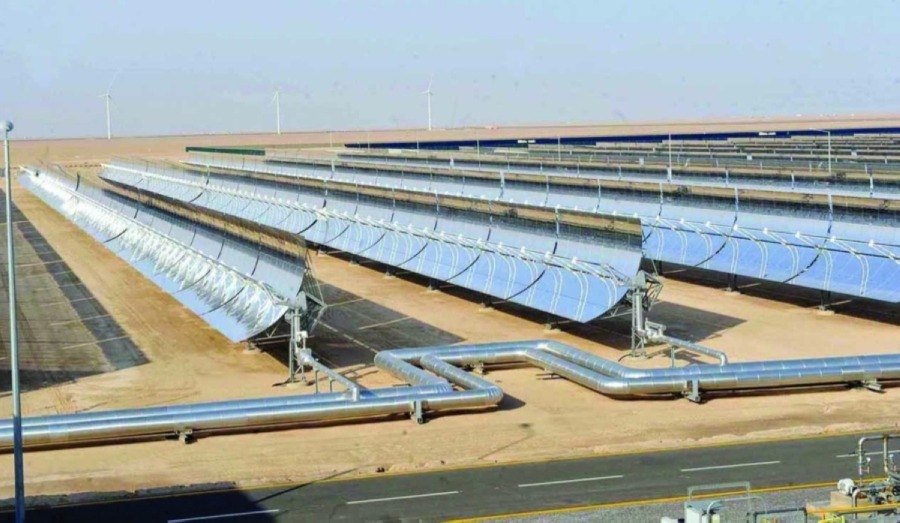
India’s clean energy transition has entered a crucial phase as the nation advances toward its target of 500 gigawatts of renewable capacity by 2030.
By June 2025, India had already installed 235.7 GW of non-fossil fuel capacity, including 226.9 GW from renewables and 8.8 GW from nuclear power — reflecting a determined move toward sustainability and energy independence.
The country recently climbed to the position of the world’s third-largest solar energy producer, a milestone highlighted by Union Minister for New and Renewable Energy Pralhad Joshi.
Yet generating clean power is only part of the challenge. Delivering it reliably to homes, industries, and fast-growing urban centers requires a modern, intelligent grid capable of handling complex and fluctuating energy flows.
At the center of this transformation is the Green Energy Corridor (GEC), one of India’s most ambitious infrastructure initiatives. Launched in 2015–16, the project aims to ensure seamless transmission of renewable power—solar, wind, hydro, and emerging sources—across the country.
Covering eight renewable-rich states, the GEC links remote generation zones such as Rajasthan’s solar parks and Tamil Nadu’s wind farms with major demand hubs through a network of inter-state and intra-state transmission lines.
The first phase of the corridor envisions about 9,700 circuit kilometers of new lines and substations with 22,600 MVA of capacity.
Backed by ₹10,041 crore in funding from central grants, state contributions and German development financing, the system is designed to integrate roughly 20 GW of renewable power into the national grid. This foundational work is strengthening India’s ability to deliver clean energy efficiently and at scale.
As renewable capacity grows, the grid itself must evolve. Unlike conventional power plants, renewable sources are variable—solar peaks during daylight hours, wind varies with weather patterns, and hydro output shifts with seasons. Managing this variability demands a smarter, more flexible transmission system.
Advanced technologies are now shaping this evolution. Flexible AC Transmission Systems (FACTS), smart substations, high-capacity transformers, real-time sensors, and AI-based forecasting tools are helping grid operators maintain stability and prevent congestion.
Energy storage solutions — particularly large-scale batteries and pumped hydro — are emerging as essential buffers, storing excess energy during periods of high generation and releasing it when demand rises.
With the rise of electric vehicles, rooftop solar installations, and distributed energy resources, India’s grid is transitioning into a dynamic two-way system where consumers increasingly become producers. This shift underscores the importance of automation and digital intelligence to manage bidirectional flows effectively.
A strong policy framework is supporting this technological shift. The National Smart Grid Mission and the Smart Meter National Program are improving demand management and reducing system losses.
More than 20 million smart meters have already been deployed, giving consumers better insight into their energy use while providing utilities with more precise control of the grid.
Future market reforms, including Locational Marginal Pricing, could further optimize grid operations by linking power prices to real-time demand and supply conditions. Such initiatives not only improve efficiency but also attract private investment into storage systems, transmission upgrades, and grid-support technologies.
As India’s economy becomes more digitized and energy-intensive, the demand on its power network will increase sharply. Industries, commercial complexes, electric mobility networks, and energy-hungry data centers will rely on a grid that is resilient, scalable, and capable of self-healing.
Localized microgrids, advanced monitoring systems, and predictive maintenance tools are expected to play a larger role in strengthening overall reliability.
India’s clean energy ambitions will ultimately depend on the strength of its transmission backbone. The Green Energy Corridor, combined with cutting-edge grid technologies and progressive policy measures, is laying the foundation for a future-ready network.
As the nation accelerates its shift toward a greener economy, a modern and resilient grid will ensure that every unit of renewable energy reaches its destination—powering industries, supporting communities, and driving India toward a sustainable and prosperous future.