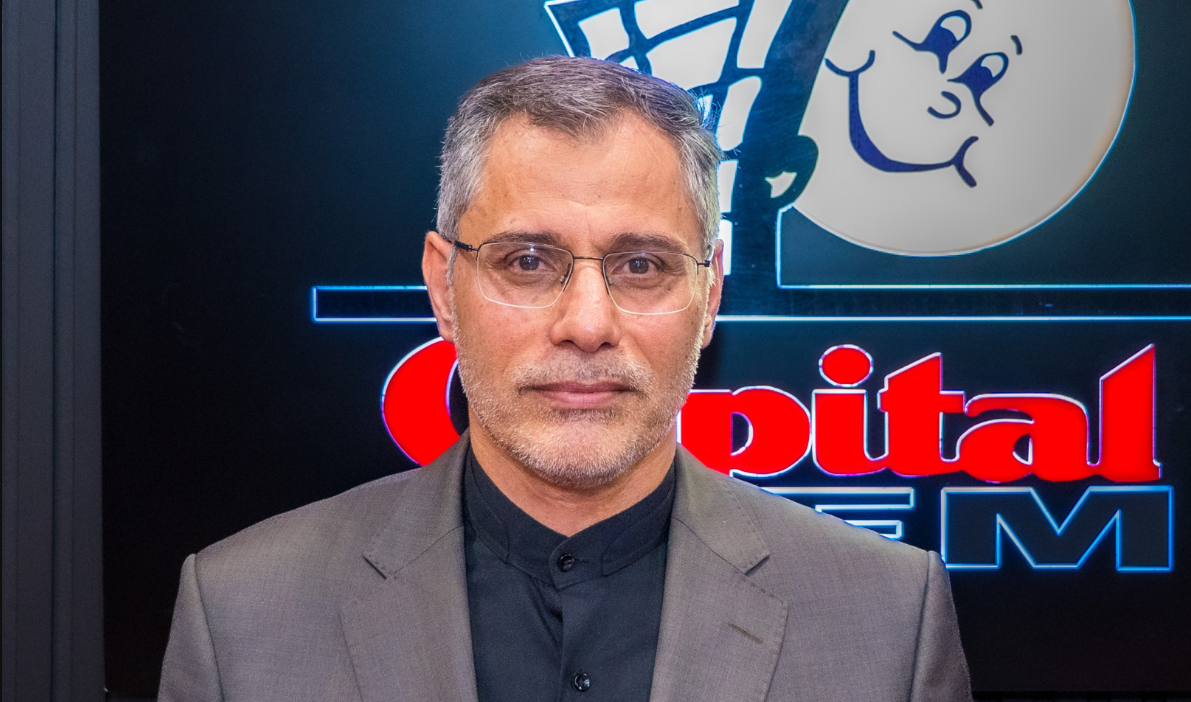
NAIROBI, Kenya, Mar 12 — The Iranian ambassador to Kenya, Ali Gholampour, has accused the United States and its Western allies of using nuclear concerns as a pretext to pursue regime change in Iran and gain control over the country’s natural resources.
Speaking on Thursday during the Capital in the Morning show, Ambassador Gholampour said the conflict involving Iran, Israel, and the United States is rooted in decades-long tensions rather than recent nuclear disputes.
Tehran, he explained, sees the ongoing conflict as part of a long-standing effort by Western powers to weaken the Islamic Republic and reassert influence over the country’s resources and strategic location.
“They argue that we are attacking Iran for liberal democracy or bringing liberty to the people. It’s absolutely wrong. It is a pretext,” the envoy said.
“Even when they claim they are acting to prevent nuclear threats, it is a false narrative, because the United States and Israel are the two nuclear powers.”
Gholampour traced tensions back to the 1979 Iranian revolution, when the United States lost influence following the fall of the Western-backed monarchy.
Since then, Washington and its allies have sought to pressure Tehran through sanctions, political pressure, and military confrontations.
He described the current military escalation as part of this broader strategy, accusing the US and Israel of attacks despite ongoing diplomatic negotiations.
“What we are seeing today did not start now,” he said.
According to the ambassador, Tehran has consistently sought to resolve disputes through negotiations but has responded militarily after what he called acts of aggression.
He defended Iran’s strikes on military installations linked to U.S. operations in the Gulf, describing them as legitimate acts of self-defense under international law.
While acknowledging some attacks targeted locations in neighboring countries hosting US military bases, Gholampour said these facilities were used to launch operations against Iran.
“Legally speaking, based on international law, rules and principles, when you are attacked from a military base in another country, it is considered the territory of the country using it, not the host country,” he explained.
“Imagine neighboring countries in Africa had military bases surrounding you and attacks were launched from there. You would respond to defend your people and territory.”
The ambassador noted that the strikes have disrupted global oil markets and aviation routes across the Middle East, raising concerns over economic fallout.
During the interview, hosts questioned the humanitarian consequences, including civilian casualties, infrastructure damage, and reports of attacks on commercial shipping in key energy routes.
Gholampour denied deliberate targeting of civilians or commercial vessels, insisting that Iran’s operations were limited to US assets and personnel.
He accused Washington and Israel of indiscriminate strikes inside Iran, including attacks on civilian infrastructure.
Despite the escalation, Gholampour said Iran remains open to negotiations but insisted attacks against the country must stop before talks can resume.
“The United States and Israel should be blamed for this situation. As long as their aggression continues, there will be no other way for us to defend our dignity, territorial integrity, and existence — it is an existential threat to Iran and its people.”
The ambassador suggested African nations could play a role in mediating the conflict.
He urged the African Union to provide a neutral platform for dialogue and call for an immediate halt to military operations.
“The African Union can take collective action and have a strong voice. It should tell those attacking Iran: stop the war and come to the negotiation table,” he said.
Gholampour added that he had previously encouraged President William Ruto to support diplomatic efforts aimed at preventing further escalation.