A recent briefing on Afghanistan before the United Nations Security Council again showed that the country’s challenges can no longer be viewed only through humanitarian assistance or debates over recognition of the Taliban government.
Afghanistan remains a deeply complex domestic issue, but it is increasingly becoming a regional one as well.
The discussion now extends beyond human rights and political dialogue with the de facto authorities. It now includes the return of millions of people from neighboring countries, pressure on cities and rural communities, shortages of jobs and water, cross-border trade, security, and the future of regional transport corridors.
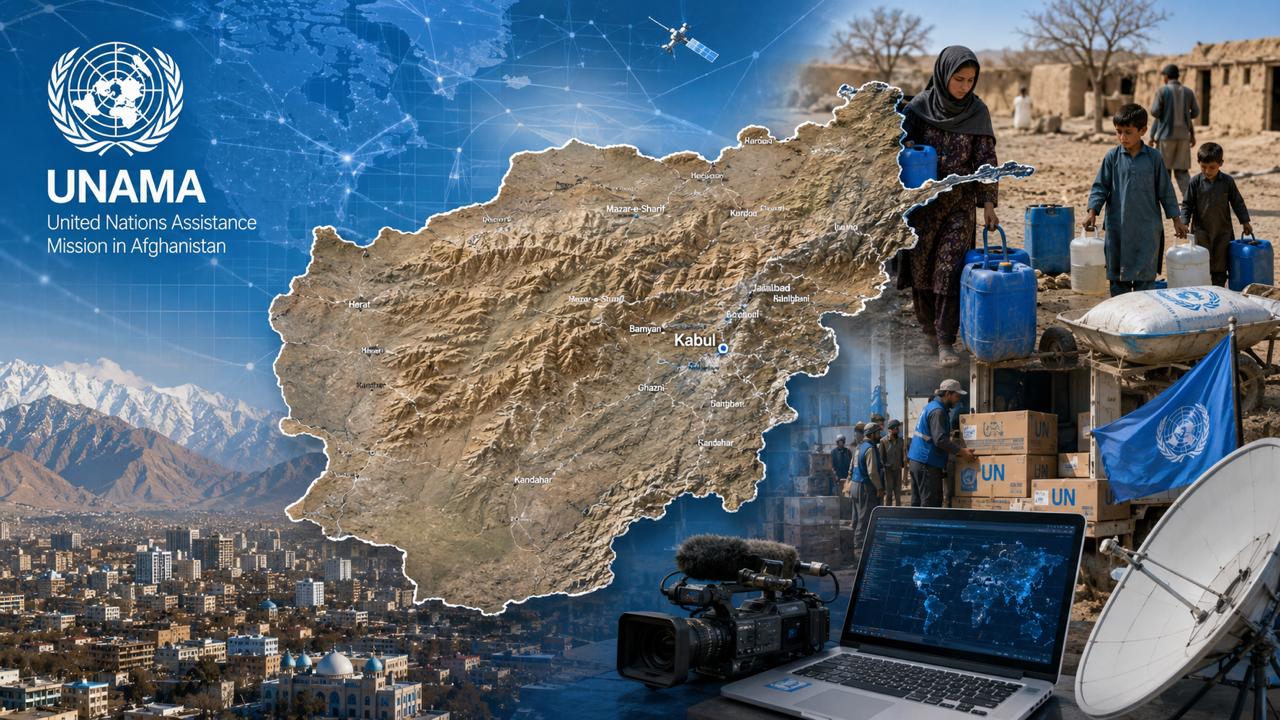
Against this backdrop, the question of who should lead the United Nations Assistance Mission in Afghanistan (UNAMA) is no longer only a personnel decision. It has become part of a wider debate about what international policy toward Afghanistan should look like in its next phase.
The catalyst for this discussion was the recent briefing delivered by Georgette Gagnon, the UN Secretary-General’s Deputy Special Representative for Afghanistan, before the Security Council.
According to Gagnon, the de facto authorities maintain control over both Afghanistan’s territory and administrative structures. At present, they face no significant armed or political challenge. The Taliban themselves view the restoration of security across Afghanistan as one of their principal achievements.
Yet this does not mean the situation is stable. Gagnon pointed to a fundamental contradiction within the current system of governance. There are rigid ideological policies that place considerable pressure on society. There are also more pragmatic approaches that have so far allowed the system to function and survive.
In other words, Afghanistan appears to have achieved a form of managed stability, but without a clear vision of where that system is ultimately headed.
Stability Conceals Deep Structural Problems
The economic picture is equally mixed. Afghanistan has recorded positive growth in absolute terms. Fiscal stability has improved, revenue collection has increased, and several infrastructure projects are moving forward. The country has also largely maintained the gains achieved through the reduction of opium poppy cultivation.
Yet beneath these signs of stabilization lie significant challenges. According to Gagnon, nearly 5.9 million people have returned to Afghanistan since 2023. This represents a population increase of more than 10%. Another 2.8 million Afghans could return during 2026 alone.
Many returnees arrive with no savings, no employment, and limited prospects for rebuilding their lives.
For a country with a fragile economy, this creates enormous pressure. Cities and rural communities are struggling to absorb new arrivals. Jobs, housing, water resources, and social services remain in short supply.
The humanitarian situation remains severe. In 2026, approximately 21.9 million people, around 45% of Afghanistan’s population, are expected to require humanitarian assistance.
Another major concern is demographics. More than half of Afghanistan’s population is under the age of 25.
This generation is growing up amid limited opportunities. While the challenges facing girls have received international attention, boys increasingly face difficulties as well. Employment opportunities are scarce, household incomes are declining, and competition for livelihoods is intensifying.
Environmental pressures compound these problems. Afghanistan faces recurring droughts, water shortages, and land degradation. Agriculture remains the primary source of income for more than 70% of the population, meaning that water scarcity and declining agricultural productivity directly affect the stability of the entire country.
The situation of women and girls remains particularly troubling. According to figures cited by Gagnon, approximately 3.8 million girls between the ages of seven and 18 are currently out of school. Each year, an additional 250,000 girls effectively lose access to secondary education.
The exclusion of girls from education carries long-term economic costs. By 2030, sectors such as healthcare and education could face shortages of more than 25,000 qualified professionals as a result of these policies.
Afghanistan Cannot Be Separated from Its Neighbors
The regional dimension of Gagnon’s briefing was equally significant.
Relations between Afghanistan and Pakistan remain strained. Border closures have disrupted trade, increased prices, complicated humanitarian operations, and limited access to vulnerable populations. Cross-border incidents continue to result in civilian casualties.
The message was clear: Afghanistan cannot be understood in isolation. Events inside the country rapidly spill across borders, while developments in neighboring states directly affect the lives of Afghans.
This reality has renewed attention on the leadership of UNAMA.
In Resolution 2818, adopted unanimously on March 16, 2026, the UN Security Council requested that the Secretary-General appoint a new Special Representative to head the mission. Yet as of the June Security Council session, UNAMA was still being represented by an acting official.
This makes the appointment of a permanent leader more than a technical matter. It has become a politically significant decision requiring not only familiarity with the UN system, but also a deep understanding of the region.
UNAMA itself has made an important point: engagement with Afghanistan’s de facto authorities does not imply endorsement of the current regime.Dialogue is necessary to understand realities on the ground. It also helps reduce risks for the Afghan population and support gradual stabilization.
This is precisely the approach Central Asian countries have pursued for years, maintaining working contacts with Kabul without automatically translating those contacts into formal political recognition. As previously reported by The Times of Central Asia, Kazakhstan has framed its Afghan policy around similar principles, while regional trade with Afghanistan has continued to grow.
Central Asia’s Direct Stake
It is increasingly clear that Afghanistan is no longer solely an Afghan problem. The Afghan question now reaches into border security and migration. It also affects trade routes and energy links, while creating pressure on water supplies and humanitarian access.
Afghanistan’s two most important external relationships remain problematic.
Relations with Pakistan continue to be strained by border closures and security disputes, including disagreements over militant groups on Afghan territory. Any deterioration between Kabul and Islamabad quickly affects trade flows and humanitarian access, with direct consequences for civilians. These tensions have pushed Afghanistan to seek alternative trade routes and have put Central Asian trade plans at risk.
Iran is another critical relationship. Much of Afghanistan’s migration pressure passes through Iranian territory. Trade and water disputes also shape relations between the two countries.
Central Asia is therefore less a peripheral actor than one of the most logical regions from which a new UNAMA leader could emerge.
The countries of Central Asia have a direct stake in Afghanistan’s stability. For them, Afghanistan is a security concern, a trade partner, a transport link, and a factor in regional development
They have also generally avoided presenting engagement with Kabul as an endorsement of the current political system. Their approach has been pragmatic: engage those who exercise authority on the ground while recognizing that dialogue is not the same as recognition.
Appointing a representative from Central Asia to lead UNAMA would be a practical response to the changing nature of the Afghan challenge.
Such a figure would likely understand Afghanistan’s neighbors more intuitively. Their perspective would extend beyond Kabul and New York to Central Asia, Pakistan, and Iran.
That regional perspective is increasingly essential because Afghanistan cannot be stabilized without taking into account its surrounding environment.
A Central Asian representative could help connect international frameworks with realities on the ground. This is particularly relevant for the Doha Process, which remains a principal multilateral platform on Afghanistan but would benefit from closer links with neighboring countries.
The argument is not that Central Asia should receive the post for geographic reasons alone. Rather, if Afghanistan is increasingly becoming a regional issue, then the leadership of the UN mission should be equipped to understand regional dynamics.
A Different Kind of UN Envoy
Since 2021, the international community has struggled to balance two competing objectives: refusing to recognize Taliban rule without meaningful commitments to international norms, while preventing Afghanistan from sliding into complete humanitarian, economic, and social collapse.
That balance is becoming increasingly difficult to maintain.
Afghanistan is not isolated from the region. Its problems affect neighboring states, and decisions taken by neighboring states directly affect Afghanistan.
The next head of UNAMA should therefore be more than a UN representative in Kabul. The role increasingly requires someone capable of acting as a bridge between Afghanistan, its neighbors, the Security Council, humanitarian organizations, and international partners.
Central Asia possesses an important advantage in this regard. The region does not view Afghanistan from afar. For its governments, Afghanistan is a neighboring state whose future is directly connected to security, trade, transit, energy, water, and regional stability.
That is why a candidate from Central Asia would carry both political symbolism and practical weight. It would reflect the reality that the Afghan question has evolved, and that the institutions tasked with addressing it must evolve as well.
The views expressed in this article are those of the author and do not necessarily reflect the official policy or position of the publication, its affiliates, or any other organizations mentioned.