On February 6, 2026, the United States announced a new round of sanctions targeting Iranian petroleum shipping networks, designating 15 entities, two individuals, and 14 vessels involved in transporting Iranian oil and petroleum products in circumvention of existing restrictions. Taken pursuant to existing executive authorities and aligned with National Security Presidential Memorandum-2 (NSPM-2), the measures reflect an intensified U.S. enforcement focus on maritime intermediaries and logistics networks, including Iran’s “shadow fleet.” While the sanctions target Iranian petroleum trade, they reinforce existing risk considerations in shared maritime spaces where sanctioned and non-sanctioned trade operate in proximity, including jurisdictions in formal compliance with U.S. and international sanctions regimes.
Today’s announcement is an extension of the U.S. Treasury’s existing sanctions measures against Iranian petroleum shipping and associated logistics networks, with implications for compliance and due-diligence processes. It does not impact lawful energy exports and commercial trade via the Caspian Sea that involve other littoral states including Kazakhstan, Azerbaijan, or Turkmenistan, whose energy exports and financial institutions operate in compliance with applicable Office of Foreign Assets Control (OFAC) regulations.
Recent additions to the Specially Designated Nationals (SDN) List include individuals and entities linked to 18 jurisdictions including the United Kingdom, Turkey and the UAE, with one entity co-domiciled in Kazakhstan and Georgia, the latter being a corridor country bordering Azerbaijan.
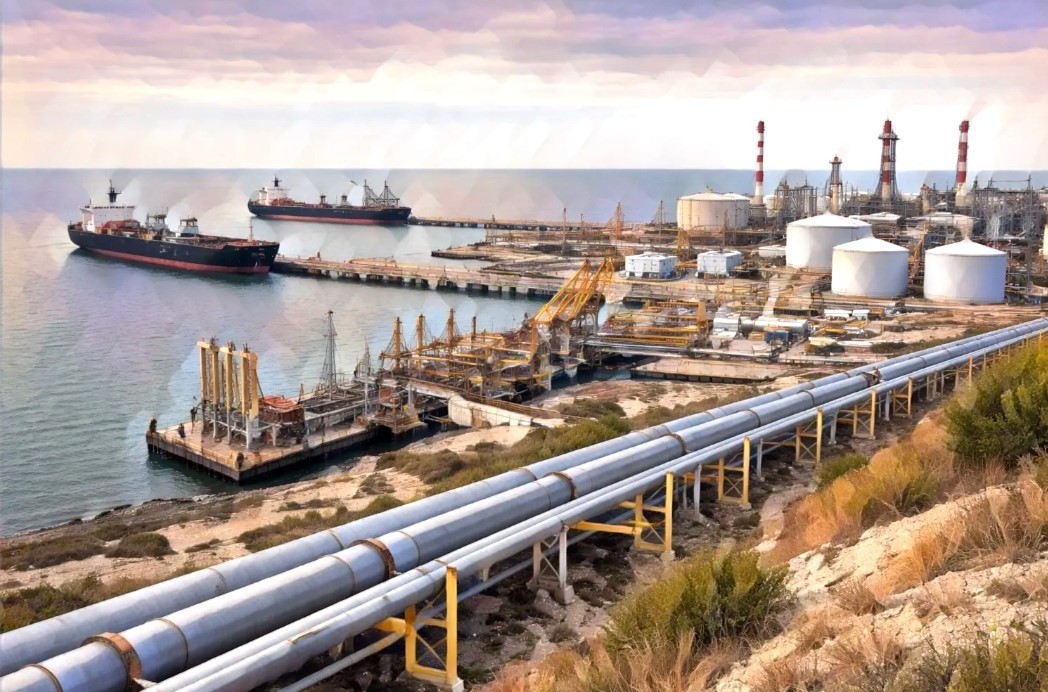
As Central Asia’s largest oil and gas producer, Kazakhstan relies heavily on the Caspian Sea as a critical route for energy exports and associated cargo. While most Kazakh crude reaches global markets via pipelines, the Caspian remains essential for regional trade connectivity, particularly through the port of Aktau and related terminals. Kazakhstan is also a significant supplier of crude oil to European markets, contributing to the continent’s diversification away from Russian energy sources and making the reliability of its export routes relevant to European energy security.
Kazakhstan’s exposure to sanctions risk in the Caspian Sea is fundamentally structural rather than policy-driven and is shared with other non-sanctioned shoreline states, namely Azerbaijan and Turkmenistan. Bordered by Russia and Iran—both of whom are heavily sanctioned by the U.S. and EU— the Caspian’s shared maritime space places regional infrastructure in an operating environment where vessels, cargoes, and service providers may be indirectly affected by international restrictions on Russian and Iranian trade. These spillover risks extend across the basin regardless of the compliance posture of individual entities or the policy intent and regulatory efforts of the host states.
Recent U.S. policy developments, including NSPM-2, have increased the relevance of these structural conditions by clarifying enforcement priorities under existing sanctions authorities with a focus on the conduct of non-sanctioned actors whose activities may be seen as facilitating sanctioned revenue generation. Enforcement practice emphasizes facilitation, awareness, and the adequacy of compliance controls—and increasingly encompasses maritime intermediaries such as ports and port operators, shipping companies, transshipment facilities, insurers, financiers, and other logistics service providers. As a result, Caspian transit pathways may face heightened compliance and due-diligence expectations in certain scenarios, even when handling non-sanctioned cargo for lawful trade.
Operational indicators suggest that Kazakhstan, Azerbaijan and Turkmenistan, as well as their businesses, continue to face a more conservative compliance environment, reflecting longstanding scrutiny of Caspian-linked transactions. Banks with access to U.S. dollar clearing and Western correspondent networks have applied more rigorous guidance from US Treasury’s Office of Foreign Asset Control (OFAC) to such activity, resulting in longer processing timelines and higher compliance costs for lawful trade, consistent with the designation of additional Iranian-linked entities and vessels.
Kazakhstan’s ability to manage these pressures is supported by its comparatively strong anti-money-laundering and counter-terrorist-financing (AML/CFT) framework, as assessed by the Financial Action Task Force (FATF) including in the 2023 Mutual Evaluation Report. Relative to other Central Asian and Caspian states, Kazakhstan demonstrates higher levels of technical compliance and institutional effectiveness and is not designated as a strategically deficient jurisdiction by FATF. While this does not entirely eliminate exposure arising from geographic proximity to sanctioned jurisdictions and shared transit environments, it provides a stronger institutional basis for meeting heightened due-diligence expectations and for signaling regulatory reliability to international partners.
Kazakhstan and Azerbaijan occupy a dual position in the Caspian as both operators in a complex regional environment for crude transport and maritime logistics and as key non-Russian energy suppliers to European markets. Turkmenistan, a major gas producer, operates in the same Caspian maritime environment. For all three, the challenge is primarily operational, requiring heightened transparency, due diligence, and oversight of intermediaries linked to Russian and Iranian trade. Effective management of these requirements supports access to international finance and reinforces the role of Caspian states as reliable energy and transit partners for European markets.