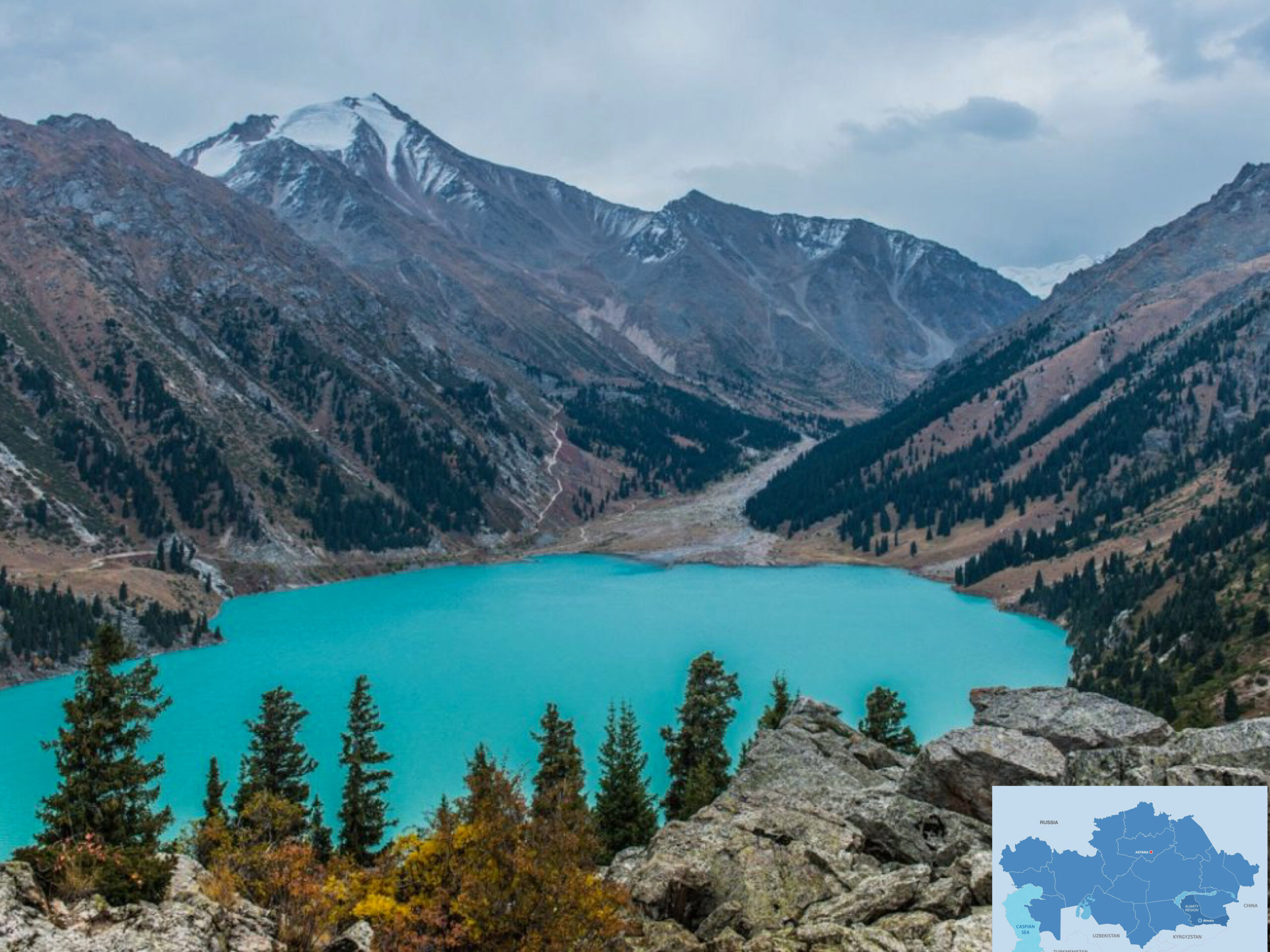
ALMATY – For three decades, the Ile-Alatau national park has stood as one of Kazakhstan’s most important protected natural areas, safeguarding the ecosystems of the Zailiysky Alatau mountains while promoting environmental awareness and sustainable tourism.
Photo credit: ile-alatau.kz Click to see the map in full size. The map is designed by The Astana Times.
Established on Feb. 22, 1996, the national park originally covered 164,450 hectares. Over the past 30 years, its territory has expanded to 200,160 hectares, an increase of 35,710 hectares, reflecting Kazakhstan’s long-term policy of strengthening its system of protected natural areas and preserving its natural heritage.
Reforestation and ecosystem protection
Since the park’s creation, extensive reforestation efforts have been carried out to restore forest ecosystems and maintain environmental balance. Between 1996 and 2025, more than five million trees were planted across 1,637 hectares of land, reported the national park’s press service.
To ensure a stable supply of planting material, the park operates seven temporary nurseries growing both coniferous and deciduous species. These nurseries provide seedlings used for forest restoration projects across the protected area.
Environmental education and tourism growth
Alongside conservation work, the park has developed a broad program of environmental education and sustainable tourism. Annual ecological initiatives, including the international March of Parks campaign, have become a large environmental movement that encourages public participation in nature protection.
Visitor numbers have grown dramatically over the years. In 1996, the park welcomed nearly 27,400 visitors, while in 2025 the number reached nearly 946,000, representing a 34.5-fold increase. The growth reflects improvements in tourist infrastructure, the opening of visitor centers, and expanded ecological awareness programs.
Between 1996 and 2025, the park organized 3,211 environmental events, engaging more than two million volunteers and eco-activists.
When the park was founded, it offered eight tourist routes. Today, visitors can explore 46 routes, including some of the region’s most popular destinations such as Big Almaty Lake, Butakovka gorge, Ayusai gorge, Turgen waterfalls, Lake Issyk, and the Kaskelen and Aksai gorges.
This year, officials plan to improve three tourist trails, including the opening of a new route and a new visit center. Planned projects include the Akkayin–Kokzhailau and Kuznetsov gorge routes, the Butakty visitor center, and the Marble trail. Improvements will include navigation signs, rest areas, safety upgrades, and educational information stands.
Over the next three years, the park also plans to open 30 additional eco-routes as part of a broader strategy to expand tourism while adhering to sustainable development principles.
Scientific research and biodiversity protection
The park conducts extensive scientific work aimed at preserving rare and endangered species listed in Kazakhstan’s Red Book. Two genetic reserves have been established on the territory, including a clone archive of the wild Sivers apple tree, considered the ancestor of modern cultivated apples.
A joint five-year research program with the Institute of Botany and Phytointroduction is currently studying this unique species and other elements of the park’s genetic plant resources.
Conservation efforts have also led to significant population growth of rare wildlife. Over the past three decades, the number of snow leopards has increased from five to ten individuals to roughly 39. The population of the Tien Shan brown bear has risen from 15–20 to around 85, while stone martens have grown from 100 to 493, and golden eagles from 50 to 97.
New technologies and forest health
In 2025, aviation-based methods were introduced for the first time to treat forest areas affected by disease outbreaks. Researchers have also recorded 10 species of entomophages, seven insect species and three spider species that help regulate forest pests naturally.
Infrastructure development is also underway. With the support of the Helios energy company, the park is constructing a 600-meter educational trail, observation platform, small museum, and visitor facilities in the Kuznetsov gorge area.
Tourism investment and mountain partnerships
Over the past 30 years, the number of investment projects in the park has grown from just one project in 1998 to 94 today. The territory now hosts three ski resorts, five visitor centers, and several modern recreation facilities, helping expand the region’s tourism potential while supporting local economic development.
To mark the anniversary, instructors from four countries organized a mass night ski descent, symbolizing unity and respect for the Zailiysky Alatau Mountains. The festival also saw the signing of the Green Charter of the Eurasian Alliance of Mountain Resorts, an initiative proposed by Shymbulak that establishes principles for the sustainable development of mountain territories.
As it enters its fourth decade, the Ile-Alatau National Park plans to continue strengthening conservation programs, expanding scientific research and protecting the biodiversity that defines one of Kazakhstan’s most treasured natural landscapes.