ASTANA — For decades, Kazakhstan’s connectivity strategy was measured in highways, railways and pipelines. Today, that vision is expanding. As global competition increasingly depends on the movement of data alongside the movement of goods, the country is investing in a new layer of strategic infrastructure — one designed not to carry cargo, but information.
Photo credit: ortcom.kz
Among the clearest examples of this shift is the Trans-Caspian fiber-optic cable project. The first-ever underwater telecommunications link across the Caspian Sea will connect Aktau and Sumqayit, creating a new digital corridor between Central Asia, the South Caucasus and Europe.
The project reflects a broader vision articulated by President Kassym-Jomart Tokayev, who has increasingly framed Kazakhstan’s connectivity agenda as extending beyond physical transport routes to include cross-border digital infrastructure. In his September 2024 State of the Nation Address, he called for the project to be completed, describing it as essential for “creating a digital infrastructure linked with international corridors and cross-border data flows.”
Several months later, speaking at an informal meeting of the Council of Heads of State of the Organization of Turkic States in Budapest, Tokayev expanded that vision beyond Kazakhstan.
“This project will significantly improve digital communication between our countries and will be a strategic step towards strengthening regional integration. Such initiatives open up opportunities to create a new digital corridor across the Eurasian continent,” he said.
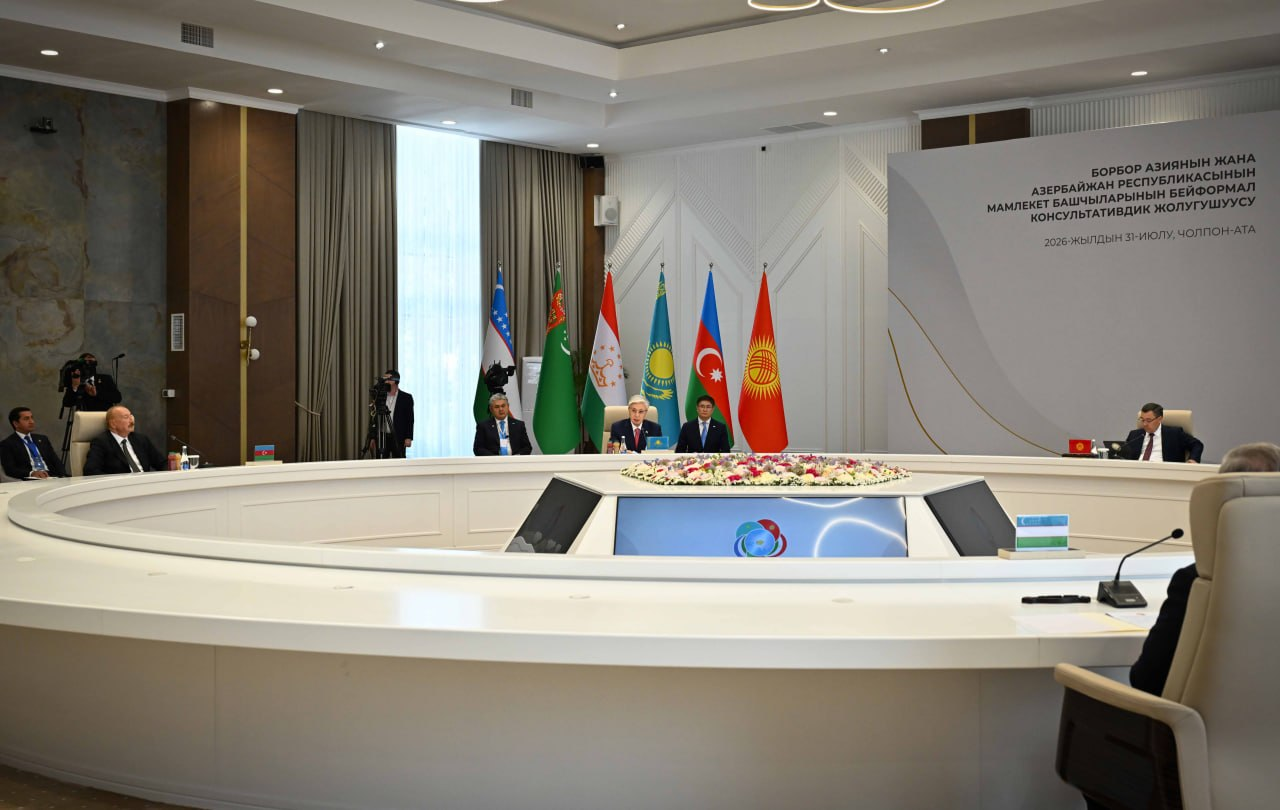
The regional context continues to evolve. As the cable enters its final construction phase, regional leaders are once again gathering, this time in Cholpon-Ata for an informal Consultative Meeting of the Heads of State of Central Asia and Azerbaijan, underscoring how cooperation between the countries increasingly extends across transport, energy and digital connectivity.
Nearly two years after Tokayev first identified the project as a strategic priority, it is entering its most tangible phase. Kazakhstan is now carrying out the final stages of the project, with commercial commissioning expected by the end of 2026. The latest phase has shifted from engineering preparation to offshore construction.
According to the Ministry of Artificial Intelligence and Digital Development’s release from July 31, regulatory, customs and organizational procedures have been completed, including the approval of equipment required for the offshore works, allowing construction to proceed without administrative delays.
Preparatory work in 2025 included desktop and offshore engineering surveys, selection of the optimal route avoiding anchorage zones and military training areas, environmental approvals from the Mangystau Region authorities, and the production and factory testing in China of a specially armored submarine cable equipped with ROPA optical amplifiers.
With the planning phase complete, attention has shifted from engineering design to execution at sea. The cable, previously delivered from China to the port of Kuryk together with three cable baskets weighing a combined 600 tons, was transported to Baku aboard a specialized logistics vessel. It has now been transferred into the cable tank of the cable-laying vessel, which has departed Baku and is laying the line toward Aktau.
The operation is being carried out by a cable-laying vessel with a displacement exceeding 20,000 tons and equipped with dynamic positioning technology to ensure precise installation on the seabed. Around 70 crew members are involved, including technical supervisors and representatives of Kazakhtelecom. The project is being implemented by CaspiLink B.V., the joint venture established by Kazakhtelecom and AzerTelecom.
A dedicated jointing room has also been installed onboard to allow engineers to repair or reconnect the cable if required during installation. Both the Kazakh and Azerbaijani cable ends have already undergone testing. Subject to favorable weather conditions, installation of the submarine cable is expected to be completed within the next 15 to 20 days, while the overall commissioning process remains on schedule for completion by the end of 2026.
The significance of the project, however, extends well beyond the technical operation. As economies become more deeply integrated through both physical and digital infrastructure, international corridors are no longer defined solely by the goods they carry. They are increasingly shaped by the data they enable to move across borders. While the cable spans just 380 kilometers across the Caspian seabed, the vision behind it reaches much further. The Trans-Caspian fiber-optic cable reflects Kazakhstan’s ambition to remain an important link in the movement of both goods and data across Eurasia.