ASTANA – A middle-path strategy based on the World Energy Council’s energy trilemma, balancing security, affordability and environmental sustainability, is the most effective approach for Central Asia’s energy transition, according to experts from the Eurasian Development Bank (EDB).
Photo credit: Vasilii Ivanov
The strategy, presented in the EDB report titled Central Asia’s Energy Sector: Modernization and Energy Transition on March 19, proposes a pragmatic pathway that combines traditional and renewable energy sources while modernizing infrastructure.
According to the report, electricity consumption in Central Asia is projected to increase by 40% by 2030, requiring 62.8 gigawatts of new generating capacity by 2035.
EDB analysts estimate that the middle-path scenario would be 30-45% cheaper than a “green maximalism” scenario while reducing the carbon footprint fivefold compared with a conservative development path.
Rapid global energy shift
Arman Akhunbayev, head of the Industry Analysis Center at the EDB, highlighted that the global energy transition has accelerated significantly over the past decade. In 2024, 92% of newly installed generation capacity worldwide came from renewable energy, with investments reaching nearly $2.2 trillion, roughly double the investment in fossil fuels.
Arman Akhunbayev, head of the Industry Analysis Center at the EDB, presented data showing the increase in newly installed power generation capacity worldwide from 2014 to 2024.
“The key driver is the global push toward carbon neutrality. At the same time, the cost of technology has dropped sharply. Solar power has become 70% cheaper since 2015, and wind power has fallen by 55%. The world has entered a new phase of energy development. The main question is no longer whether renewable energy is needed, but how to integrate it into energy systems while maintaining reliability, affordability and stability,” Akhunbayev said.
He noted that a single technology will not dominate the future energy system, but rather a balanced mix of energy sources, including solar, gas, coal, hydropower, and nuclear energy.
Global energy demand is growing faster than expected. In recent years, energy consumption has increased by 2.2% annually, compared with an average of 1.3% in previous decades. Drivers include industrial growth, digitalization, data centers, cooling demand, electric transport, population growth and urbanization.
“Clean generation is expanding quickly, but consumption is growing even faster. The key question today is whether power systems will have enough capacity to meet this new wave of demand without shortages or price shocks,” Akhunbayev said.
This challenge is particularly relevant for Central Asia, where electricity demand is rising rapidly while generation capacity remains limited.
As the share of variable renewable energy increases, energy systems must rely more heavily on flexibility tools, including battery storage, peak gas plants, hydropower resources, demand management and auxiliary service markets.
The energy trilemma framework
Akhunbayev highlighted that choosing the optimal energy mix remains challenging, as each energy source has advantages and limitations. Solar and wind power are among the lowest-cost options but lack balancing capacity, whereas gas offers flexibility but produces higher emissions. Nuclear energy delivers low-carbon baseload generation and is sensitive to capital costs, while coal continues to support system stability despite its larger carbon footprint.
“There is no universal solution for every country. The task is to find the right balance in the energy mix, which is why we use the energy trilemma framework developed by the World Energy Council,” Akhunbayev said.
The framework assesses energy policy across three dimensions, such as energy security, energy equity and affordability, and environmental sustainability. It measures a system’s ability to reliably meet demand and withstand external shocks, ensure access to energy at reasonable prices for households and businesses, and reduce emissions and environmental impact.
“The key principle is that progress in one dimension should not come at the expense of failure in the others. Maintaining balance between the three is essential,” Akhunbayev said.
Central Asia’s structural challenges
EDB senior analyst Demir Kabylbayev said Central Asia clearly demonstrates the complexity of the energy transition, as the region faces a unique combination of risks and opportunities.
“Energy systems used to be simpler. Large power plants generated electricity and transmitted it to passive consumers. Today, the system is becoming far more complex,” he said.
Consumers are increasingly becoming both users and producers of energy, installing solar panels and home battery systems. This transformation is reshaping the structure of the energy sector and requires new technological and institutional solutions.
Electricity consumption in the region increases, while much of the infrastructure is outdated. More than half of power plants and transmission networks require modernization, and technical losses in power grids are several times higher than in developed countries. Recent winters have exposed vulnerabilities, including blackouts in major cities and failures at aging plants.
Using the energy-trilemma approach, the experts found that the region suffers from low diversification of generation, making it vulnerable to shocks.
According to Kabylbayev, a comparative analysis of Kazakhstan and Tajikistan showed different weaknesses in each country’s energy system.
Kazakhstan has low environmental sustainability due to its heavy reliance on coal-fired generation, while Tajikistan faces challenges in energy security and accessibility. In winter, hydropower plants in Tajikistan cannot produce enough electricity, which can lead to power shortages and outages. The country also has the lowest electrification level in the region, with some remote mountainous areas still lacking access to electricity, affecting universal energy availability.
Kabylbayev also noted that many countries rely heavily on a single resource, gas, coal or hydropower, due to geography and historical development.
“Uzbekistan, for example, is facing a gas shortage, yet around 74% of its electricity generation depends on the availability of affordable natural gas. The Kyrgyz Republic and Tajikistan historically rely on hydropower, which makes them vulnerable to climate change, river inflow fluctuations and reservoir levels. This directly affects their ability to generate electricity, which is why diversification of generation is critically important,” he said.
The middle path for Central Asia
Countries in Central Asia are pursuing different energy-transition strategies, but all face the same challenge of balancing reliability, cost and environmental goals.
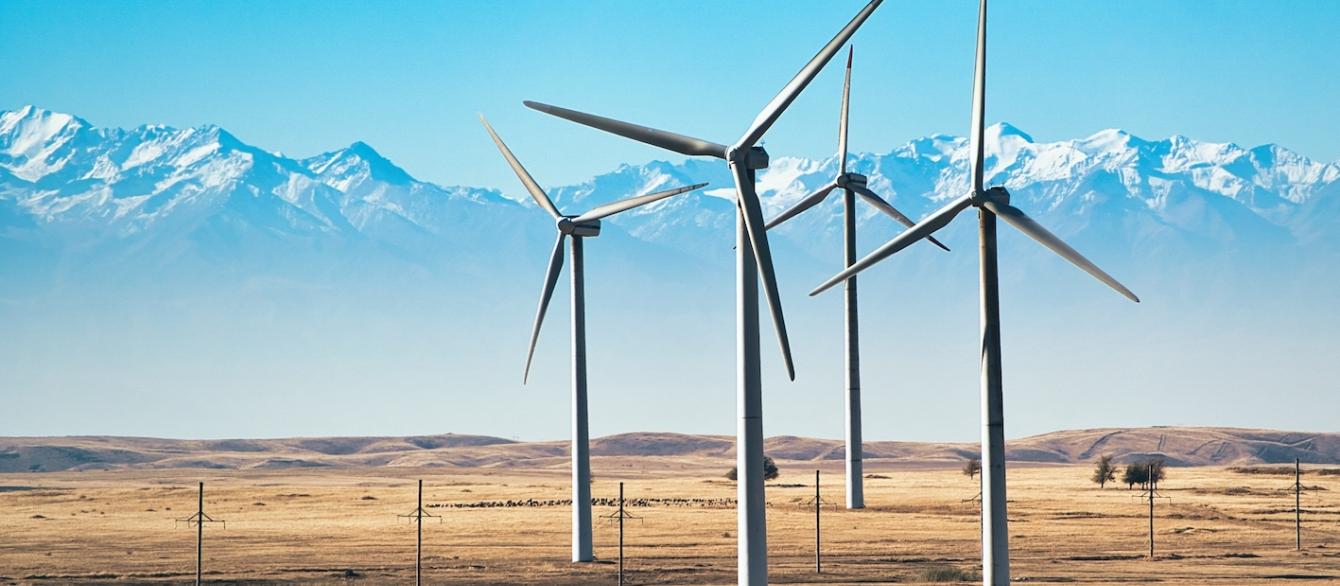
“Kazakhstan aims for 15% renewables by 2030 and 50% by 2050, while Uzbekistan plans 25 gigawatts of renewables and around 54% of electricity from clean sources by 2030. The Kyrgyz Republic currently leads the region in renewable deployment, with more than 12% of electricity generated from solar and wind in 2025,” Kabylbayev said.
Experts say the most realistic scenario for the region is a middle-path approach, combining renewable energy with gas, hydropower, nuclear power and modernization of existing plants, along with storage, demand management and stronger regional cooperation.