A new immersive experience at the Museo dell’Ara Pacis will allow visitors to rediscover one of ancient Rome’s most important monuments through light, sound and narration.
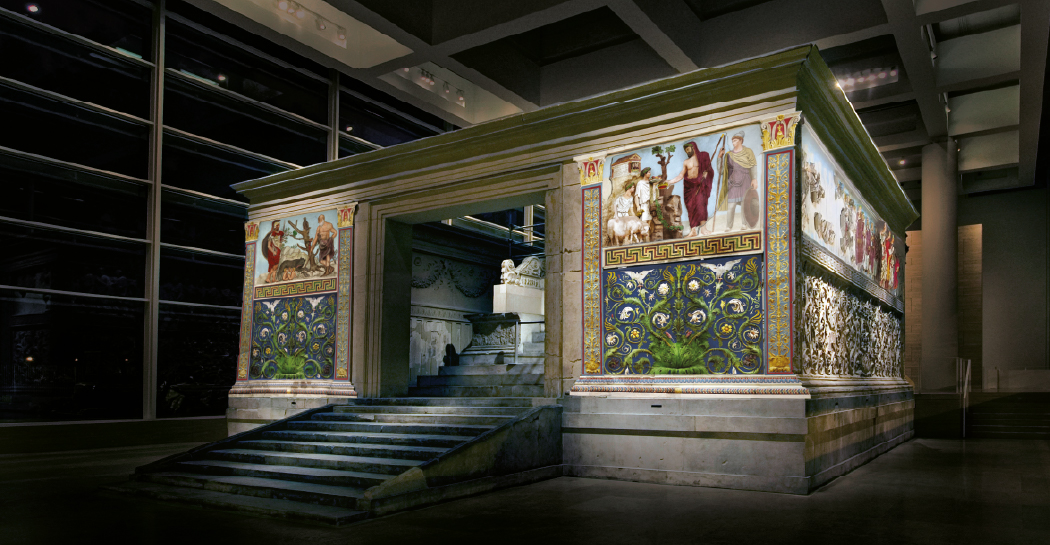
From 27 March until the end of 2026, the multimedia project L’Ara si rivela transforms the Ara Pacis Augustae using videomapping technology designed to recreate the altar’s original colours with striking realism. The installation combines projections, music and soundscapes to reconstruct how the monument may have appeared in the Augustan age.
The experience guides visitors across the altar’s most celebrated sculptural panels. These include the western façade, which depicts Aeneas sacrificing to the Penates and the Lupercal scene, and the eastern façade, featuring allegorical representations of Tellus and the goddess Roma. The two long procession friezes, among the most studied reliefs from the age of Augustus, are also brought to life through the projection mapping.
Narration accompanies the visual display, taking audiences through the monument’s creation and symbolic meaning, as well as its later history. The programme also explores the altar’s burial over centuries, its rediscovery in fragments, and the complex restoration process that led to its current presentation.
The evening format is designed to create a more intimate viewing experience. Access is limited to small groups of up to 25 visitors, each accompanied by a guide. Three sessions will run each evening, roughly one hour apart, and each visit lasts approximately 45 minutes.
The multimedia experience will take place on Friday, Saturday and Sunday evenings from 20.00 to 23.00, with seasonal timetable adjustments during the summer months. Tickets and updated visiting information are available through the museum’s official channels.
What is the Ara Pacis Augustae?
The Ara Pacis Augustae, or Altar of Augustan Peace, was commissioned in 13 BCE by the Roman Senate to honour Emperor Augustus and celebrate the peace established across the Roman Empire following his military campaigns.
The monument is a richly decorated altar, famous for its detailed reliefs depicting mythological scenes, allegorical figures, and processions of Rome’s elite. Beyond its artistic significance, the Ara Pacis reflects the political and cultural values of the early Empire, illustrating the connection between imperial authority, religious ritual and the ideal of civic harmony, a tangible symbol of Rome at the height of its power.