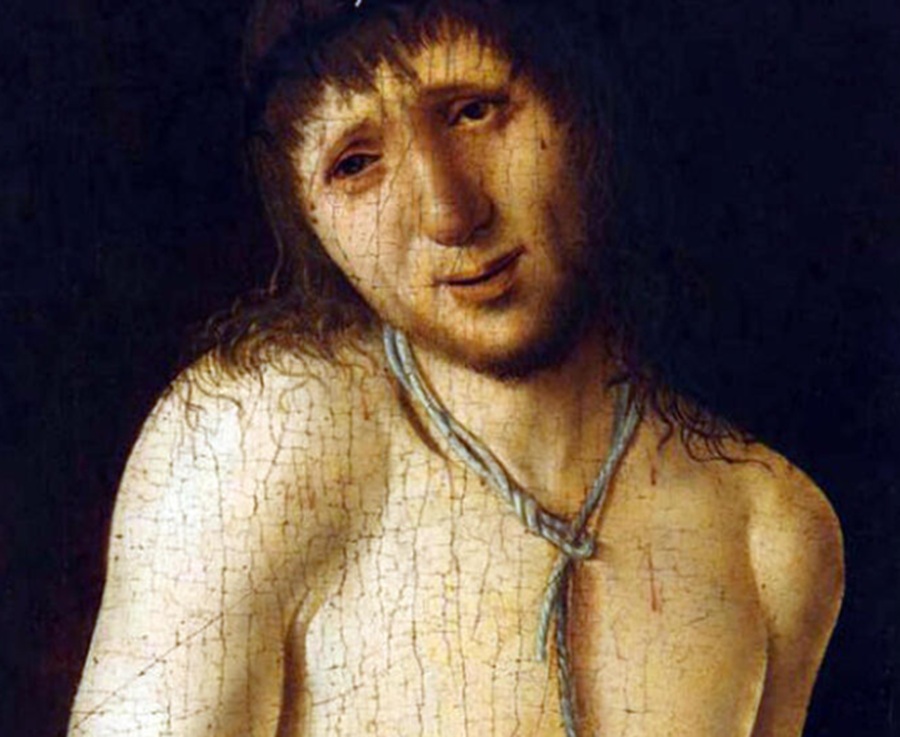
A tiny devotional panel, Ecce Homo, by Antonello da Messina, worn smooth by centuries of prayer, went on display in Rome’s Senate on Thursday. At $14.9 million, it is almost certainly the last work by one of Italy’s most transformative painters still in private hands.
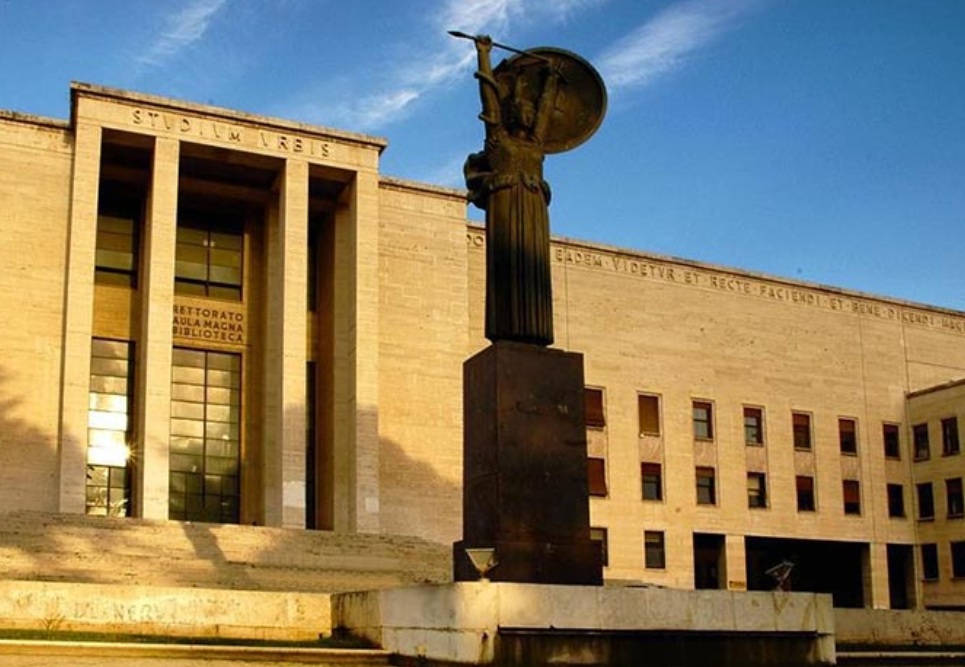
For most of its five-and-a-half centuries of existence, the painting lived quietly in private hands — carried in a leather pouch, brought out for prayer, kissed so many times that Saint Jerome’s face on the reverse side has worn almost entirely away. On Thursday, Antonello da Messina’s Ecce Homo was unveiled in the Sala Capitolare of Rome’s Palazzo della Minerva. It was then that Culture Minister Alessandro Giuli announced that Italy intended to buy a great deal more.
“It is true that there is a policy to step up these acquisitions,” Giuli told the Associated Press after the work was unveiled. “We want people to understand how important it is for us to bring works of great artistic and public significance back to Italy and make them available to the world as well as to Italians.”
Our pockets are not deep, as the Culture Ministry budget is not even 0.3 percent of the national budget, but it is large enough to purchase works of art.
Culture Minister Alessandro Giuli
The acquisition was completed when Giuli personally flew to New York to finalise the transaction at Sotheby’s headquarters. The private sale was negotiated just before the work was due to go under the hammer at Sotheby’s Old Masters evening auction on 5 February. It had been estimated at $10 to $15 million.
The Ecce Homo arrives in Italian public ownership at an exceptional moment of concentration. It follows by only a matter of weeks the government’s purchase of a Caravaggio portrait for €30million euros. Giuli was at pains to frame this not as a spending spree but a deliberate strategic pivot. It is a statement that the Italian state intended to reclaim works of singular national significance wherever they surfaced on the international market, even within the constraints of a Culture Ministry budget.
About the work
Guests view the reverse of Antonello da Messina’s Ecce Homo
The Ecce Homo acquired by Italy is considered likely the last Antonello still in private hands, previously held by a Chilean collector and later passing through Wildenstein & Co. in New York and the Florentine dealer Fabrizio Moretti. Its attribution to Antonello was first made in 1985 by the late art historian Federico Zeri. With only some 40 known paintings by Antonello da Messina, the acquisition represents a major coup for any museum ultimately to receive it.
The painting is remarkable not only for its artistic quality but for its physical biography. Designed for private devotion, it travelled for years in its owner’s leather pouch — a portable act of faith small enough to carry on a journey, intimate enough to hold during prayer. The wear on Saint Jerome’s face is not damage in any conventional sense; it is evidence of use, of a relationship between an object and a person that stretched across decades. The Ecce Homo itself, Christ presented to the crowd with eyes reddened, blood tracing the crown of thorns, shows none of that wear. It was the verso, the private saint, not the public Christ, that was kissed.
Who was Antonello da Messina?
Born around 1430 in Messina, Sicily, Antonello di Giovanni d’Antonio, known as Antonello da Messina, is one of the most consequential and enigmatic painters of the Italian Renaissance. He is, in a sense, the first truly European painter. No other Italian artist of the fifteenth century responded in such a direct fashion to the leading masters of Bruges and Brussels, nor to the giants of French Provençal painting.
Trained in Naples under Niccolò Colantonio, where Netherlandish painting was fashionable, Antonello appears to have encountered the Flemish oil technique through the collection of Alfonso V of Aragon and possibly through direct contact with Jan van Eyck’s most accomplished follower, Petrus Christus. From these sources he absorbed something transformative: the ability to build form and light through layers of translucent oil rather than drawing and shade.
His practice of building form with colour rather than line and shade greatly influenced the subsequent development of Venetian painting. When he arrived in Venice in 1475, his innovative San Cassiano Altarpiece left a lasting imprint on Giovanni Bellini and other Venetian masters. The portraits he painted there represented a new stage in the evolution of the genre in Italy.
John Pope-Hennessy described Antonello as “the first Italian painter for whom the individual portrait was an art form in its own right.” With fewer than 40 surviving works and a life of roughly 49 years, he died in Messina in February 1479. His influence, however, ran through Giovanni Bellini, Giorgione, and the entire tradition of Venetian luminism pointing, ultimately, toward the Mona Lisa and beyond.
Where will it end up?
Giuli announced that the painting would first be exhibited at the National Museum of Abruzzo in L’Aquila before continuing to further Italian venues, a touring schedule designed, he said, to maximise public access across the country. The choice of L’Aquila as the first stop is not merely practical: the city, still carrying the memory of the devastating 2009 earthquake, has been a focus of Italian cultural restoration efforts, and sending a national treasure there first carries a symbolic weight that has not been lost on observers.
Sicily wants it back
Museums across Italy are vying for the chance to add the work to their collections. Rumours have swirled that the 15th-century masterpiece could head to a number of high-profile institutions, including the Pinacoteca di Brera in Milan, Venice’s Galleria dell’Accademia, or the Capodimonte in Naples, given that Antonello received much of his training there and first encountered Flemish techniques in the city.
Sicily has mounted its own passionate claim. Antonello was born, trained intermittently, and died in Messina. Regional politicians have argued vigorously that the work belongs in his home island, most plausibly at the Museo Regionale di Messina, which holds his 1473 polyptych. The final destination remains officially unannounced and is likely to generate significant cultural-political debate before it is settled.