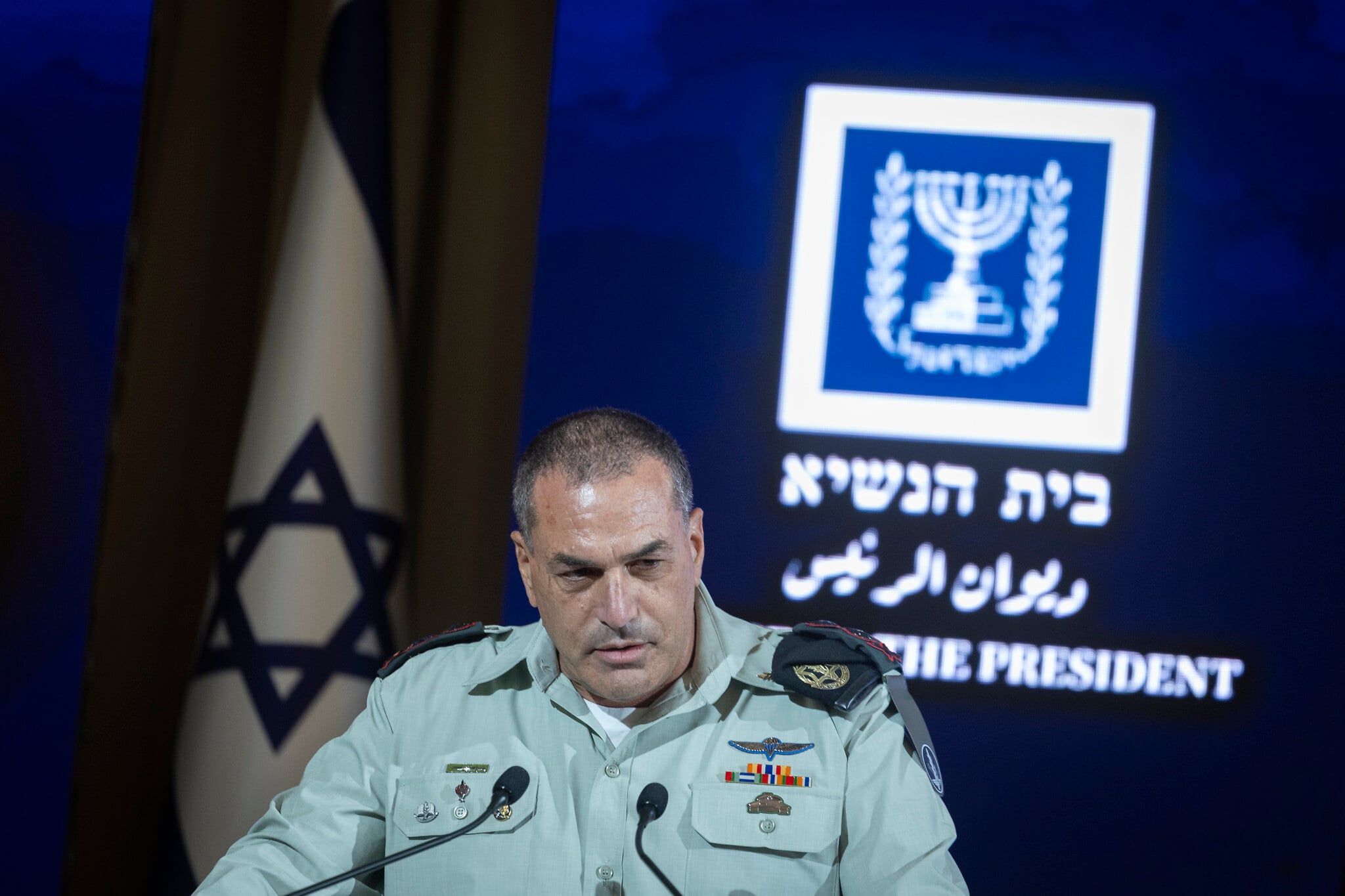
A day after a Knesset committee advanced a bill that will effectively freeze ultra-Orthodox enlistment to the military for seven months, IDF Chief of Staff Lt. Gen. Eyal Zamir on Monday issued a harsh letter calling the proposal “clearly and unequivocally inconsistent with the IDF’s needs.”
Addressing Prime Minister Benjamin Netanyahu, Defense Minister Israel Katz, and Knesset Foreign Affairs and Defense Committee chair Likud MK Boaz Bismuth, Zamir wrote that the proposed mechanism, under which IDF officers would approve the status of yeshiva students in order to grant them immunity from arrest for draft evasion, “undermines the legitimacy of and trust among those who serve.”
“It is inconceivable that the military system under my command, which demands unprecedented sacrifice from its personnel, would be party to granting mass exemptions from prosecution,” wrote Zamir, who has repeatedly warned that the army needs more troops.
He added that “such a move would create a deep rift with the serving force, which has borne the burden of the fighting for two and a half years, and would increase inequality.”
“The bill is not expected to result in an increase in military personnel in the immediate term and provides an incentive for not reporting for military service,” he lamented.
Get The Times of Israel’s Daily Edition
by email and never miss our top stories
By signing up, you agree to the terms
Zamir noted that the bill comes at a time when the army is facing “an unusual gap in manpower, which directly affects the ability to meet operational missions.”
MK Boaz Bismuth, right, leads a Foreign Affairs and Defense Committee hearing on legislation to freeze the arrest of ultra-Orthodox draft dodgers, July 12, 2026. (Chaim Goldberg/Flash90)
The Knesset Foreign Affairs and Defense Committee on Sunday approved the bill for a final reading. Among its provisions is the establishment of a three-member panel of IDF officers who will review each of the exemption requests by ultra-Orthodox community members, known as Haredim.
The temporary immunity bill was set to be brought for its back-to-back second and third readings in the Knesset plenum later Monday. It is one component of an agreement between the ultra-Orthodox parties and Netanyahu to preserve ultra-Orthodox support for key coalition bills being pushed through the Knesset before it is dissolved and elections are called at the end of this week.
Committee chair Bismuth defended the legislation, responding in a statement to Zamir that the IDF was given ample opportunity to comment on the proposal, and questioning the publication of the letter shortly before the bill was due to be approved by the full Knesset.
“It’s hard to see this timing as a coincidence,” Bismuth wrote, while noting that Zamir sent his missive Sunday night, only after the measure had been approved by the committee.
He said that the IDF had three weeks to review the draft legislation and that its representatives participated in the Knesset committee discussions over it. Bismuth added that the legislation was composed in coordination with the Defense Ministry and that it was amended according to the ministry’s wishes.
He also defended freezing draft arrests by arguing that arrests are ineffective. During the discussions over the legislation, “the IDF’s representatives did not show one example to the committee of an arrest of a Torah scholar leading to enlistment in practice,” Bismuth wrote.
Ultra-Orthodox Jewish men block Route 1 near Jerusalem during a protest against the imprisonment of Haredi draft evaders, June 24, 2026. (Yonatan Sindel/Flash90)
The chairman of the Yashar party, Gadi Eisenkot, who is the leading challenger to Netanyahu in the October 27 elections, backed Zamir, saying “the IDF has unequivocally determined the bill won’t add personnel to its ranks.”
“Even in its twilight, the Netanyahu government continues to do damage by ignoring warnings,” Eisenkot, a former IDF chief of staff, said in a statement.
The bill, which is considerably more far-reaching than previous iterations, gives the tens of thousands of Haredi men currently deemed to be draft dodgers immunity from arrest until November 30. In addition, the bill freezes criminal proceedings already in place against current Haredi draft dodgers.
The bill makes oversight of the granting of immunity to such people practically impossible, and removes the ability to financially punish ultra-Orthodox yeshiva deans and staff who make false declarations regarding the eligibility of their students for arrest immunity.
Before the committee approved the bill, the committee’s legal adviser warned that it would be discriminatory, violating the principle of equality before the law, while the Knesset’s legal adviser stated that the way the bill has been legislated is “illegitimate” after the measure was dramatically changed from the original text of the bill.
Ultra-Orthodox parties have sought to preserve military service exemptions following a 2024 High Court ruling that found them unconstitutional, leading to some state benefits being curtailed. Currently, tens of thousands of Haredi yeshiva students are considered draft dodgers and are subject to arrest.
The coalition has argued that the controversial bill is necessary because, it claims, arrests of Haredi men who have failed to report for conscription after receiving draft orders are causing a reduction in motivation among ultra-Orthodox men to enlist.
Although very few Haredi draft dodgers have actually been arrested, the small number of draft evaders who have been in military prisons has caused the ultra-Orthodox parties and the coalition a severe political headache, prompting the new legislation to freeze such arrests.
Head of the Yashar party Gadi Eisenkott attends a conference at the Peres Center in Tel Aviv, July 12, 2026. (Miriam Alster/Flash90)
Calls for Haredi conscription have mounted as Israel has fought wars on multiple fronts since the Hamas-led October 7, 2023, attack, while facing a growing manpower shortage. The IDF has repeatedly said it urgently needs thousands more soldiers, and Zamir has reportedly warned ministers that the army will “collapse in on itself” if it does not get more manpower.
Last week, Zamir said at a ceremony at Israel’s National Security College, “We must significantly expand the ranks of the IDF so that it can meet all the missions assigned to it. The responsibility rests with all of us — the IDF needs everyone.”
Some 80,000 ultra-Orthodox men aged 18 to 24 are currently believed to be eligible for military service, but have not enlisted.
We can’t do this work alone.
The war with Iran has been draining for all of us in Israel. But when I heard about a high casualty incident – ballistic missile impacts in Arad and Dimona that left nearly 200 people wounded – I drank a cup of coffee, packed a bag, and headed south.
There, I spoke with Shilgit, the head of an after-school program for underprivileged youth. Standing outside her destroyed center, Shilgit said it was a miracle that no children were hurt and spoke about the community coming together in the hours since.
As a Times of Israel reporter, I’m committed to telling stories of resilience like Shilgit’s. But my colleagues and I can’t do this alone. If you value work like this, please consider joining our reader support group, The Times of Israel Community. Your financial support is essential to keep real human reporting like this going.
— Stav Levaton, military reporter
Yes, I’ll join
Yes, I’ll join
Already a member? Sign in to stop seeing this
You’re a dedicated reader
We’re really pleased that you’ve read X Times of Israel articles in the past month.
That’s why we started the Times of Israel – to provide discerning readers like you with must-read coverage of Israel and the Jewish world.
So now we have a request. Unlike other news outlets, we haven’t put up a paywall. But as the journalism we do is costly, we invite readers for whom The Times of Israel has become important to help support our work by joining The Times of Israel Community.
For as little as $6 a month you can help support our quality journalism while enjoying The Times of Israel AD-FREE, as well as accessing exclusive content available only to Times of Israel Community members.
Thank you,
David Horovitz, Founding Editor of The Times of Israel
Join Our Community
Join Our Community
Already a member? Sign in to stop seeing this