(Sept. 28, 2026 / JNS)
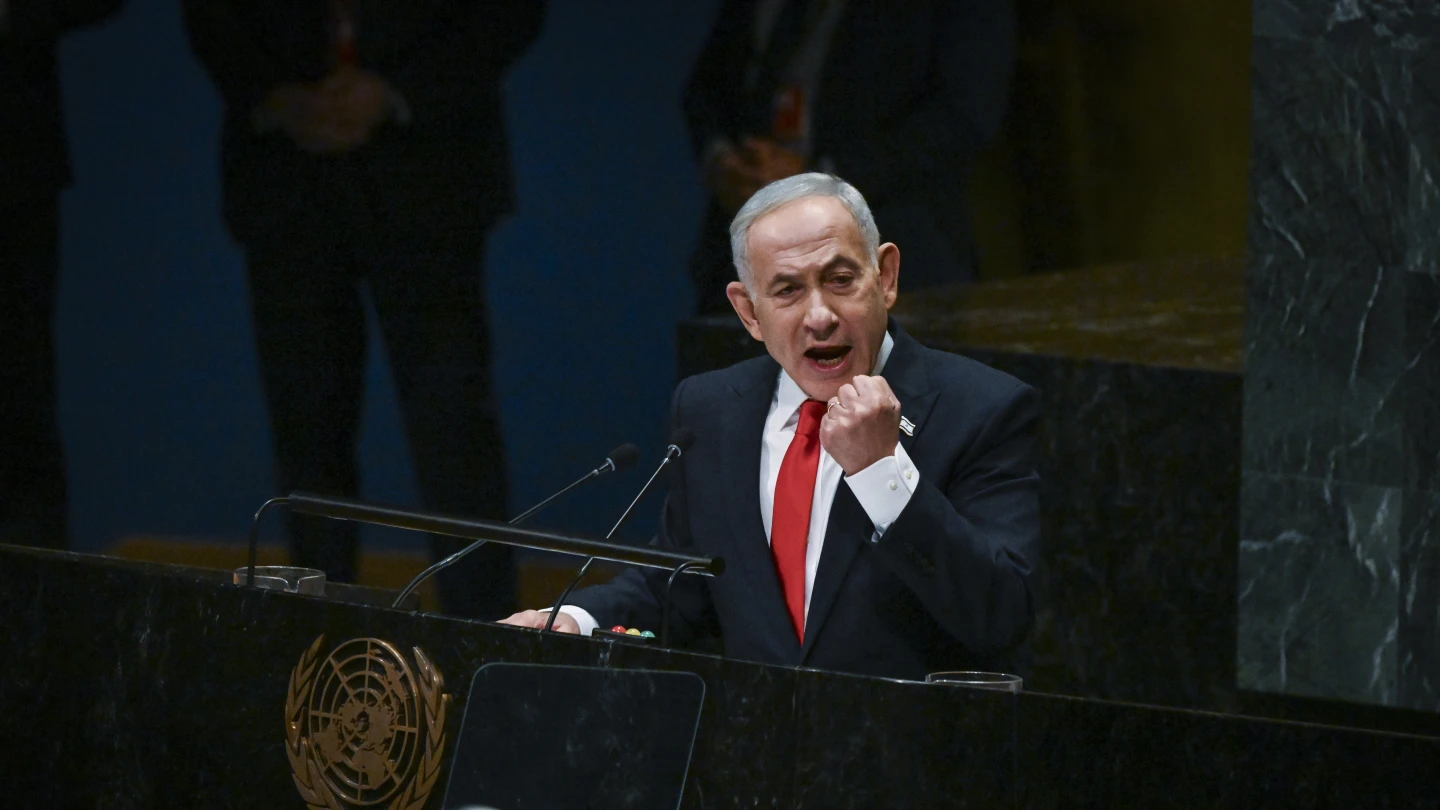
Some 2,500 years ago, the legendary Chinese military theorist Sun Tzu advised, “When your enemy is angry, agitate him.” Israeli Prime Minister Benjamin Netanyahu followed this advice to the letter at the United Nations on Thursday, when he rose to condemn the words and actions of New York City Mayor Zohran Mamdani.
Mamdani’s appalling record of defamation is well known. He has called American Jewish activists like AIPAC “monsters,” rejected Israel’s right to exist, repeatedly accused Israel (and Netanyahu) of genocide, refused to condemn the terrorist slogan “globalize the intifada” and incited protests that threatened to end in anti-Jewish riots. Such riots, thankfully, did not transpire during Netanyahu’s U.N. speech—perhaps to Mamdani’s chagrin—but Mamdani’s rhetoric has already resulted in a spike in antisemitic hate crimes against the mayor’s own citizens.
I have always been ambivalent about Netanyahu himself. He strikes me as an Israeli Richard Nixon: brilliant, effective and possessed of an extraordinary political and strategic mind, but also unscrupulous and often amoral, with a persecution complex of immense proportions. Nonetheless, one cannot deny his genius as a rhetorician and his capacity to make Israel’s case in uncompromising and strident terms. It should not be surprising, then, that his U.N. speech was an example of Netanyahu at his best.
The prime minister’s speech touched on many subjects, but when he spoke of Mamdani, his talents shone. He openly called the mayor “antisemitic” on the global stage; charged him with “inverting victim and aggressor” on the Oct. 7 war and “spitting in the face of truth”; made the effects of Mamdani’s incitement plain, saying, “Many Jews no longer feel safe in New York”; and smashed Mamdani’s favorite defamatory talking point, asserting, “Israel didn’t commit genocide. Israel prevented genocide. And that’s exactly what Mr. Mamdani’s Hamas buddies would have done to us had we not stopped them. They would have killed every last one of us.”
Perhaps most significantly, however, Netanyahu threw Mamdani’s pretensions of rectitude back in his face, rightly asserting, “The lies you and other antisemites spread about the Jews and the Jewish state have real consequences. In New York, Jews are threatened on the way to synagogue. Jews have been stabbed in the streets. Jews are demonized. They’re targeted simply for being Jews.” In effect, Netanyahu was saying to Mamdani and the movement he represents: We do not accept your moral arrogance. Your pretensions of sainthood are laughable. You are not saints. You are the devil.
While American Jewish leaders hedge their bets and hold their fire, America’s antisemites have no such compunctions.
These are things that need to be said. I hope there will be two, three, a million speeches like Netanyahu’s. But perhaps its greatest importance is that, along with shaming Mamdani, it also indirectly shamed many American Jewish leaders.
Amid the rise of the first antisemitic mass movement in American history, such leaders, especially the leaders of the largest and wealthiest organizations, have accepted the antisemites’ pretensions of sainthood, if only through silent submission. They have pulled their punches, emasculated their rhetoric, stuck to statements of lamentation and pathos, and generally refused to call the antisemites what they are: the devil.
This is not just craven; it is also supremely dangerous, because while American Jewish leaders hedge their bets and hold their fire, America’s antisemites have no such compunctions. Their rhetoric is fundamentally and consciously deceptive and defamatory, but it is also fiery, ferocious and uncompromising.
In a society defined by its media landscape, where spectacle is everything and the more spectacular the better, this is horrifyingly effective. People get a euphoric thrill from such discursive violence; they believe it because it is entertaining and fun, and they embrace the equally euphoric and thrilling hatreds it justifies. There is nothing the audience loves more than nuclear war, verbal or otherwise, so long as it remains on the social media feed.
For the most part, however, this war goes only one way. There are smaller organizations like End Jew Hatred and the Lawfare Project that have no inhibitions about engaging in equally ferocious rhetorical combat, and in their case, that rhetoric has the virtue of being genuine and accurate. But the large legacy organizations have shied away from the struggle, and as a result they have been utterly defeated, steamrolled by the merciless bad faith of their adversaries.
In his U.N. speech, Netanyahu showed that there is another way—that one can use the truth and argue in good faith while speaking with the same ferocity and violence as the enemy. The Jews, the speech asserted in both style and substance, not only can speak out, but can speak out in the most furious terms.
This is all-important, because in our society of the spectacle, words are never mere words. Speech may not be mightier than the sword, but it can be as mighty as the sword. Today, words are instruments of war, and the Jews in Israel, America and around the world are in a war whether they like it or not. Netanyahu showed that, in this battle of the spectacle, the Jews can fight back and win.
For Zionists like myself, this also underlines a fundamental truth, since what Netanyahu did is what Israel and Zionism are for: to give the Jews a voice before the world. To speak for the Jewish people when so many seek to silence us. To ensure that, no matter what, the world will hear us, if only because, in the face of their demented and racist anger, we will continue to agitate them.