Everything you need to know about daylight savings time and when and why it happens
For spring 2026 the clocks will change on Sunday, March 29. Here’s everything you need to know.
When do the clocks change this year?
The clocks go forward by one hour at 1am on the last Sunday of March. This means at 1am the time on the clock is changed to 2am on Sunday March 29, 2026. So unless your clock does this automatically, if you’re still up at that time, you change your clock from 1am to 2am, or do it before you go to bed.
Either way, this all means you will get an hour’s less sleep.
Every year, the clocks change on the last Sunday in March and the last Sunday in October, when we get the hour back again.
The system, called daylight saving time in the US or summer time in the EU and Britain, can be easily remembered using the phrase “spring forward, fall back”.
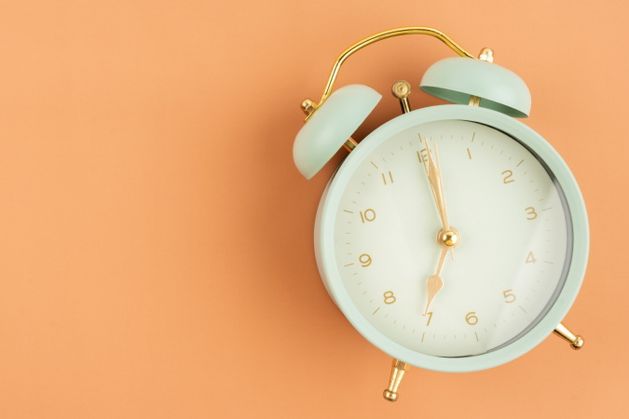
The clocks go forward by one hour at 1am on the last Sunday of March. (Photo: Getty)
Why are the seasonal changes still happening?
As it stands under EU law, the clocks in all member states change at the same time.
In 2019, the European Parliament voted in favour of ending seasonal time changes, but EU institutions have not made progress on implementing the decision, and the European Commission has said it does not plan to submit a new proposal on the matter to the parliament.
This means that no changes are expected to summer and winter time in the coming years.
The Department of Justice had previously outlined concerns about having two different time zones on the island of Ireland as a result of the UK leaving the EU.
Why do the clocks go back?
The clocks change in order to make the best use of the natural light.
In winter, the clocks go back by an hour, providing people with more sunlight in the morning and an extra hour in bed.
However, in summer, the clocks go forward an hour. which allows us to enjoy brighter evenings.
William Willett, who promoted the idea of British Summer Time. Photo: Getty
How long has this been happening?
The idea of British Summer Time (BST) was first proposed in the UK in 1907 by inventor William Willett.
He felt that valuable daylight was being wasted and wanted more time to enjoy the outdoors in the evenings.
Willett, whose great-great-grandson is Chris Martin of Coldplay, published a pamphlet called The Waste of Daylight, in which he outlined his plans to change the time of the clocks around Britain.
But when he died in 1915 the government still hadn’t backed BST.
It wasn’t until a year later, in May 1916, that Britain passed the Summer Time Act and started changing its clocks twice a year. Ireland followed suit.
This article was updated on March 9, 2026.