The Government announced a series of fuel tax reduction for households last month as part of a targeted effort to minimise the cost burden on households until May 31.
Taoiseach Micheál Martin this week announced the imminent launch of an “energy-efficiency programme” that will “give helpful advice to citizens” on how to reduce energy usage.
However, in the absence of any tangible reprieve from this energy shortage, motorists may want to start by maximising the fuel already in their tank.
Here is a list of ways in which you can do just that.
Reduce speed
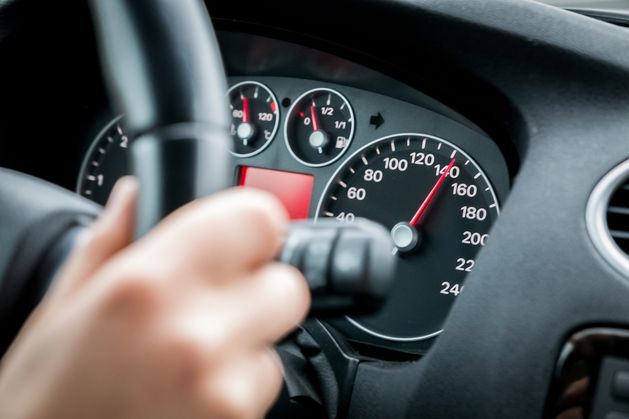
As you drive faster, the rate at which you save fuel in your engine drops. In fact, excessively fast driving has been proven to raise the consumption of fuel in your vehicle by 10pc to 12pc.
Use sat-nav
A pretty common infotainment feature in many modern cars is satellite navigation (sat-nav).
Stock image
This is not only easy for helping you to find your way on a road you have not travelled before, but also for fuel consumption for the very reason that it saves you travelling unnecessary extra distances while pulling your hair out because you missed your turn for the fourth time.
The AI within the sat-nav also offers you the fastest routes possible by guiding you away from the areas with the most traffic congestion.
Clean your car
It might sound far-fetched, but you would be surprised at the total weight of all the clutter you routinely carry around inside your car.
By reducing the weight of the contents, your car is required to burn less fuel to accelerate, meaning you conserve fuel in the long run, however marginally.
You might also consider removing your roof rack if you rarely use it, aiding aerodynamics too.
Turn off air conditioning
Keeping this on, especially when it is not needed, will add more resistance to the engine adding another stressor on the engine.
Ensure correct tyre pressure
Driving on under-inflated tyres will burn fuel faster by generating more rolling resistance on your car.
Air inside tyres expands when warm, giving potentially false readings for high pressure
Different tyres have different optimal pressure requirements. Driving warms your tyres, and in turn, warms the air inside them.
This could give a false reading of high tyre pressure when you go to check it, so try to measure pressure when the vehicle is cooled down.
Leave the house in good time
Aggressive driving is a no-no, as is harsh braking. The best way to avoid this is by not leaving it to chance that you will arrive at your destination in a less-than-normal timeframe.
This will end up consuming far more fuel than you need to. Also use higher gears sooner, and maintain momentum wherever possible.
Switch off your engine
It is advisable not to leave your engine running for longer than 10 seconds when stopped, like in traffic or the lights, for example.
Modern cars have stop-start technology, so the system automatically shuts off the engine when the car is stationary.
A stationary car emits more CO2.
Read the road
By watching the road ahead and anticipating any likely problems, driving becomes smoother, more controlled and be safer for all.
Motorists should drive in as high a gear as is suitable to road conditions. At bends reduce speed gently and accelerate smoothly when halfway through to help reduce fuel use.