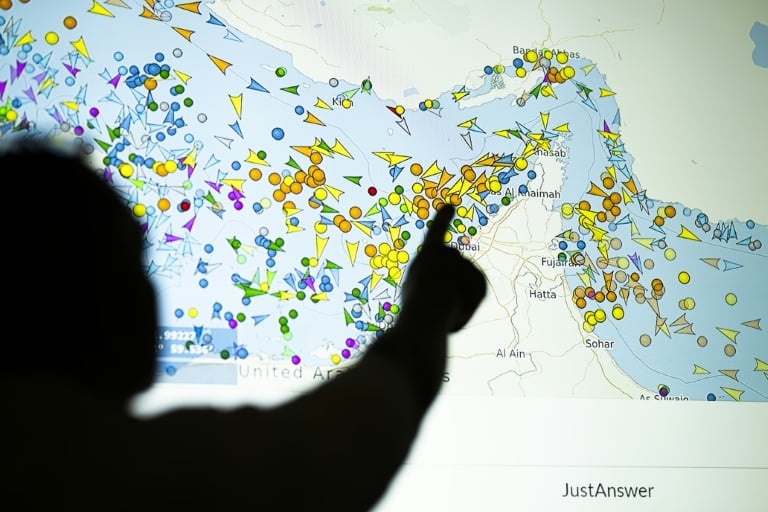
Baghdad (IraqiNews.com) – The sudden closure of the Strait of Hormuz by Iran’s Khatam al-Anbiya Corps—triggered by the rapid breakdown of the newly brokered US-Iran Geneva memorandum—has plunged Iraq into an immediate economic and security emergency.
As a country that depends on this single maritime chokepoint for the vast majority of its financial survival, a prolonged regional war introduces devastating risks to Iraq’s fiscal stability, public services, and sovereign security.
Here is an analysis of how a continued regional war and a sustained blockade at the Strait of Hormuz will directly affect Iraq across three critical fronts:
1. Total Fiscal Suffocation and Oil Export Paralysis
Iraq’s economy is fundamentally monolithic, relying on crude oil sales for more than 90% of its federal budget revenues and total merchandise exports.
- The Hormuz Trap: Unlike other Gulf producers, Iraq lacks immediate alternative routing. The vast majority of its crude is pumped from southern fields in Basra and loaded onto tankers passing directly through the now-blockaded Strait of Hormuz. A prolonged closure means millions of barrels of Iraqi oil will remain trapped underground, completely cutting off the state’s primary source of hard currency.
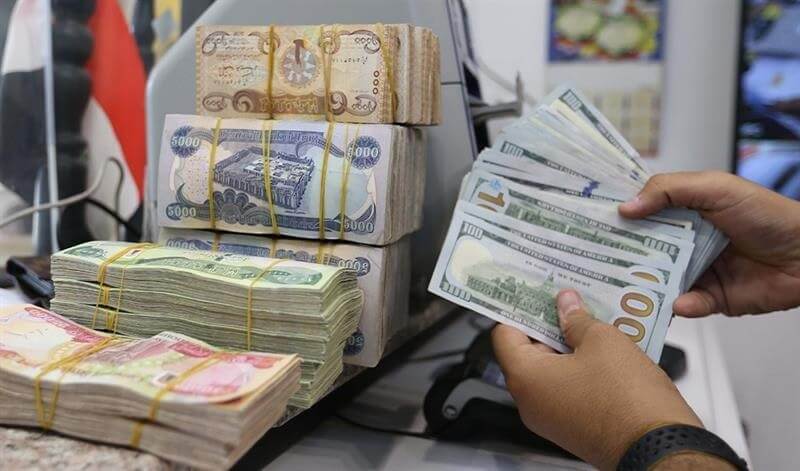
- The S&P Worst-Case Reality: Financial rating giants like S&P Global recently warned that Iraq’s real GDP could contract by 15% under prolonged export drops. If the war continues, the budget deficit will widen drastically far beyond the projected 7.5% baseline, forcing the government into severe austerity measures, delaying public sector salaries, and threatening the stability of the Iraqi Dinar.
- The Stalled Lifeline: While the government recently signed a Memorandum of Understanding with TI Capital to revive the historic Kirkuk-Baniyas pipeline to the Mediterranean as a strategic bypass, expert estimates show this project will take 2 to 3 years and cost up to $5 billion to build. Iraq simply does not have the infrastructure ready to survive a prolonged naval blockade today.
2. A Catastrophic Summer Power Crisis
A continued regional war immediately cripples Iraq’s fragile electrical grid, which faces its harshest operational test during the peak summer heat.
- The Iranian Gas Collapse: Iraq relies heavily on imported Iranian natural gas to fuel its domestic power generation plants. With Iran shifting into total war footing and experiencing localized conflict, these vital energy flows are highly prone to sudden, prolonged disruptions.
- The Race Against Time: Baghdad has sought to break this energy dependency by partnering with American firms like Excelerate Energy to build a Floating Storage and Regasification Unit (FSRU) in Khor al-Zubair to process alternative liquefied natural gas (LNG). However, Ministry of Electricity officials acknowledge that regional military escalations have continuously disrupted engineering timelines. Without regular Iranian gas or a completed FSRU terminal, major cities like Baghdad and Basra face catastrophic power grid failures, triggering severe local commercial losses and widespread civil unrest.
3. Escalating Security Sovereignty Threats
A prolonged war drastically complicates Prime Minister Ali Falih al-Zaidi’s efforts to enforce a state monopoly on weaponry and secure absolute national sovereignty.
- Militia Demobilization at Risk: Under recent understandings brokered with US Special Envoy Tom Barrack, the Iraqi government committed to a strict timeline to completely disarm and dissolve non-state armed groups. However, an active regional war involving Iran and Israel makes the domestic enforcement of this policy incredibly volatile. De-escalation becomes nearly impossible if local factions choose to bypass state orders to engage in the broader regional conflict.
- Vulnerability of Investment Zones: Iraq’s military leadership recently took the unprecedented step of deploying federal air defense and intelligence units to the Kurdistan Region to protect American energy operators (HKN, Western Zagros, Hunt Oil). If the regional war expands, these localized energy fields in Erbil, Sulaymaniah, and Duhok risk becoming secondary targets for drone and missile strikes, threatening to permanently drive foreign direct investment out of the country.
For Iraq, a continued war is not a distant geopolitical event—it is a direct threat to its daily survival. The escalation at the Strait of Hormuz transforms Iraq’s long-standing structural vulnerabilities (lack of export diversity, dependence on imported gas, and unorganized weaponry) into an immediate national crisis.
The coming days will test whether Baghdad can utilize its balanced diplomatic relations to insulate its economy, or whether it will be pulled into the financial and security fallout of a wider regional collapse.