In n interview with national Iranian TV on Wednesday night, Ghalibaf addressed various topics regarding the recent war and negotiations.
Ghalibaf said that the strait will not “return to prewar conditions.”
He said Iran has the right to sovereignty over the Strait of Hormuz and to receive fees for its services, adding that this doesn’t mean the country intends to disregard international law or the rules of maritime navigation.
He continued that Iran has palns to charge service fees for ships crossing the strait after the 60-day fee-free period.
The head of the Iranian negotiating delegation noted that they had not allowed any of the nine goals stated by the Israeli regime and the United States for starting the war to be realized, adding that the opposing sides had failed to achieve any of their objectives. He stated that this war had precisely demonstrated various dimensions.
Iran’s chief negotiator said that he could speak from a position of strength in the talks because of the strong performance of Iran’s armed forces and the people’s nightly rallies in the streets.
Ghalibaf stated that negotiations had previously taken place during the 8-year Iran-Iraq war, resulting in the adoption of Resolution 598. He added that the nuclear negotiations and the JCPOA, which lasted for years, along with the negotiations conducted in the previous two wars, were part of the country’s negotiating history.
He continued that the recent war had fully global impacts, with its effects visible from geopolitical, military, and international perspectives. He explained that the recent war had been imposed on them with the latest technologies by the world’s foremost military, economic, and political power, alongside the Israeli regime, which was one of the nuclear and military powers.
The Speaker of theParliament emphasized that in the recent war, two symbols had stood against each other, one with a monotheistic approach resisting the opposing party’s arrogant approach, which in fact formed the fronts of truth and falsehood.
Ghalibaf continued that they believed neither submission nor mere sloganeering existed, noting that chanting slogans without action made the enemy bold and insolent, as the enemy would perceive it as an empty threat and a bluff.
The Speaker of the Parliament added that they had witnessed objective examples of this approach in the recent war. For instance, regarding the ceasefire, he stated that the enemy itself had been pursuing it, making the request for months while they refused to accept it; however, when the decision to establish a ceasefire was made, they observed that the enemy continued its provocative actions in the Persian Gulf.
He recalled that in the latest instance, they had witnessed the American helicopter incident, which was immediately met with their decisive reaction. He mentioned that the public had seen that two invading frigates were hit and set ablaze to such an extent that satellite imagery confirmed it; although the enemy initially tried to conceal it, the truth was revealed.
He added that even the enemy’s flights from the airports of regional countries were not out of reach of their operations, even though they were simultaneously engaged in negotiations at that very time.
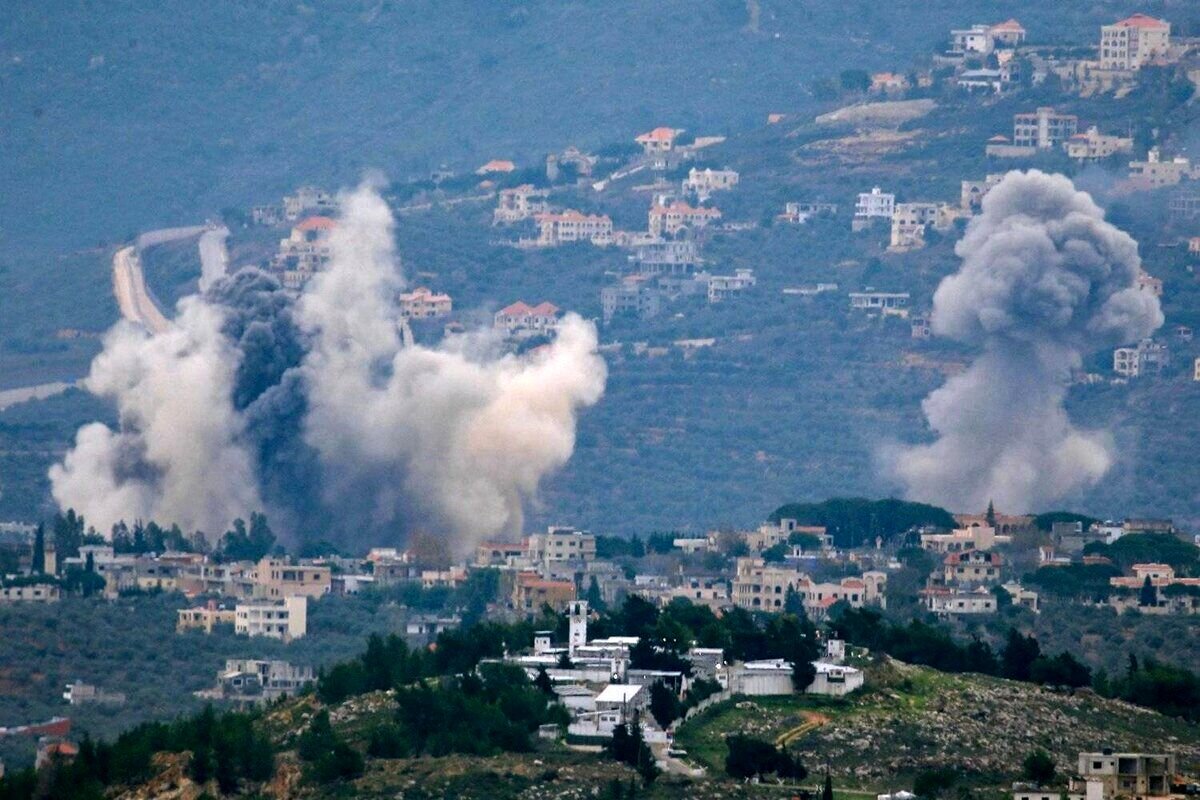
Ghalibaf stated that when Dahiyeh in Lebanon was struck, the United States was threatened with a response from their side. He added that around 2:00 AM, Trump posted a tweet instructing Netanyahu that he no longer had the right to strike Dahiyeh. He noted that this outcome was achieved through both the negotiations they were pursuing and their military power.
He emphasized that the Israeli regime had intended to respond to their operations, which led to subsequent operations being launched against them. He remarked that this made the enemy realize that when they spoke of negotiation, their sword was also ready.
Ghalibaf emphasized that he had warned the other parties that if they violated Dahiyeh in Lebanon, they would respond under any circumstances. He mentioned that he had conveyed this even as the agreement was taking shape and being finalized, though the other sides replied that such a response would be impossible.
He continued that their friends in the armed forces were prepared, held orders, and operated under the commander’s strategic wisdom, meaning everything was set. He stated that despite being repeatedly urged there not to strike, he maintained that they would certainly do so.
added that this perspective represented a culture that viewed negotiation as a form of struggle. He asserted that whatever they had wanted to achieve through military action, they had obtained several times over through negotiation, stating that the two were not comparable at all.
Ghalibaf added that the public had seen how Trump, the US President, announced a ceasefire by 2:00 AM not just in Dahiyeh but across the whole of Lebanon, speaking to Netanyahu using that exact same tone. He noted that this demonstrated how negotiation served as a method of struggle.
He clarified that the critical factor was reaching the goal. He mentioned that on that night, he had instructed the friends on the military front, with whom he was in constant contact, to remain prepared for the task.
However, he noted that a different outcome occurred and security returned. He pointed out that both that night and today, people had seen that more than 50 percent of the displaced population had returned to their homes.
Ghalibaf added that this represented the power of negotiation, which was itself a method of struggle. He remarked that while he possessed experience in diplomatic work, diplomacy was not his profession. He stated that their colleagues in the Ministry of Foreign Affairs carried out this work professionally, while he considered himself a combatant who pursued the path of diplomacy with the spirit and culture of a warrior.
Ghalibaf stated that every war could yield victories, but if those victories did not ultimately lead to a legal and political document and get officially recorded, they would provide no benefit, neither in history nor in consolidating battlefield achievements.
He continued that they had now emerged victorious in the 40-day war, and this achievement had to be shaped and consolidated within negotiations. He noted that this was precisely why they had been in the middle of negotiations stating that if the other side struck, they would strike back.
MNA