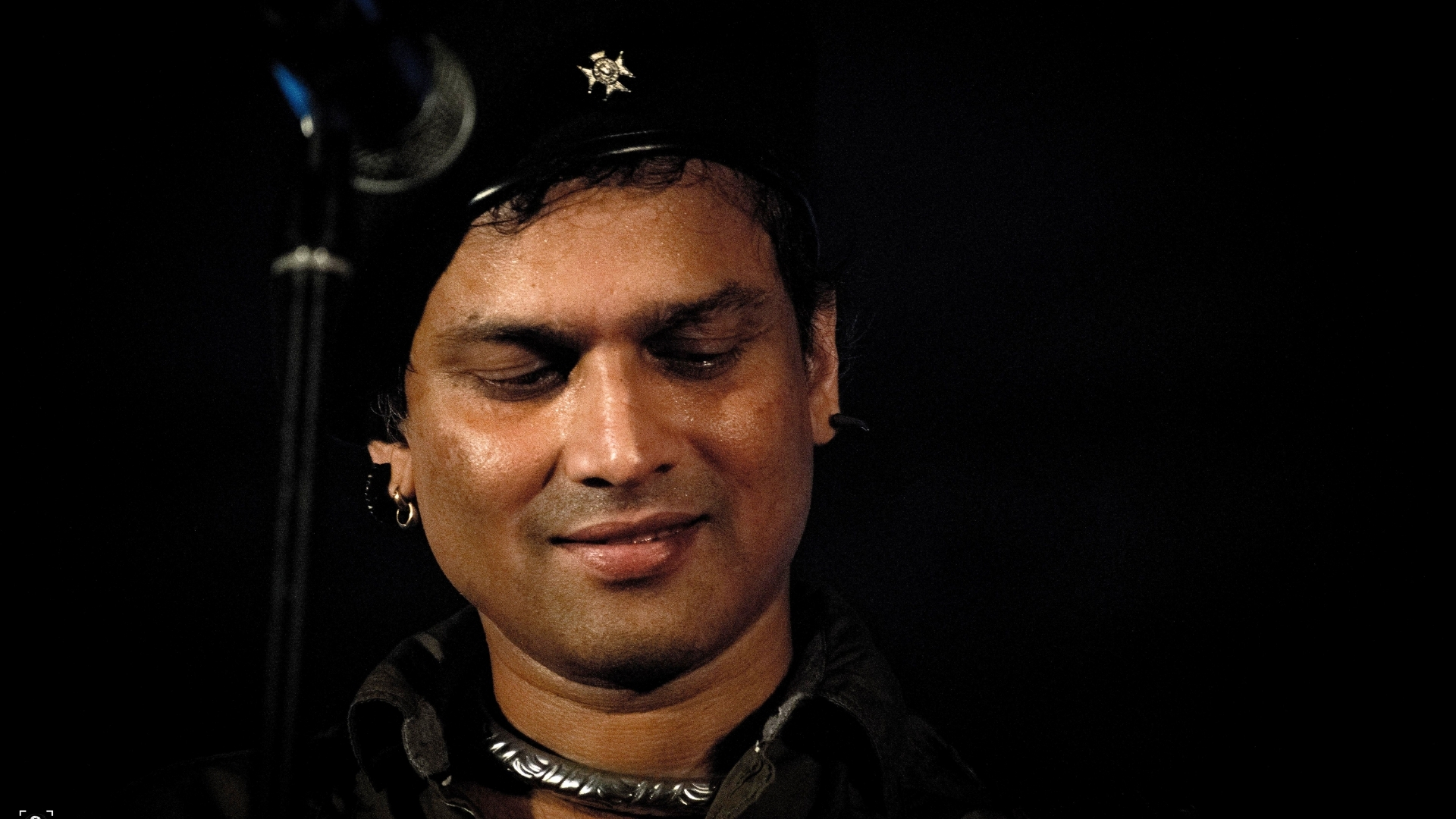
September 19 is no longer an ordinary date for Assam. It is etched into the collective memory of a people who, on that day in 2025, lost not merely a singer, but a voice, a conscience and, for many, an inseparable part of their identity.
I remember that afternoon vividly. I was in my classroom, teaching my students, when messages began arriving incessantly on my phone. At first, I wondered who was sending so many messages.
Then I saw the name: Zubeen Garg is no more. For a moment, I convinced myself that it had to be false news. Surely, this could not be true. But within seconds, social media and news organisations began reporting his untimely death in Singapore. I was left blank. Emotions overwhelmed me, but I held them back because I was standing before my students and could not explain what was happening within me.
A year has passed. On 19 September 2026, Assam commemorates his first death anniversary as Zubeen Divas. Yet even the phrase “death anniversary” feels inadequate. For millions, Zubeen Garg has not died.
He continues to live in the songs that accompany our memories, in the language that he made resonate beyond Assam, and in the collective consciousness of people who saw in him something far greater than a celebrity.
The scale of this remembrance reflects the extraordinary place he occupied in Assam’s cultural life, with people gathering at Zubeen Kshetra and across the state to remember him.
Across Assam, people gathered at his Samadhi Kshetra to pay their respects. Cultural programmes have been organised across districts, in government and private offices, shops, homes and streets.
People from different generations have remembered him. This extraordinary response raises a question that those outside Assam may find difficult to understand: how could a singer who remained so deeply rooted in a particular region command such an emotional following?
The answer perhaps lies in the fact that Zubeen never treated Assam merely as a market for his music. He belonged to it. He could have pursued a different trajectory. His talent could have taken him deeper into Mumbai and Bollywood. He could have become a commercially dominant national artist.
Instead, he chose to return, repeatedly, to his people. He chose the soil from which he had emerged over the comforts of becoming merely another successful name in the commercial entertainment industry. His remarkable quality was his ability to remain firmly and deeply rooted in Assamese society and culture while maintaining a vision that extended beyond Assam towards the wider world.
He once said, in essence, that he was a king and that a king never leaves his kingdom. Those words acquire a different meaning today. His kingdom was not defined by wealth, political office or institutional authority. It was his people. His music was not merely performed before them; it was lived with them.
But Zubeen’s contribution to Assam cannot be understood only through music. He was also a public voice. He spoke on social issues, expressed dissent, participated in public movements and was unafraid of controversy when he believed that something mattered to his people. Governments, regardless of political colour, could not simply ignore his voice.
There are moments in his public life that make this particularly clear. During the protests against the Citizenship Amendment Bill and, later, the Citizenship Amendment Act, Zubeen did not remain an observer. He joined artiste-led protests and repeatedly expressed his opposition.
In 2019, alongside other Assamese artistes, he helped launch a platform intended to counter misinformation surrounding the CAA and defended the right of people to protest against the legislation. He said that speaking against a law could not by itself be treated as sedition and described such protest as a democratic right.
He also said artistes would continue to protest regardless of whether the government was led by the Congress or the BJP.
That position became even more forceful during the protests of December 2019. Standing amid a deeply agitated Assam, Zubeen spoke openly about the pain of the people and said that he would not accept the CAA in Assam.
Whether one agreed with his political position or not is not the point here. What matters is that he chose to use the public space available to him to disagree openly with those in power. He did not treat his celebrity as a reason to remain silent; he treated it as a responsibility to speak when he believed that the concerns of his people needed to be heard.
His voice was not exercised only against governments or legislation. When violence threatened Assam, he used his influence to speak against those resorting to it. Following a grenade blast in Guwahati in May 2019, Zubeen wrote an open appeal to ULFA-I calling for peace and rejecting the killing of innocent people.
He argued that fear could not build a nation and that education, development, hard work and progress were the means through which Assam could move forward. He was arguing that the pursuit of rights and aspirations must not come at the cost of innocent lives.
This was also visible in quieter forms of his engagement with society. During Assam’s recurring floods, Zubeen and the Kalaguru Artist Foundation participated in relief collection drives for affected communities.
In one such drive, he personally led members of the foundation and his fan club through offices and business establishments in Guwahati to collect assistance for flood victims. His humanitarian work demonstrated that his idea of standing with people was not limited to making public statements. Sometimes it meant physically showing up when people were in distress.
Perhaps a striking example came just months before his death. When old trees around Dighalipukhuri in Guwahati were marked for felling for a proposed flyover, Zubeen joined citizens protesting the project.
The issue was not simply about trees; Dighalipukhuri carries environmental, historical and cultural significance for Guwahati. Zubeen questioned whether development should come at the cost of something that belonged to the city’s collective memory and environment. He joined ordinary citizens in challenging the decision. The protests continued, and the government altered the proposed alignment so that the flyover would terminate before reaching Dighalipukhuri.
These moments show that Zubeen’s idea of being a public figure was not confined to entertainment. He spoke when government policy troubled his people. He spoke when violence threatened ordinary people. He showed up when floods devastated communities.
He stood with citizens when they believed their environment and cultural heritage were at risk. His interventions were sometimes controversial, sometimes emotional and sometimes blunt, but they were rarely indifferent.
This aspect of his legacy deserves particular reflection from the perspective of constitutional democracy. The Constitution of India guarantees, under Article 19(1)(a), the fundamental right to freedom of speech and expression.
The right is not merely a licence to speak when our opinions are convenient or popular. Its democratic significance lies precisely in the protection of dissent, criticism and uncomfortable voices. A democracy does not remain healthy merely because citizens are permitted to speak; it remains healthy when citizens are willing to speak when speaking matters.
Perhaps this is where Zubeen’s legacy becomes larger than music. He demonstrated that a public figure can use popularity not merely to accumulate influence but to amplify the concerns of others.
His voice could have been used exclusively for entertainment. Instead, he frequently used it to speak about the society around him. He showed that popularity carries a responsibility: to stand with people when they need to be heard.
That trust cannot be manufactured through publicity or commercial success. It is earned over years of belonging. Zubeen Garg’s greatest legacy, therefore, may not be any particular song. It may be the courage to remain connected to one’s people and to speak when silence would have been easier.
As we remember him today, we should not merely mourn the voice that has fallen silent. We should ask ourselves what we will do with the freedom that he exercised so fearlessly. Article 19(1)(a) gives us the constitutional space to speak. Democracy gives that speech its social purpose. But rights acquire meaning only when citizens have the courage to exercise them responsibly.
If Zubeen Garg taught Assam anything, it is that a voice becomes powerful not when it speaks for itself, but when it gives expression to those who struggle to be heard. His voice may no longer come from a stage.
But perhaps the most fitting tribute to Zubeen Garg is to ensure that it continues to echo through us. To speak. To question. To stand with one another. And, above all, never to allow ourselves to be silenced.
Views expressed are that of the author and do not reflect EastMojo’s stance on this or any other issue. The author is Assistant Professor, School of Law, Manipal University Jaipur.
Also Read: Moi Bhagora Nai: A year since Zubeen
Shubham Kashyap Kalita
Reporter, EastMojo
You just read a story that took days to report. Help us keep our reporters on the ground in the Northeast.
For Rs 83/month – less than a cup of coffee
Ad-free reading, support and keep important stories alive
Become a Member
OR
Support once (any amount)
₹199
Recommended ₹499
₹799
Other Amount
or
Scan to pay via UPI