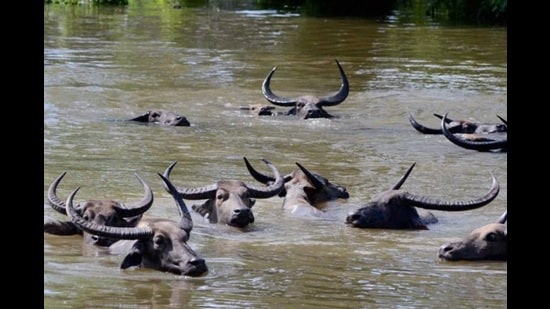
Uttar Pradesh plans to reintroduce the wild water buffalo, also called the Asiatic wild water buffalo, after a gap of 117 years since the last of the bovine were documented.
The wild water buffalo (Sourced)
“The reintroduction of the wild water buffalo could prove to be a significant conservation initiative aimed at reviving Dudhwa’s historic biological heritage. Much like the Manas region in Assam, Dudhwa’s landscape features vast grasslands, wetlands, marshy habitats, and a suitable forest ecosystem, all of which have the potential to provide a favorable habitat for the wild water buffalo,” said Vemuri.
The wild water buffalo is a crucial species within the grassland ecosystem. Through grazing, it helps maintain the balance of grasslands and provides suitable habitats for various small herbivores and wildlife dependent on these ecosystems, thereby strengthening ecological balance.
“We have proposed that the Wildlife Institute of India (WII) conduct a feasibility study for the reintroduction of wild water buffaloes in Dudhwa,” said Anuradha Vemuri, principal chief conservator of forests (wild life), Uttar Pradesh.
WII scientists Dr Somrat Mandal and Dr Vibhas Panda commenced a feasibility study in Dudhwa on April 26. Based on discussions with the scientists concerned, the study and a habitat assessment report will soon be submitted to the Uttar Pradesh forest department. This will pave way for further necessary action.
The wild water buffalo introduction is powered by an earlier such attempt with the rhinoceros reintroduction programme in Dudhwa that was a successful example of wildlife conservation in Uttar Pradesh. Rhinoceroses were reintroduced to Dudhwa from Assam and Nepal during 1984–1985, with the first batch released into the park on April 20, 1984. At present, there are more than 50 rhinoceroses in the Dudhwa region.
“The Terai region of Uttar Pradesh, particularly the Dudhwa area, was historically known for the presence of the wild water buffalo. At one time, this species was found in significant numbers in the grasslands and wetland areas of Dudhwa.
“However, due to excessive hunting, human interference, and habitat changes over time, their population steadily declined, eventually leading to their local extinction. Wild water buffaloes were last documented in Gorakhpur in 1909,” said Vemuri.
Currently, the wild water buffalo is entirely absent from the Dudhwa region. In India, the largest population of wild water buffaloes is found in the state of Assam, with approximately 4,000–4,500 head inhabiting areas such as Kaziranga, Manas, and Orang. Additionally, a small population—estimated at around 50–70—remains in the Udanti-Sitanadi region of Chhattisgarh. About 400–500 wild water buffaloes are also found in the Koshi Tappu region of neighbouring Nepal.
This year, wild water buffaloes have been reintroduced into Kanha Tiger Reserve after decades of local extinction. Four buffaloes, one male, three females, were translocated from Kaziranga National Park and Tiger Reserve in April.