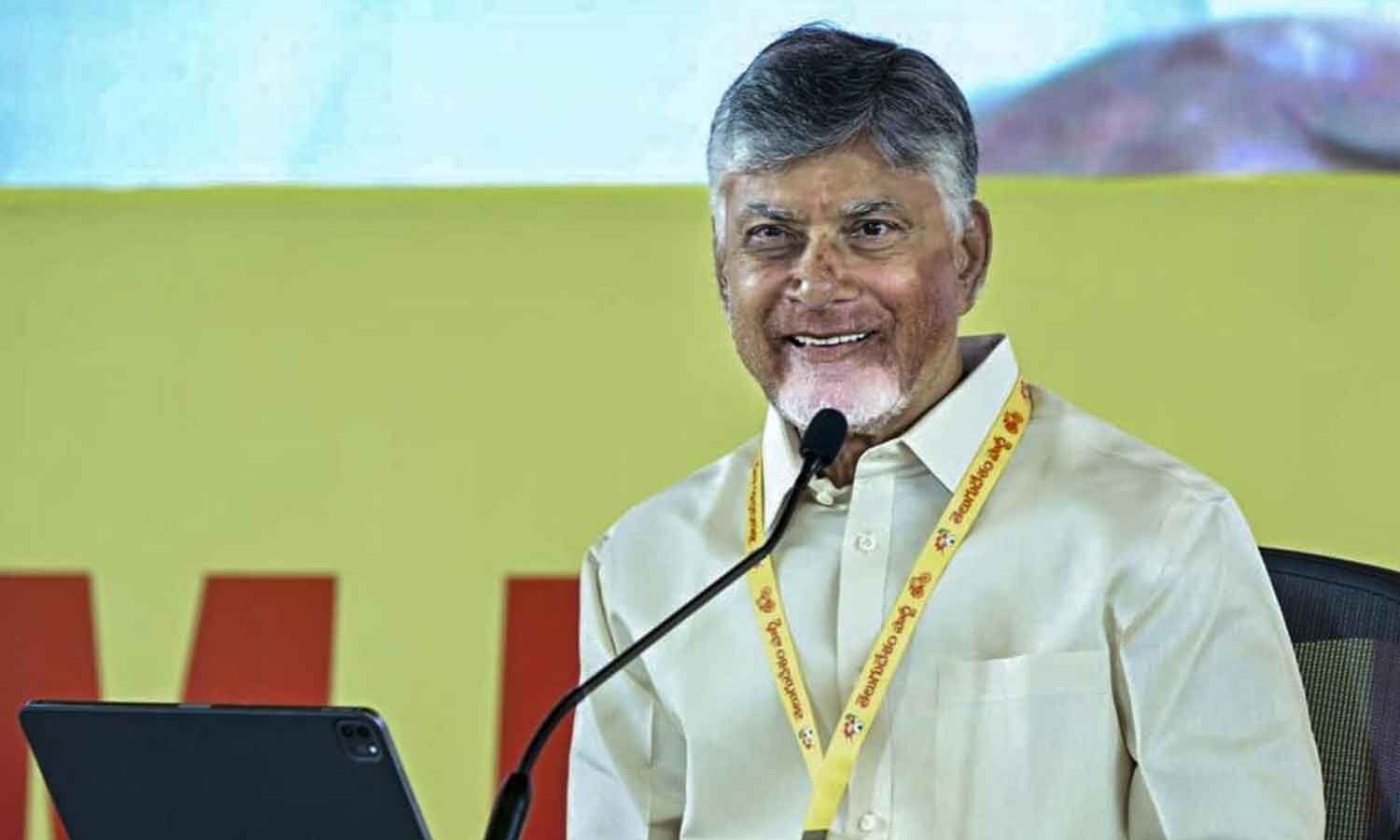
Amaravati: Politics in Andhra Pradesh took a sudden turn three years ago when TDP supremo N Chandrababu Naidu was arrested by the YSRCP government led by Y S Jagan Mohan Reddy.
My very first reaction was that this would be the beginning of the end of the YSRCP government in the State. Many did not agree with me and felt that I was being partisan towards the TDP. But ultimately, my prediction proved correct.
As one who closely monitored the developments right from the time he was arrested until his release 53 days later, I can say with certainty that it was a major ordeal that he had to undergo and that he was subjected to many hardships. Though he was a VIP prisoner in judicial custody and was entitled to certain privileges, he was denied many of them. No hot water was provided for his bath; even mosquito repellent was not given, and he was not allowed to bring his medicines from home. Even a mulakat with family members was not an easy task.
All his appeals for bail were rejected by the lower courts.
But why was he arrested? Naidu was arrested on September 9, 2023, in Nandyal in connection with the alleged skill development corporation scam. Police officers did not even produce an arrest warrant at the time of his arrest. He was made to travel in a rickety vehicle throughout the day from Nandyal to Vijayawada and was later sent to Rajahmundry jail.
The TDP and other political parties felt that this was nothing but a political vendetta unleashed by the YSRCP government. It may be recalled that earlier, YSRCP members used to insult him in the Assembly and even made highly disparaging and condemnable remarks against his wife.
His arrest triggered widespread protests across the State and became the main political flashpoint for the 2024 Assembly elections. In fact, politics took another major turn when Jana Sena president Pawan Kalyan met Naidu in jail and, soon after coming out, announced an alliance with the TDP. This gave greater energy and vigour to the rank and file of the TDP. They later went to the polls with the slogan, “Nijam Gelichindi” (Truth has prevailed).
The general expectation was that soon after coming back to power, Naidu would respond with revenge. But Naidu said politics should not be reduced to a cycle of retaliation. He said the law would take its own course and laid emphasis on good governance and putting the State on the fast track of development with the help of the Centre.
His latest recollection also brings into focus the larger issue of the use of investigative agencies and the criminal justice system in political disputes. While no politician should be above the law and legitimate investigations must be pursued, political parties have often been accused of selectively targeting their opponents.
Though some in the party still feel that the government has been lenient towards Jagan, Naidu feels that the need of the hour was to restore all institutions and put the State back on the track of development, which had gone for a toss during the previous regime. However, Naidu feels that his jail experience will always remain an important chapter of his political career and that it taught him many things.
Three years after his arrest, Naidu’s political test is not merely how he remembers the ordeal, but how he responds to it in power. The TDP-led NDA government would certainly keep recalling this during its campaign in the run-up to the 2029 general elections.
A Journey of Three Decades Time passes faster than we realise. What feels like a journey that began only yesterday has today grown into more than three decades of a meaningful and fulfilling life devoted to education, journalism, and the empowerment of young minds. My professional journey began with journalism training in New Delhi in 1979. I went on to work as an independent journalist, drawing on my fluency in both English and Telugu. Over the years, I have edited and worked on Telugu articles in both languages, an experience that strengthened my command of language and sharpened my understanding of society, people, and contemporary issues. Yet, my principal profession and enduring passion have always been teaching. My decision to become a teacher was not merely a career choice—it was a calling. Teaching offered me the rare privilege of inspiring young minds, guiding them through their formative years, and making a lasting difference in their lives. I found immense satisfaction in simplifying complex concepts, nurturing curiosity, encouraging independent thought, and building confidence among students. Every moment in the classroom—every question, every moment of discovery, and every spark of understanding—reminded me why I had chosen this path: to empower young people through knowledge, values, and essential life skills. My teaching career began at the grassroots level as a Montessori teacher and gradually progressed to the position of Vice Principal. I had the opportunity to work in reputed educational institutions, including Dilsukhnagar Public School in Hyderabad, where I shouldered both teaching and administrative responsibilities. Although I have always considered myself, at heart, a teacher, my administrative experience enabled me to understand and contribute to the education system from a much broader perspective. For my students, I have always tried to be an approachable and dependable presence—someone they could turn to not only for academic support, but also for guidance and emotional encouragement. At the same time, I developed a reputation as a firm disciplinarian who believed that integrity, fairness, responsibility, and discipline were fundamental to education. I was also consistently appreciated for maintaining clear communication with parents and staff and for ensuring that examinations and other academic processes were conducted with transparency, fairness, and efficiency. As my career progressed, however, I began to feel that academic education alone was not enough. This realization led me to work more closely with students following the SSC and CBSE curricula, while consciously bringing life-skills education into my teaching. I came to understand that education becomes truly meaningful when it prepares children not merely to pass examinations, but to face life. Teaching emotional resilience, self-reliance, social awareness, communication, decision-making, and other practical life skills often had a deeper and more lasting impact than academic achievement alone. I saw how these skills could help students navigate challenges with greater confidence, maturity, and responsibility. My academic background provided a strong foundation for this approach. My degree in Psychology from the University of Madras helped me develop a deeper understanding of young people’s minds, their emotional needs, and the influence of their family and social environments. My M.A. in Telugu with First Class from Osmania University.
Read More