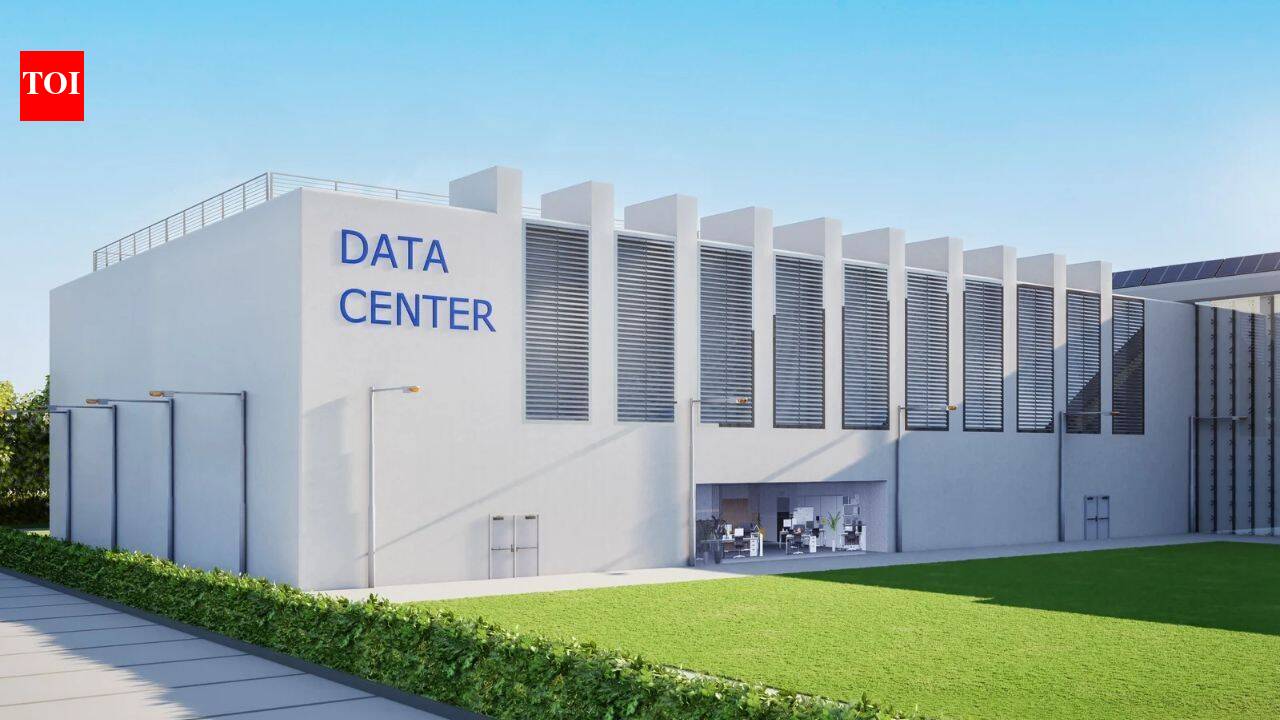
Representative image from Canva Texas homeowners near Westlake challenged an 88 acre data centre planned close to their houses, fearing noise, drainage problems, and environmental effects. A settlement between developer PowerHouse, the City of Keller, and affected residents offers nearly $1.9 million and new protections, but it allows the project to move forward, according to NBC 5 Dallas-Fort Worth and the Town of Westlake.The facility, planned near the northeast corner of U.S. 377 and Westport Parkway, would include four buildings totaling about 1.1 million square feet. The site sits roughly 500 feet from some residents’ backyards, which is why the project became a flashpoint for the Lakes of Marshall Ridge neighbourhood.
Why residents pushed back
Residents in Keller’s Marshall Ridge area worried that the data centre would bring noise, traffic, and environmental disruption too close to their homes. Their concerns were strong enough to become the basis of a lawsuit challenging the project.The proposed site is in Westlake’s commercial and industrial area, but its proximity to residential backyards made the issue personal. For people living nearby, the question was not whether data centres are useful, but whether one could operate responsibly at that distance.The dispute also reflected a broader tension between economic development and quality of life. Westlake leaders saw the project as a major revenue opportunity, while residents saw a risk to their neighbourhood.
What the settlement provides
The settlement, signed on November 5, requires PowerHouse to pay nearly $1.9 million within 45 days. The payment includes $1.5 million for a noise mitigation fund, $300,000 for fire protection, and $76,000 to cover Keller’s legal and consulting costs.The agreement also sets specific limits on how the facility can operate. Noise is capped at 49 decibels overnight between 7 p.m. and 7 a.m., and 56 decibels during the day, measured at residential property lines, as per the report.Other protections include a taller berm, longer sound monitoring, and restrictions on diesel generator testing. The settlement also moves construction staging farther away from homes.
How the project will be managed
The developer must increase the proposed berm from 8 feet to 10 feet. Sound monitoring is extended from one year to three years, giving residents a longer window to see whether the limits are being met.More than half of the trees in the buffer must be evergreens, with replacements required for trees that die. Diesel backup generators must meet EPA Tier 4 emissions standards, and testing is restricted to between 10 a.m. and 4 p.m.These requirements are meant to reduce the impact on nearby residents. They do not eliminate the project, but they create a framework for how it must operate.
What Westlake gains
Westlake Mayor Kim Greaves said the data centre would generate about $5 million a year for the town over its first 10 years. That would increase the town’s revenue by about 14 percent, according to NBC 5.The Town of Westlake says the project is expected to generate roughly $5 million annually for the first decade and about $7 million annually thereafter. The town describes this as a long term source of revenue for services, infrastructure, and future priorities.The settlement also makes clear that Westlake taxpayers will not pay for the agreement. All settlement related obligations are covered by PowerHouse, and the town’s attorney fees were fully reimbursed.
Why the project still divides people
Even after the settlement, the project continues to draw mixed reactions. During public comment, some residents expressed frustration with the town’s handling of the development, while others argued that data centres are an important part of growing infrastructure.One resident said the town had never wanted people to know the truth about what was going on. Another described the project as irresponsible, calling it a big stinking pile of BS.Supporters took a different view. They argued that communities, counties, and states cannot fear information processing infrastructure, and that power and water concerns are solvable.
What happens next
With the settlement in place, the project has a clear path forward. The Westlake Town Council approved the development agreement on November 12, clearing another hurdle after months of legal disputes and public pushback.The agreement does not erase the concerns of nearby residents. It does, however, give them specific protections and a financial commitment from the developer.For Westlake, the project represents a major economic opportunity. For the residents closest to the site, it represents a compromise that allows the data centre to proceed while trying to limit its impact.