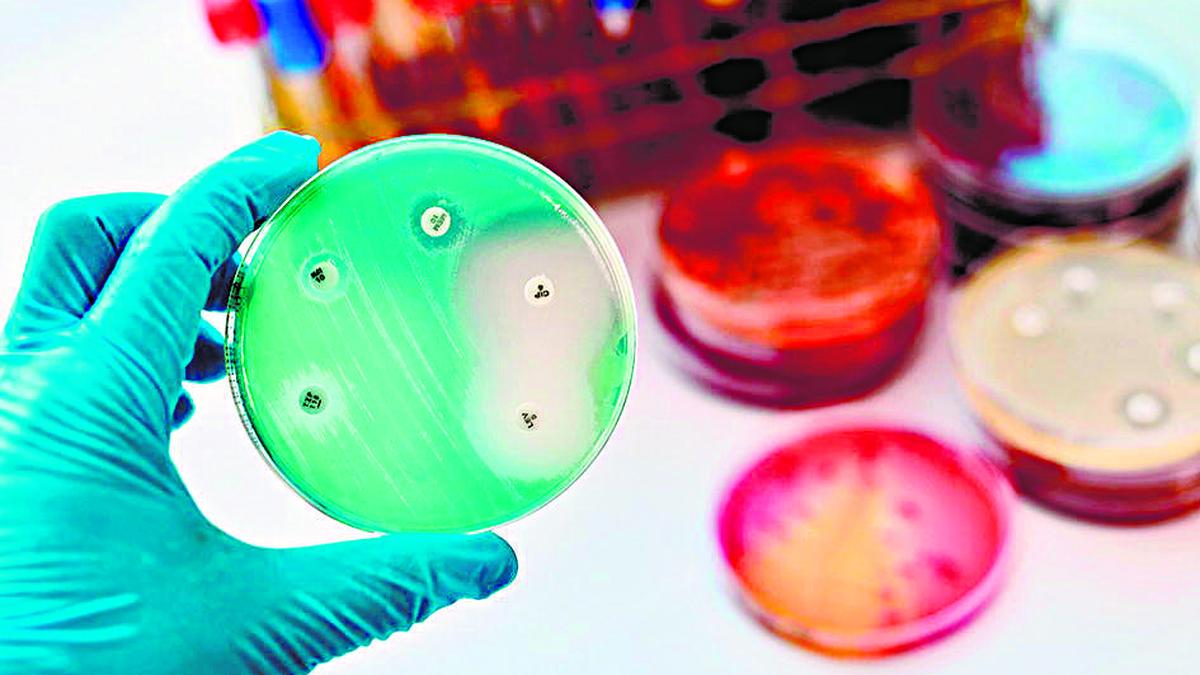
Antimicrobial resistance (AMR) is no longer just a problem of hospital-acquired or health care-associated infections. Clinicians in Keralam are worried that the resistance profile of primary antibiotics used to treat even acute diarrhoeal diseases like Shigellosis is going up, which has important implications for antibiotic use in the State.
Data from Keralam’s KARS-NET (Kerala Antimicrobial Resistance Surveillance Network), one of the strongest AMR surveillance systems in the country and which has been tracking the AMR profile of Shigellosis since 2023, says that the resistance profile of primary antibiotics used to treat the infection is growing.
Increased resistance
Ciprofloxacin, which continues to be included in national guidelines for treatment of Shigella dysentery and which used to be an important treatment option for bacterial dysentery, has a resistance profile of 96% and can no longer be relied upon for empirical treatment of Shigellosis.
What is worrying is that pathogenic resistance to the next available drug, Ceftriaxone, a third-generation Cephalosporin class antibiotic, has also gone up to 36% as per KARS-Net data.
“Till now, community-acquired AMR had not been a problem in the State. If you, as a citizen, have never been worried about AMR, you should be now, because it is showing up right at your doorstep. Our arsenal of effective and affordable antibiotics for common infections in the community is shrinking,” points out R. Aravind, head of infectious diseases, Government Medical College, Thiruvananthapuram, who is also the convener of KARS-Net.
Most acute diarrhoeal diseases are self-limiting and do not really require treatment with antibiotics. Shigellosis, too, is largely self-resolving with proper rehydration but in vulnerable populations (children below five years and the elderly), the infection can lead to severe dehydration, sepsis and neurological complications, requiring the use of antibiotics.
Shigella is primarily an enteric/community pathogen, which spreads from person to person through contaminated food and water and is thus a sentinel organism for detecting what is happening to AMR in the community.
“Clinicians have been using Ceftriaxone for treating Shigellosis in patients who get admitted to hospital. But the clinical implication of growing resistance of Shigella to this drug is immense. For Shigellosis patients with severe dysentery going into septic shock and multiorgan failure, it is absolutely important that the correct antibiotic is administered within an hour and that it is 100% sensitive. This means that for such serious patients, we can no longer depend on Ceftriaxone and have to go for high-end drugs like Meropenem which belongs to the Carbapenem class, widely considered the last-resort antibiotics,” explains Dr. Aravind.
Major outbreak
Shigellosis is reported sporadically from all districts in Keralam every year. But the State reported one of the major outbreaks ever in June this year, when 225 cases and six deaths were reported from Kozhikode, Malappuram and Wayanad districts.
The fact that loss of lives was unusually high this year should be read alongside the information about the rising AMR profile of Shigellosis, clinicians warn, even when there is no exact data to say that AMR led to the death of patients.
Emergence, a decade ago
Keralam documented multidrug-resistant Shigella and ESBL-producing strains more than a decade ago, signalling the emergence of Ceftriaxone resistance. ESBL-producing strains are bacteria that release Extended Spectrum Beta Lactamases enzymes, which can break down important third-generation antibiotics, rendering them ineffective.
The 2018 study published by clinicians in Government Medical College, Alappuzha, which studied the antibiotic susceptibility pattern of Shigella isolates (2011-2016) had reported that 91.6% of the isolates were multi-drug resistant and that eight of the isolates were resistant to Ceftriaxone/Cefotaxime. It had also reported that five isolates produced ESBL enzymes, making third-generation Cephalosporins less effective. This was one of the first studies from Keralam that had given a clear indication that AMR was no longer confined to just the older drugs.
What it means for patients
Rising drug resistance means more treatment failures, longer hospital stays, greater use of high-end antibiotics and increased health-care costs, apart from the threat that more drug-resistant pathogens might emerge in the community.
“Most cases of acute diarrhoea do not require antibiotics. But even when antibiotics are genuinely indicated, particularly for severe bacillary dysentery caused by Shigella, our treatment options are steadily narrowing. This is certainly a wake-up call for everyone that we need to be very careful about using antibiotics,” a senior health official points out.
Published – August 23, 2026 07:00 am IST