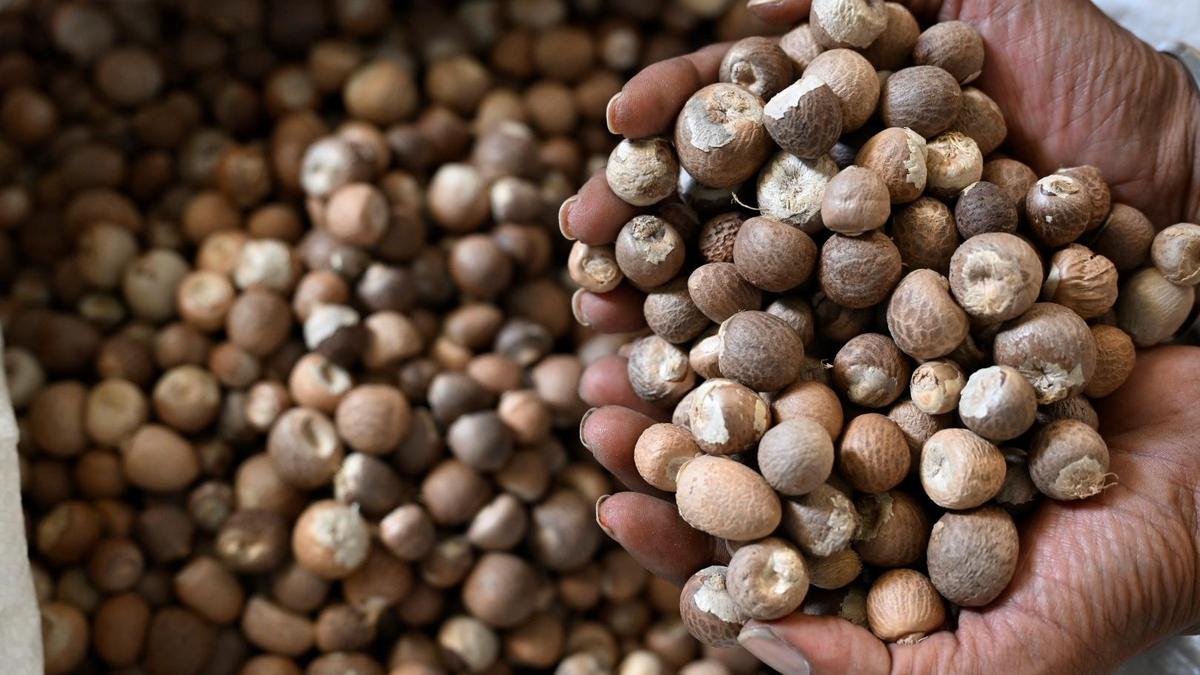
Food and Drug Administration officiaks of Maharashtra have stopped 50 trucks carrying arecanut from Karnataka.
| Photo Credit: GOVARTHAN M
The Federation of Karnataka State Cooperative Arecanut Societies has expressed concern that the areca trade could come to a standstill in Karnataka following recent action by the Food and Drug Administration in Maharashtra, where officials stopped over 50 trucks carrying arecanut from Karnataka.
The FDA officials seized the trucks and sent samples to laboratories for testing. Traders allege that the FDA officials have misconstrued the traditional use of chogaru—a natural coating applied during processing—as a chemical additive and have wrongly classified mechanically dehusked areca as sub-standard.
Federation chairman and former minister Araga Jnanendra told a press conference on June 24 that the situation has alarmed both growers and traders. “The entire areca trade may come to a halt if this matter is not resolved,” he said. Federation representatives have approached Maharashtra’s Chief Minister on the issue. “We have appealed for the release of all seized trucks and are hopeful the matter will be resolved soon,” Mr. Jnanendra said.
He further assured growers that the federation would support them and fight for their welfare. “The growers need not worry. The federation will always stand with them,” he added.
Areca cultivation in Karnataka
The State accounts for over 70% of the country’s total areca output.
The State’s areca cultivation spans 6.75 lakh hectares
Production averages 10 lakh tonnes annually
Areca is cultivated across nine major districts: Shivamogga, Uttara Kannada, Chikkamagaluru, Dakshina Kannada, Davangere, Chitradurga, Kodagu, Hassan, and Tumakuru
Shivamogga and Uttara Kannada account for the bulk of cultivation in the State
Most areca is exported to northern India, with Uttar Pradesh, Gujarat, Rajasthan, Madhya Pradesh, and Haryana emerging primary consuming states
Gutka manufacturers represent the largest buyer category
Quality under the lens
Areca is a major commercial crop in the districts of Shivamogga, parts of Dakshina Kannada, Uttara Kannada, Chikkamagaluru and Davangere. In recent years areca has attracted growers of Chitradurga, Tumakuru and other districts as well. Lakhs of farmers’ families are depending on the crop.
Trade experts suspect the seizures may be linked to poor quality supplies. In the past, many consignments of areca from Karnataka have been rejected by traders citing quality concerns.
After harvest and dehusking, areca kernels are boiled and natural precipitates are added before the nuts are dried. Areca nuts are then graded into five categories—Nuli, Hasa, Rashi, Bette and Gorablu—based on quality. Nuli nuts command the highest prices, while the Gorablu variety fetches lower prices.
Sources in the trade suspect that some processors use chemical additives during processing to improve the colour and appearance of nuts so they can be sold at premium prices. The FDA’s concerns may stem from such practices and the potential health hazards posed by these chemicals.
Impact on price
The Maharashtra FDA action has already affected areca prices in Shivamogga. Within days, areca prices have fallen by approximately ₹2,000 per quintal. “The rashi variety was trading at around ₹53,000 per quintal last week. Now it is around ₹50,000 per quintal,” said Prashanth, a trader at the APMC market in Shivamogga. If the matter remains unresolved, prices are unlikely to recover, he added.
Published – June 24, 2026 12:15 pm IST