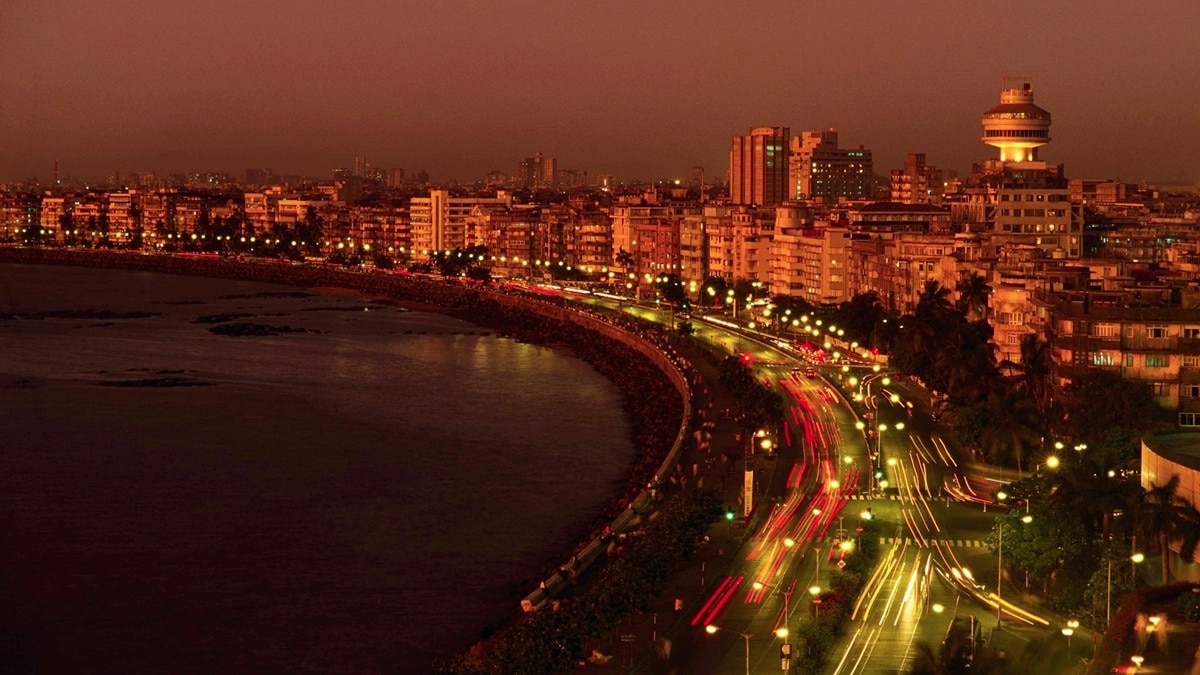
Mumbai’s wait for the monsoon has become a countdown.
The seven reservoirs that supply drinking water to the city held just 9.34 per cent of their combined capacity on June 19, according to the Brihanmumbai Municipal Corporation. The monsoon has stalled for eight straight days, and the reservoirs that sustain the city are continuing to retreat.
The advance of the southwest monsoon across India in 2026
According to the BMC’s Hydraulic Department, combined reservoir storage has fallen to 9.34%, the lowest for this date in the past three years, compared with 12.27% last year and 10.24% in 2024.
Sentinel-1 radar imagery shows Tansa reservoir’s shoreline retreating between June 2025 and June 2026
Satellite radar imagery analysed by India Today offers a view of the visible retreat. The OSINT team compared radar satellite images from the European Space Agency’s Copernicus programme, taken in early June 2025 and June 2026. The images were analysed to identify water and trace changes in the visible shoreline.
The comparison shows a contraction in the surface-water extent of several reservoirs, with water retreating from shallow edges and exposing parts of the reservoir bed. The imagery does not measure the volume of water, but it independently illustrates the decline as recorded in the BMC’s reservoir data.
Upper Vaitarna is in the most severe operational condition. Its water level has fallen below the lowest drawdown level, the point below which water is not ordinarily counted as useful live storage. The BMC therefore records its available useful stock as zero.
Tansa is the next most depleted reservoir, with only 3.87 per cent of its useful capacity remaining, down sharply from the same period last year.
Sentinel-1 radar imagery shows Bhatsa lake’s retreating between June 2025 and June 2026
Bhatsa, the largest source in Mumbai’s water network, accounted for 8.63 per cent. Its size, however, means that it still held 61,888 million litres—nearly 46 per cent of all the useful water available across the seven-reservoir system.
Vihar had the highest percentage remaining, at 41.63 per cent, but its relatively small capacity meant that it contributed only about 8.5 per cent of the current stock. Tulsi, another small reservoir, was at 22.53 per cent and held 1,813 million litres. Middle Vaitarna was at 10.34 per cent.
Mumbai receives water from Bhatsa, Upper Vaitarna, Middle Vaitarna, Modak Sagar, Tansa, Vihar and Tulsi. Four are controlled by the BMC, while three belong to the Maharashtra government, which allocates water to the city.
The reservoirs did not decline overnight. They follow a predictable annual cycle: rainfall fills them during the monsoon, and the stored water is gradually drawn down over the following months. By the end of summer, levels are expected to be low. Rainfall in June normally begins to slow the decline and eventually reverses it.
This year, that replenishment has not begun.
The southwest monsoon reached parts of southern Konkan and southern Madhya Maharashtra on June 8, but its advance across the rest of the state stalled. From June 12 through June 19, the western section of the monsoon’s northern limit remained fixed near Harnai, Solapur and Hyderabad.
The India Meteorological Department attributed the slowdown to a combination of unfavourable conditions: the absence of a strong surge from the Arabian Sea, weakened southwesterly winds, reduced moisture transport from the western Indian Ocean and the absence of a sufficiently strong low-pressure system or offshore trough along the western coast.
The department said conditions could become favourable for the monsoon to advance into more parts of Maharashtra and several eastern and central states around June 23.
For Mumbai, however, rainfall within the city will not be enough. What matters is sustained rain over the distant catchments that feed the seven reservoirs.
Until that happens, nearly four billion litres of water will continue to leave the system each day, while very little flows back in.
– Ends
Published By:
bidisha saha
Published On:
Jun 19, 2026 18:57 IST