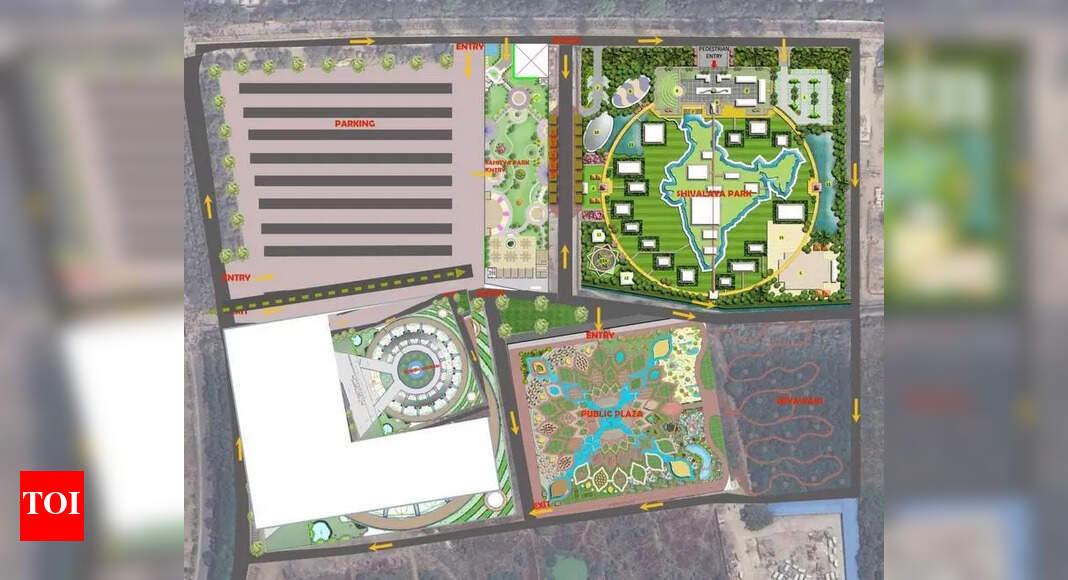
Prayagraj: In a unique blend of cultural traditions, the Sangam City will host a public plaza park that combines the essence of Japanese Shinto culture with India’s Sanatan heritage. This innovative project, to be built on the picturesque banks of the Yamuna River, promises to be a haven of tranquillity and harmony, reflecting the shared values of both cultures.The park will also incorporate Japanese traditions such as tea ceremonies and ikebana, alongside Indian art, music, yoga, and temple architecture. The park will be divided into five zones, with highlights such as a Zen Garden inspired by themes of peace, meditation, and self-reflection, as well as a Miyawaki forest.The construction will be carried out by the urban development department, with CNDS as the implementing agency. Rohit Kumar Rana, project manager, CNDS, said that the park will be constructed on three hectares of land near Shivalaya Park in the Arail area on the banks of the Yamuna river.He added, “An assessment has been sent to the Prayagraj Municipal Corporation and will utilise architectural symbols shared by Indian and Japanese cultures.”This initiative is part of the city’s growing reputation as a hub for spiritual and cultural parks, following the development of Shivalaya and Sahitya Parks in Arail area during the Maha Kumbh preparations, Rana said. He said, “The park will have five zones. Each corner will reflect the shared values of Japanese Shinto culture and Indian Sanatan culture. A Torii Gate, a symbol of Shinto culture, will be constructed in place of the entrance gate. Besides, a Japanese garden will be developed within the park, along with a Miyawaki forest. Despite thousands of kilometres of distance and language differences, officials said India’s Sanatan culture and Japan’s traditional Shinto culture display striking similarities. Both civilisations consider nature divine, self-restraint the highest value, and peace the foundation of life.The art of both countries is not merely decorative, but a medium of self-discipline and spiritual practice. Harmony, peace, and universal brotherhood are the common messages of India’s “Vasudhaiva Kutumbakam” (the world is one family) and Japan’s “Wa” (harmony) philosophies, which will also be reflected in the symbols to be installed at the park.