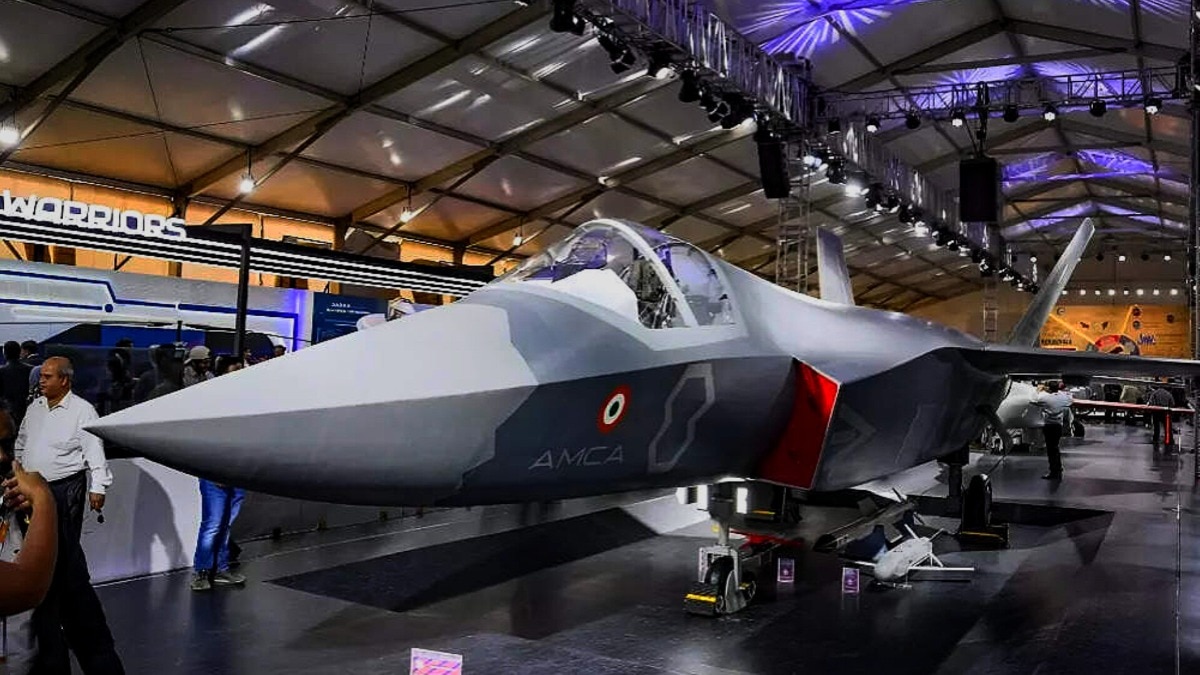
India will soon step up its push for next-generation weapons and military platforms, with a Parliamentary Committee recommending a dedicated budget head for research into “critical and latest technologies”, including hypersonic missiles, sixth-generation fighter jets and supersonic glide weapons.
The recommendation was made to ensure that funding for these projects is not delayed and that their development is taken up on a priority basis.
In its report, the Committee noted that the Defence Research and Development Organisation (DRDO) is working on next-generation military technologies amid rapid advances in defence systems worldwide.
The panel said Advanced Medium Combat Aircraft (AMCA) is being developed as a fifth-generation fighter, while work is also being planned for sixth-generation fighter aircraft. These aircraft are expected to be network-centric and integrated with other military platforms and ground-based systems.
A key focus area identified by the Committee is the development of Supersonic Glide Missile systems, which combine supersonic or hypersonic speeds with the ability to glide and manoeuvre after launch.
According to the report, these characteristics make such weapons extremely difficult to detect and intercept.
The panel recommended adequate funding, time-bound development milestones and testing infrastructure for research into glide missile technology. It said indigenous development in the field would be important for the nation’s preparedness as warfare increasingly relies on networked systems.
The Committee said a dedicated allocation for critical and emerging technologies would help avoid funding bottlenecks and ensure timely implementation of strategic defence projects.
The report also noted that developing capabilities in these areas would support future platforms, including next-generation combat aircraft and unmanned systems.
Meanwhile, the Ministry of Defence told the Committee that DRDO’s work on hypersonic technologies is progressing.
The ministry said hypersonic weapons and missiles travel at speeds of Mach 5 or more and at low altitudes. “They are also highly manoeuvrable making them nearly impossible to intercept with current defence systems,” the ministry said.
The government further said such weapons can reduce an adversary’s decision-making and reaction time, allow attacks from unexpected directions and use high kinetic energy to penetrate hardened targets.
– Ends
Published By:
Nitish Singh
Published On:
Aug 8, 2026 04:22 IST