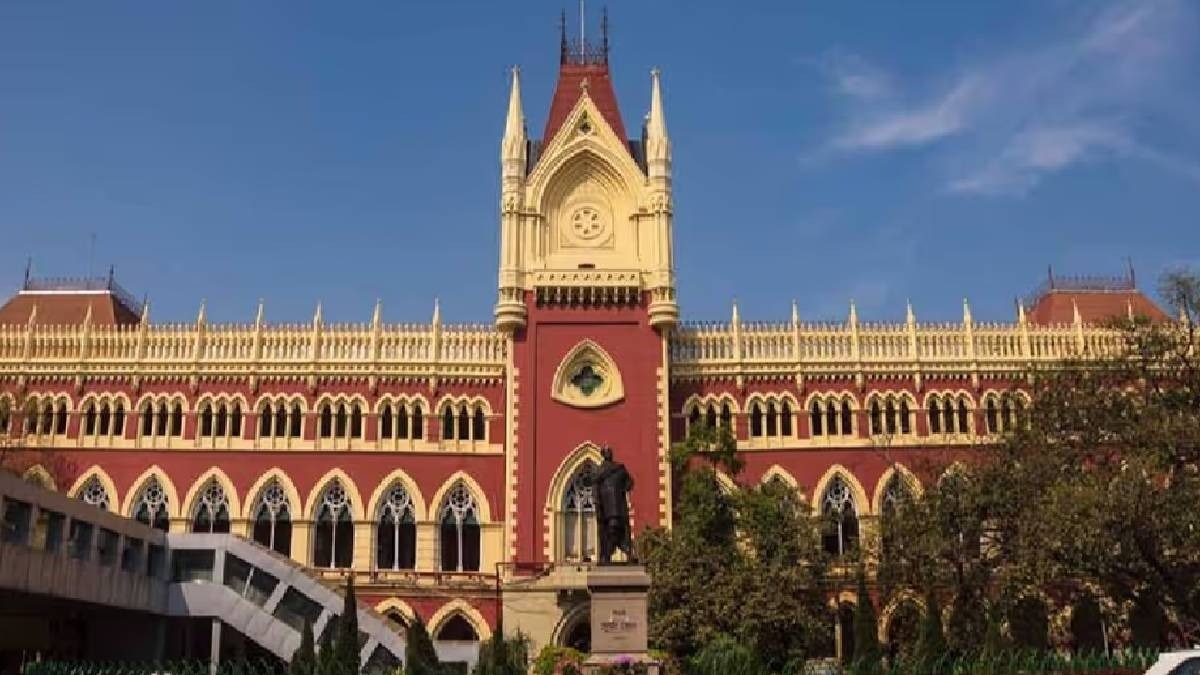
The Calcutta High Court has rejected a petition by the Communist Party of India (Marxist), seeking protection against an attempt by the Kolkata Municipal Corporation and the police to remove its temporary bookstall near Jadavpur Coffee House during Durga Puja.
Justice Partha Pratim Roy ruled that the party could not seek judicial protection against the removal of the stall without first proving that it had the required permission to operate it, reported Live Law. As no such approval had been granted, the court held that the CPI(M) was not entitled to the relief it had sought.
The CPIM’s Jadavpur 1 Area Committee had approached the High Court after municipal officials arrived with a large police contingent and a bulldozer at around 6.30 pm on October 17 and attempted to remove the temporary stall.
The party told the court that it had set up a bookstall in front of Jadavpur Coffee House during Durga Puja for the past 49 years. In 2026, it planned to run a 16-foot-by-20-foot stall from October 13 to October 22.
According to the petition, the CPIM applied to the Kolkata Municipal Corporation for permission on September 19 and notified the officer-in-charge of Jadavpur Police Station about the proposed stall. It also deposited Rs 3,208 with the civic body for the temporary installation.
The party asked the court to restrain the authorities from forcibly removing or dismantling the stall except through a process permitted by law. It also sought direction requiring the municipal authorities to consider its application and issue a reasoned decision if the question of permission was still unresolved.
The court, however, noted that the payment receipt had been issued subject to police approval and that permission to operate the bookstall was ultimately not granted.
Justice Roy referred to an earlier Division Bench judgment, which involved another dispute over a CPIM bookstall.
In that matter, the Division Bench had directed the police to determine whether permission to erect the stall had been granted. It had said that immediate action should be taken to remove the stall if the required approval had neither been sought nor obtained.
The Division Bench had also held that anyone seeking the court’s intervention must first demonstrate that permission to put up the stall existed.
– Ends