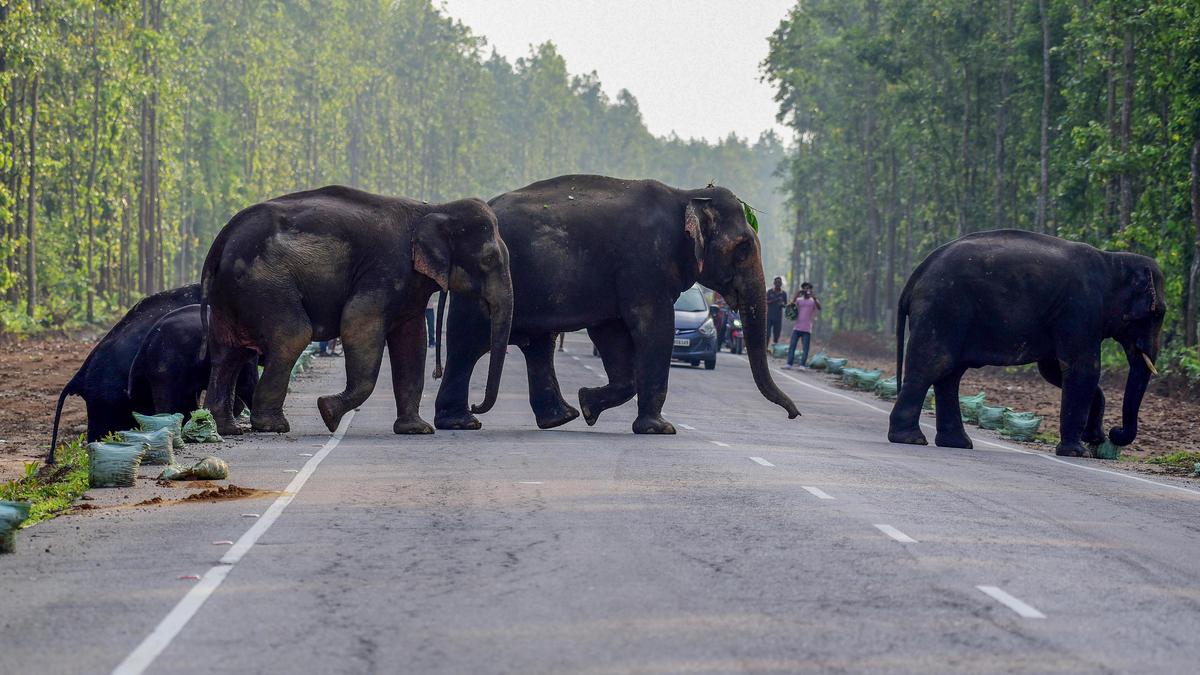
Environmentalists have raised serious concerns over the alleged land use changes in the Periya-Pakranthalam (Periya-Pannippad) elephant corridor, warning that ongoing excavation and construction activities could obstruct elephant movement, worsen habitat fragmentation, and trigger a rise in human-elephant conflict across north Kerala.
The Animal and Nature Ethics Community Trust has submitted a representation to senior forest department officials seeking immediate intervention to protect the ecologically sensitive corridor. The Trust’s representative T.S. Santosh has urged the Principal Chief Conservator of Forests, the Chief Wildlife Warden, the Chief Conservator of Forests (Northern Circle), the Wildlife Warden of Kottiyur Wildlife Division, and the Divisional Forest Officer (North Wayanad) to halt ongoing land use changes and restore the functional integrity of the corridor.
“The Periya-Pakranthalam corridor is a vital landscape connectivity that ensures elephant movement across the Aralam-Kottiyur-Periya-Kannavam-Pakranthalam-Padinharathara landscape. Any blockage at Pakranthalam will inevitably increase human-elephant conflict in the surrounding areas,” Mr. Santosh said.
The corridor is one of the most important movement routes for Asian elephants within the Wayanad Elephant Reserve, enabling seasonal migration, maintaining genetic exchange between elephant populations, and reducing encounters with human settlements.
The Trust alleged that the Pakranthalam bottleneck is already under considerable pressure due to existing obstructions, including a mobile communication tower and related infrastructure buildings on private land, and the busy Mananthavady-Kuttiyadi road, all of which restrict elephant movement.
Mr. Santosh said express excavation and large-scale earth removal activities were being carried out in the bottleneck area by a private landowner, potentially altering the terrain permanently and encouraging further conversion of land for non-forest purposes.
“If these activities continue unchecked, the effective width of the corridor will be narrowed or completely blocked, forcing elephants into nearby settlements and agricultural lands. This will inevitably result in increased crop damage, destruction of property, threat to human life, and greater risk of elephants being killed or injured in road accidents,“ he said.
The Trust also contended that such alterations could undermine long-term conservation efforts in the Wayanad Elephant Reserve and weaken one of the region’s most critical wildlife corridors.
Citing directions issued by the Supreme Court on elephant corridor protection, including orders relating to the Segur Plateau elephant corridor, Mr. Santosh stated that authorities are under legal obligation to identify, inspect, and remove illegal obstructions from elephant corridors.
The court has also held that no construction should be permitted within such corridors and that the principles apply to functional wildlife movement routes, not merely those formally notified, he said.
Seeking urgent intervention, the ANEC Trust demanded an immediate field inspection of the Pakrandalam bottleneck, verification of the legality of recent excavation and land use changes, and suspension of all activities affecting elephant movement. It also sought action under the Wildlife Protection Act, Forest Conservation Laws, and other applicable statutes wherever violations are detected.
Mr. Santosh further called for a scientific assessment of the corridor, coordination among forest, revenue, and local self-government authorities to prevent further encroachments, and the constitution of a high-level expert committee under Project Elephant to assess the corridor’s ecological status, recommend restoration measures, and prepare an action taken report within 30 days.
B.N. Anjankumar, Chief Conservator of Forest (Northern Circle) told The Hindu that a case had already been registered under the Kerala Promotion of Tree Growth in Non Forest Areas Act for alleged unauthorised felling of trees on private land. “Permission from the Forest department is mandatory before cutting notified trees even on private non-forest land. Action has been initiated under the relevant provision,” he said.
Mr. Anjankumar said the land belongs to private owners but shares its boundary with vested forest. While land use permissions fall under the jurisdiction of the Revenue department, local self government institutions and other statutory authorities, any commercial development or large scale alteration in such a sensitive area could adversly affect elephant movement.
“The area was largely unmanaged agricultural land earlier. If commercial activities or intensive land development come up, it could increase human presence and interfere with its corridor functionality. We have brought the matter to the notice of the district administration, the geologists, and the local authorities. Further action will be reviewed after consultation with the divisional forest officer,” he said.
Published – August 08, 2026 11:13 am IST