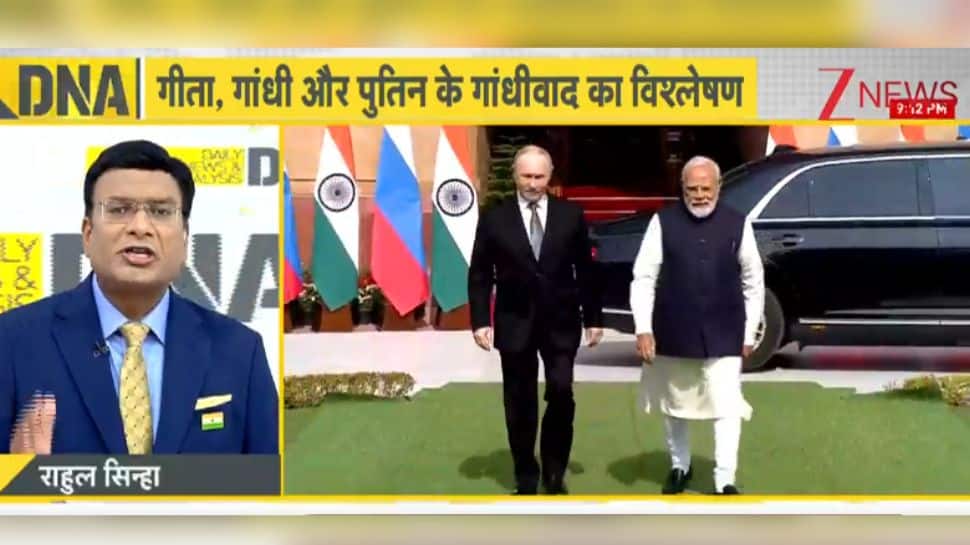
Russian President Vladimir Putin’s two-day visit to Delhi concluded with a strong reaffirmation of India–Russia friendship, at a time when global pressure is rising over the Russia-Ukraine conflict. Despite attempts by several global powers to weaken the partnership, the 23rd India–Russia Summit resulted in 21 major agreements and a roadmap for cooperation till 2030, signalling that the relationship will only grow stronger.
Prime Minister Narendra Modi and President Putin met three times in 24 hours, over a private dinner, bilateral talks, a joint press conference, and at the India–Russia Business Forum. While no major defence deal was announced, the two sides unveiled a wide-ranging set of pacts aimed at boosting bilateral trade and long-term strategic cooperation.
Key agreements include the Economic Cooperation Program till 2030, a push to fast-track India’s FTA with the Eurasian Economic Union, enhanced collaboration in agriculture and fertiliser production, joint initiatives to scale up shipbuilding in India, and the extension of e-tourist visas for Russian citizens, with group visas made free. Both nations also reaffirmed their longstanding cooperation in civil nuclear energy, along with a new partnership in critical minerals to secure rare earth supply chains crucial for EVs, solar, and emerging technologies.
Add Zee News as a Preferred Source
Watch Today’s Full Episode
इंडिगो के विमान का ‘ऑटो वाला विश्लेषण’
गीता..गांधी और पुतिन का ‘गांधीवाद’
हुमायूं कबीर..बाबरी बनाएंगे या जेल में रहेंगे?
देखिए #DNA LIVE Rahul Sinha के साथ#DNAमित्रों #ZeeLive #ZeeNews #DNAWithRahulSinha @RahulSinhaTV
https://t.co/UjMreDIDH3
— Zee News (@ZeeNews) December 5, 2025
Prime Minister Modi also referred to the recent Pahalgam terror attack, calling India and Russia strong partners in combating terrorism, and described the bilateral friendship as a “Dhruv Tara” that always shines.
Putin, in turn, highlighted uninterrupted fuel supply to India despite sanctions, announced plans for building India’s largest nuclear plant with Russian support, and set a target to raise bilateral trade from USD 60 billion to USD 100 billion. He emphasised that Russia seeks partnerships across sectors—not just in oil and gas—and pointed to a new transport route linking Belarus to the Indian Ocean.
Putin also evoked cultural ties, recalling how Raj Kapoor’s Awaara shaped Soviet cinema culture—symbolising the enduring warmth between both nations.