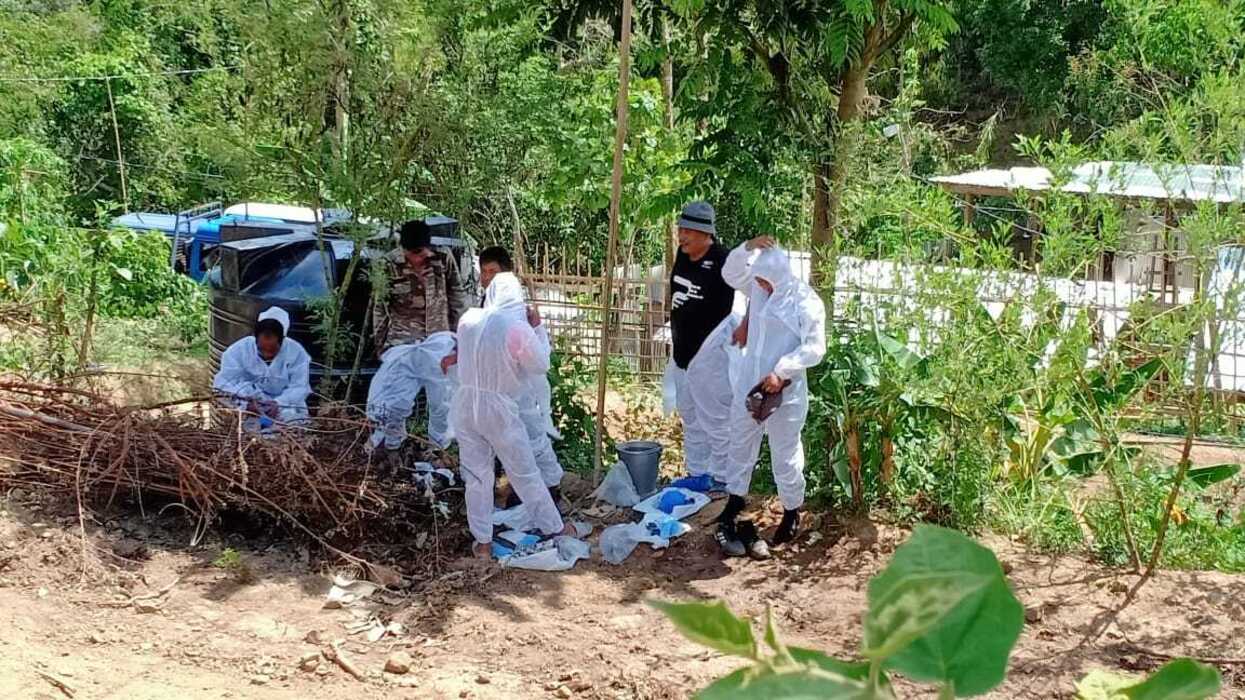
Guwahati: African Swine Fever (ASF), a highly lethal viral disease affecting pigs, continues to pose a grave threat to livelihoods, indigenous pig breeds and biodiversity across Northeast India, according to a new study published in the latest issue of the Indian Farming journal.
Authored by Dr Sandeep Ghatak, Hosterson Kylla, A.A.P. Milton, Samir Das, K. Puro and V.K. Mishra, the study highlights how ASF has devastated pig farming systems in Assam, Arunachal Pradesh, Mizoram and Manipur since the disease was first detected in India in 2020.
The researchers are associated with the ICAR Research Complex for North Eastern Hill Region, Umiam, and the Meghalaya Animal Husbandry and Veterinary Department.
ASFV is unique as it is the only DNA arbovirus capable of being transmitted by soft ticks (Ornithodoros spp.) in some ecological settings, although tick-borne transmission has not been confirmed in India.
The disease results in nearly 100 per cent mortality in affected pigs and currently has no vaccine or specific treatment. First confirmed in India in 2020, with outbreaks initially reported in Assam and Arunachal Pradesh, ASF has since spread rapidly across north-eastern India, devastating pig populations and causing serious disruptions to rural livelihoods and the regional economy.
According to the Basic Animal Husbandry Statistics (BAHS) 2024 (Department of Animal Husbandry and Dairying, 2024), the region accounts for a significant proportion of India’s total pig population, with Assam leading at over 2.1 million pigs, followed by Meghalaya (706,364), Nagaland (404,695), and Mizoram (292,465).
While Assam, Meghalaya and Mizoram showed population growth from 2012 to 2019, states like Arunachal Pradesh, Tripura and Manipur recorded substantial declines, possibly due to systemic farming challenges.
Pig farming occupies a central place in the socio-economic and cultural life of the Northeast, particularly among tribal and marginal communities.
However, the dominance of small backyard pig-rearing systems, coupled with uneven veterinary infrastructure and informal pig trade, has made the region especially vulnerable to repeated ASF outbreaks, the study notes.
Official data cited in the paper show that Assam lost over 42,000 pigs between 2020 and 2023, with nearly 39,000 deaths recorded in 2022 alone.
Mizoram reported more than 12,000 pig deaths in a single year, while Arunachal Pradesh and Manipur also suffered heavy losses. The authors caution that actual figures are likely higher due to underreporting in remote and backyard farming areas.
Beyond economic distress, the study flags a serious long-term risk to the Northeast’s indigenous pig breeds — including Doom (Assam), Niang Megha (Meghalaya), Zovawk (Mizoram), Tenyi Vo (Nagaland) and Manipur Black. These breeds, valued for their adaptability and cultural importance, face erosion if ASF outbreaks continue unchecked.
The researchers also warn of the spillover of ASF into wildlife populations, noting the detection of the virus in wild boars near Assam’s Manas and Nameri National Parks. Such spillovers could create a persistent wildlife–livestock transmission cycle and threaten rare species like the pygmy hog, endemic to the region.
With no effective vaccine or treatment available, the study stresses that prevention remains the only viable strategy.
In its concluding assessment, the authors emphasise that managing ASF in Northeast India requires a layered approach — integrating community participation, veterinary preparedness and strong inter-departmental coordination. A one-size-fits-all model, they argue, will not work in a region marked by diverse landscapes, farming practices and cultural traditions.
Instead, the study calls for region-specific strategies anchored in scientific evidence, responsive governance and public trust.
These include locally adapted biosecurity measures, fair and tailored compensation frameworks, and integrated disease surveillance systems. With the right policy vision and sustained investment, the authors conclude, ASF can be controlled — allowing pig farming to remain a resilient and vital source of livelihood and food security across Northeast India.
Also Read: From IIT to impact: How Dinesh Lahoti is transforming classrooms & careers
Related
Latest Stories