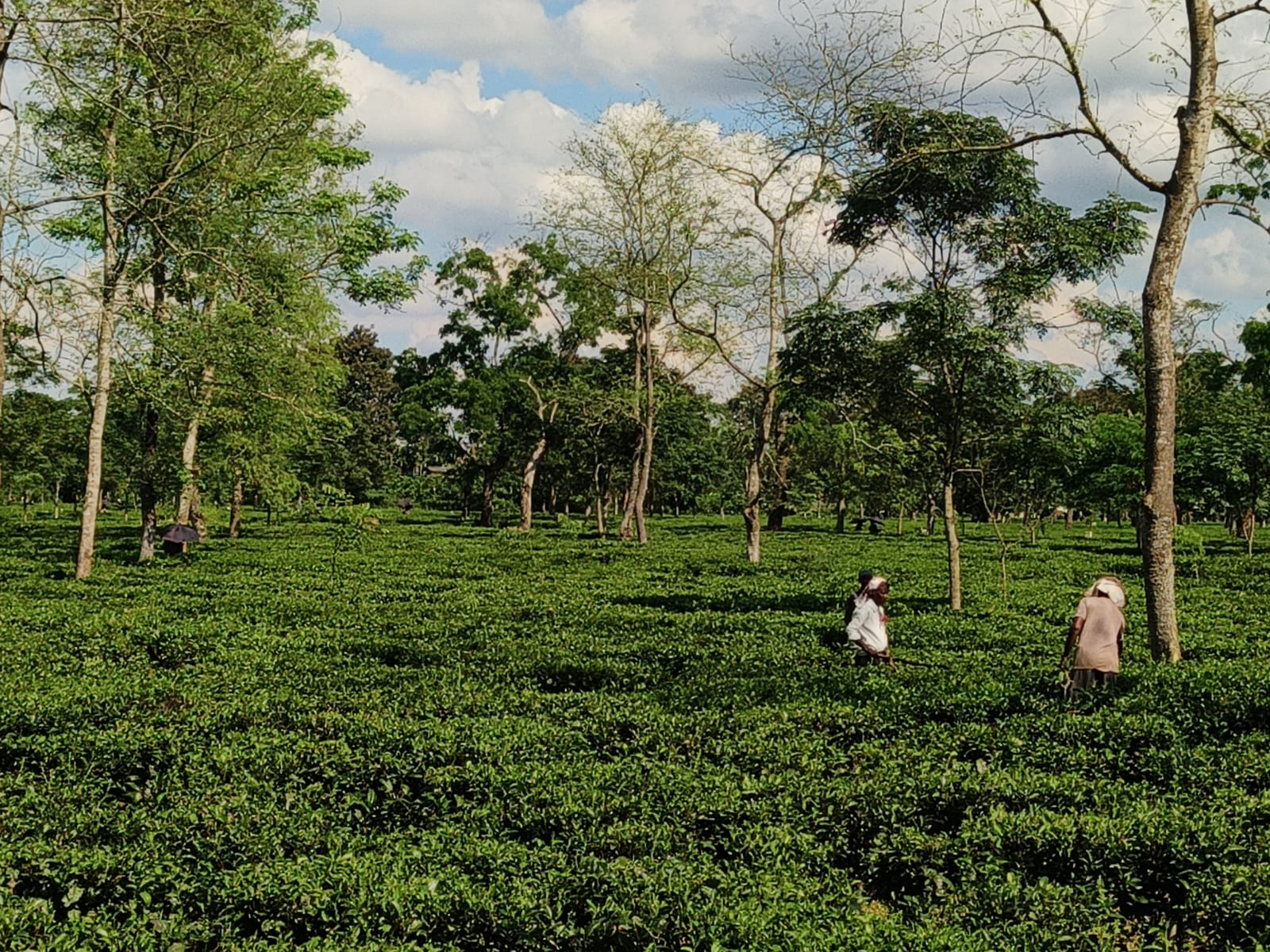
Guwahati: Assam’s tea gardens are facing a “triple climate stress” of rising temperatures, declining rainfall and falling humidity, according to a new study that offers one of the most detailed pictures yet of how climate change is altering India’s tea landscapes.
The research, published in the journal Frontiers in Climate, analysed three decades of weather records from four major tea-growing regions in India and found that Assam’s South Bank tea belt is becoming hotter, drier and less humid—a combination that researchers say could threaten both tea productivity and quality.
The study was authored by Azariah Babu and Hariharan Sudha Sooraj of the UPASI Tea Research Foundation, along with Ajmeri Sultana Rahman, Rupanjali Deb Baruah, Venkatesan Selvaraj and Rupak Sarma of the Tocklai Tea Research Institute.
While numerous studies have examined the impact of climate change on tea, the researchers say this study is unique in tracking 30 years of plantation-level weather data from Assam, West Bengal, Tamil Nadu and Kerala, allowing direct comparisons across India’s principal tea-growing regions.
Unlike many previous studies that focused primarily on temperature or rainfall, the new research analysed four key variables simultaneously—maximum temperature, minimum temperature, rainfall and relative humidity—revealing that Assam is experiencing changes across all of them.
The researchers found that maximum temperatures in Assam’s South Bank region have increased significantly over the past three decades, rising by about 1.1°C relative to long-term averages. At the same time, annual rainfall in 2025 was 364 mm lower than historical levels, while morning and afternoon humidity also showed a declining trend.
The study identified another less-discussed change: rainfall is no longer arriving in the same pattern as before. Comparing the periods 1996–2005 and 2016–2025, researchers found that rainfall in Assam’s tea belt is increasingly concentrated into shorter periods rather than being evenly distributed throughout the growing season.
For tea, this shift could be as important as rising temperatures.
Tea grows best under warm and humid conditions with well-distributed rainfall. Scientists warn that alternating periods of drought and intense rainfall can expose tea bushes to water stress, waterlogging, and reduced productivity.
The study also highlights humidity as an overlooked climate indicator. Tea typically requires humidity levels above 80 per cent for optimal growth, yet both Assam and North Bengal showed a long-term decline in relative humidity. In Assam, afternoon humidity has fallen by around two percentage points in recent years.
According to the researchers, these climate shifts can affect not only yields but also the flavour and chemical composition of tea leaves. Previous research cited in the paper indicates that tea yields begin to decline when monthly temperatures exceed 26.6°C, while higher temperatures can alter important compounds responsible for flavour and aroma.
The study also found that climate change is not affecting all tea regions equally. While Assam and North Bengal are experiencing warmer and drier conditions, southern tea-growing regions displayed different temperature, rainfall and humidity trends, underscoring the need for region-specific adaptation strategies.
The authors argue that the findings highlight the urgent need for climate-resilient tea cultivation practices, including drought-tolerant cultivars, agroforestry systems, improved water management and long-term adaptation planning.
For Assam, which produces more than half of India’s tea, the message is clear: the challenge is no longer simply rising temperatures. The climate itself—the balance of heat, moisture and rainfall on which tea depends—is undergoing a fundamental transformation.
Also Read: Tripura: How landslides threaten century-old village in Jampui Hills
Roopak Goswami
Reporter, EastMojo
You just read a story that took days to report. Help us keep our reporters on the ground in the Northeast.
For Rs 83/month – less than a cup of coffee
Ad-free reading, support and keep important stories alive
Become a Member
OR
Support once (any amount)
or
Scan to pay via UPI