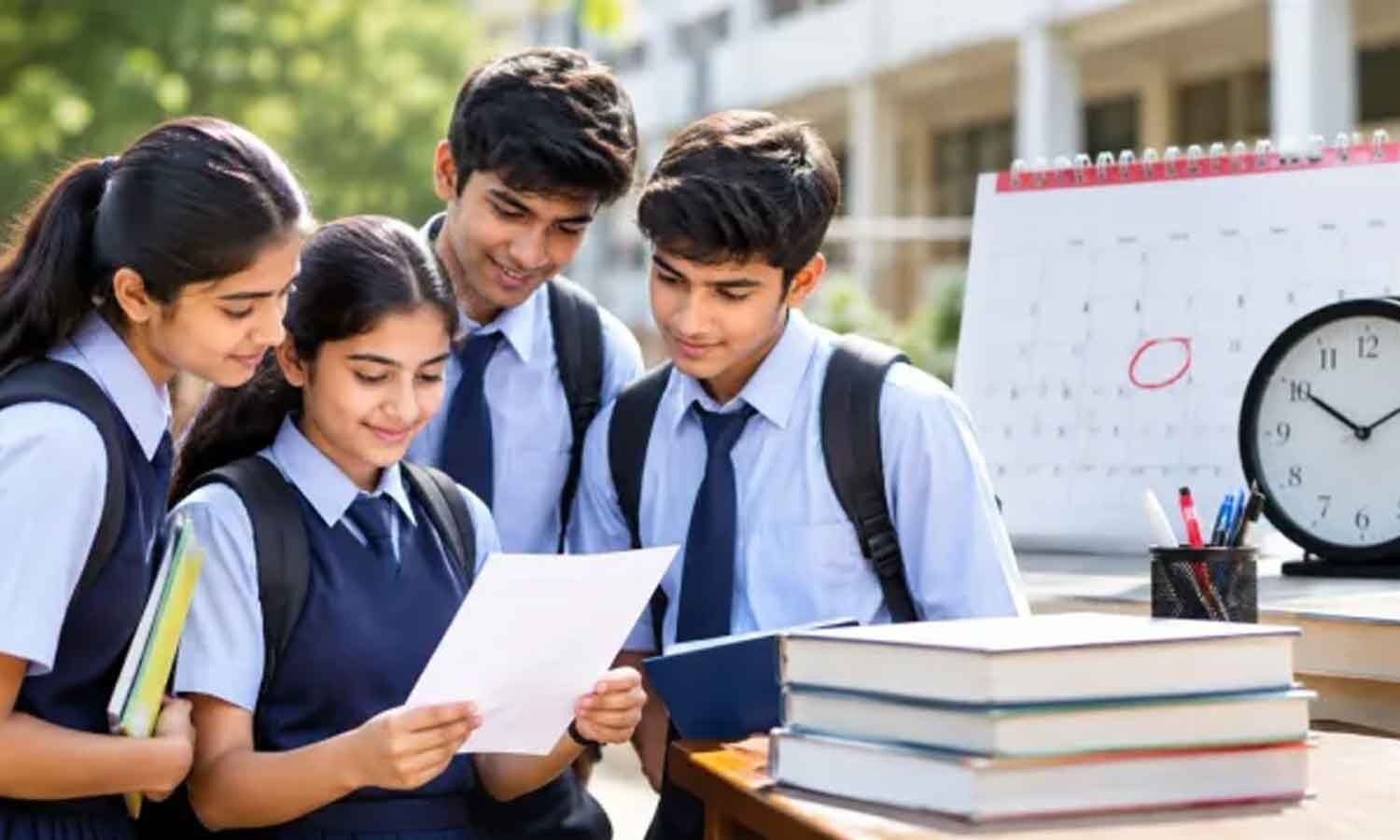
Vijayawada: The Board of Intermediate Education, Andhra Pradesh (BIEAP), has released the tentative timetable for the Intermediate Public Examinations (IPE) for first and second-year students for February-March 2027. The theory examinations will commence on February 24 and continue until March 16.
Board of Intermediate Education (BIE) secretary P Ranjith Basha released theory and practical examination schedule here on Thursday.
The examinations will be conducted in the forenoon session from 9 am to 12 noon. First-year students will begin their examinations with language papers and elective subjects on February 24, while second-year students will take their corresponding Paper-II examinations on February 25.
Practical examinations for general courses will be held from February 1 to 10, while those for vocational courses will take place from February 1 to 15 in two sessions — 9 am to noon and 2 pm to 5 pm. The examinations will be conducted on all days, including Sundays. The Ethics and Human Values examination will be held on January 27 from 10 am to 1 pm, while the Environmental Education examination is scheduled for January 29 during the same hours.
The Samagra Shiksha Vocational Trade Examination (NSQF Level-4) theory paper will be conducted on February 17 from 10 am to noon. The board clarified that the timetable is tentative and some dates may be changed depending on public holidays notified by the State government. The vocational examination timetable will be issued separately, though the dates will remain unchanged.
The board also stated that separate question papers will be provided for elective subjects such as Mathematics, Biology, Physics, Chemistry, History, Economics, Civics and Commerce under Part-II, while common question papers will be provided for core and additional subjects, as specified in the schedule.
Dasari Srinivasa Rao is a Staff Reporter with The Hans India, covering NTR and Krishna districts, with a primary focus on Vijayawada. He has 32 years of experience in journalism. His reporting spans a wide range of beats, including city and rural development, politics, irrigation, education, crime, and human-interest stories.
Read More