Following on from my article last year about the three “Hungarian Jackals” involved in the assassination attempt on President of France Charles de Gaulle in 1962, now comes the tale of another “Jackal” connection, this time Carlos the Jackal, the internationally hunted terrorist and his secret hideout in the select Budapest suburb Rózsadomb from 1979 to 1985.
It still remains a mystery why Hungary allowed entry to this notorious figure sought over a series of assassinations and terrorist acts. Certainly, hosting the committed Marxist-Leninist earned the goodwill of the Communist and anti -Western world that generally supported him in defiance of mounting pressure from the West to bring him to justice, wherever he was holed up.
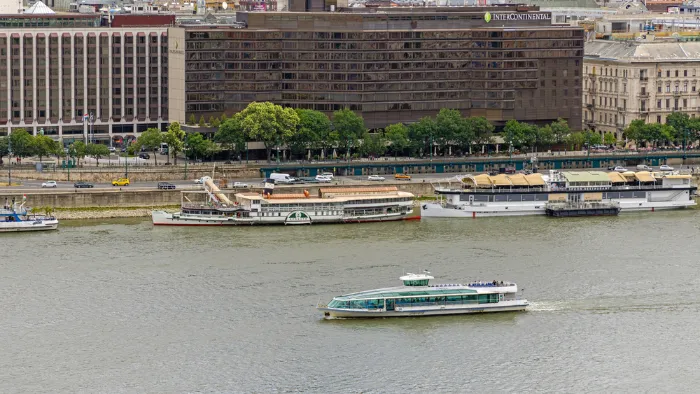
The Hungarian authorities have not released his files and it is not known where he lived at leafy “Rose Hill”, but presumably in a nice enough villa. While it was prepared the Jackal briefly stayed at the cosmopolitan and five-star Hotel Intercontinental, today named the Marriott, a cubist structure in central Pest overlooking the River Danube.
Both the hotel and the nearby monumental Inter-Continental “glass-house”, which opened in 1968, were symbols of the more progressive and prosperous Hungarian “Goulash Communism”, designed to attract the rich and famous from around the world. Everyone and everything came and went, with this newish riverside setting an obvious clandestine location for Eastern and Western diplomats, journalists, artists, prostitutes and spies during the Socialist Cold War era.
Such premises were heavily bugged, having surveillance cameras, hidden microphones, discreet observers and so forth. Despite the precariousness, the hotels also served as a checkpoint where the Hungarian regime permitted various forms of contact between East and West, while still keeping tabs on one another. The Jackal remained able to carry on his illicit activities.
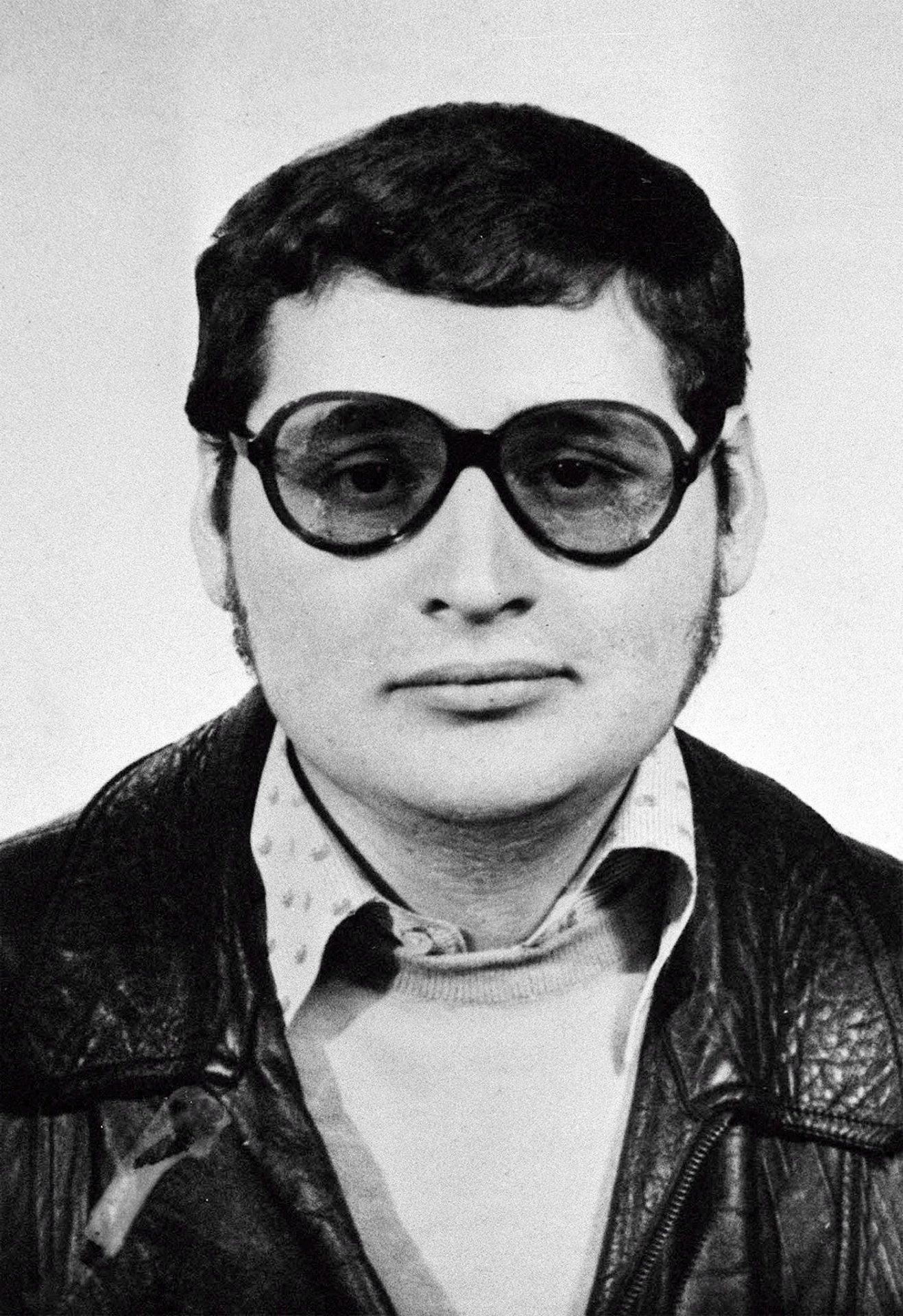
Carlos the Jackal’s real name was Ilich Ramírez Sánchez and he was Venezuelan, born into a privileged family in 1949. Educated in Caracas, London and Moscow, he underwent guerrilla training in the Middle East, playing an active role for the Popular Front for the Liberation of Palestine and gaining a reputation as a fighter.
He travelled around Europe and the Middle East, and led the 1975 raid on the Organization of Petroleum Exporting Countries headquarters in Vienna. This ended in his demanding a plane and successfully flying with hostages to Libya.
Eventually he made his way to Hungary, where the authorities maintained fairly amicable relations with both East and West throughout the Cold War. Hungary was playing safe with the USSR and keeping friendly with the various anti-Western countries favourable to Carlos.
While the Jackal reposed in low-profile comfort, he remained a concern and was always very closely watched by the Hungarian Secret Police. The secretive Hungarian authorities naturally kept the matter under wraps and away from the outside world. Carlos remained relatively safe on Hungarian territory and was not called upon for any services by President János Kádár. Hosts and guest basically left each another alone.
But eventually his presence became an uncomfortable matter for Hungary, an irritant affecting foreign relations and the delicate balance of geopolitics. It was clear that he had overstayed his time and must go. Finally, under international pressure especially from the United States due to his continual anti-Israeli activities, he was expelled in late 1985.
Hungary wanted more open relations with the West, and while it was a tricky move to expel him there was relief too. At least the country could report to the Soviets and to the rest of the world what an uncontrollable and unpredictable person he was.
The “Jackal” left without issues and travelled to Syria but later was chased out. When the Cold War ended in 1989 he fled to Sudan and was finally captured by French military agents in Khartoum in 1994. Sentenced to a high-security prison in Paris, he is still serving life sentences in France today.
To round off, I know nothing about how the “Carlos” part of his nickname evolved but he was dubbed “The Jackal” by The Guardian, a British newspaper, after one of its investigative correspondents reportedly found Frederick Forsyth’s 1971 novel “The Day of the Jackal” in an apartment belonging to a friend of Carlos.
There is no knowing at present where this place is located but the terrorist used it to stash weapons. The book may have belonged to the original tenant or to Carlos himself, who I assume must have read it for curiosity value and inspiration, despite its chilling ending.
In a 2016 interview, the Jackal described himself as a “professional revolutionary”, stating, “It’s a miracle that I’m still alive, I’ve survived so many operations”. A list of these can be found on Wikipedia.
My Budapest Times story “Shadowy Hungarians had role in attempt to kill de Gaulle” can be read here. The three, Lajos Marton, Gyula Sári and László Varga, all came from working class and military backgrounds, and were staunchly anti-communist. They met during the 1956 Uprising in Hungary then went on the run from the occupying authorities and made their ways to France.
The attempt by French military personnel to kill de Gaulle in the Paris suburb Petit-Clamart in August 1962 was unsuccessful. Carlos the Jackal, though, could claim many victims and one thing seems sure – there will be no memorial plaques on Rózsadomb anytime soon.