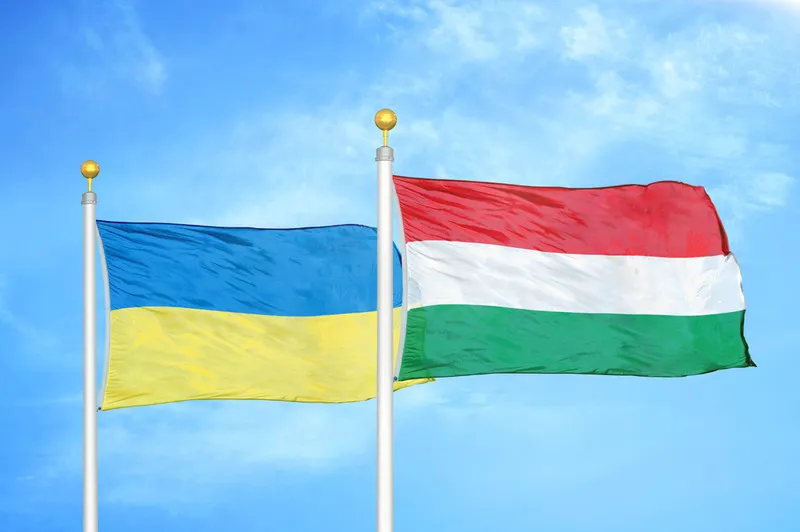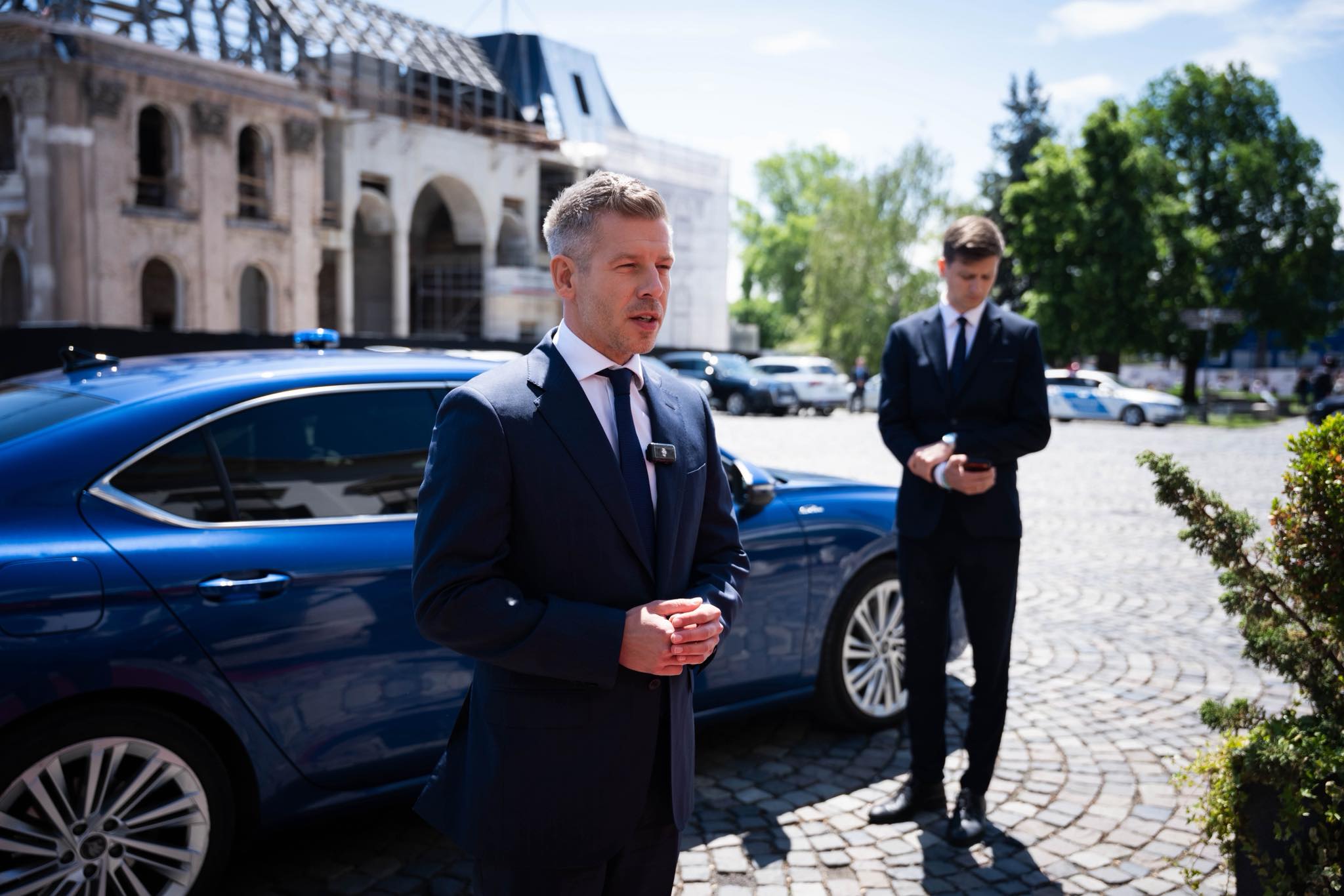
Foreign Minister Anita Orbán summoned Russia’s ambassador to Budapest on Thursday morning over the Russian drone attack on Transcarpathia, Prime Minister Péter Magyar said on Wednesday in Ópusztaszer during a press conference held in a break of the first meeting of the Tisza government.
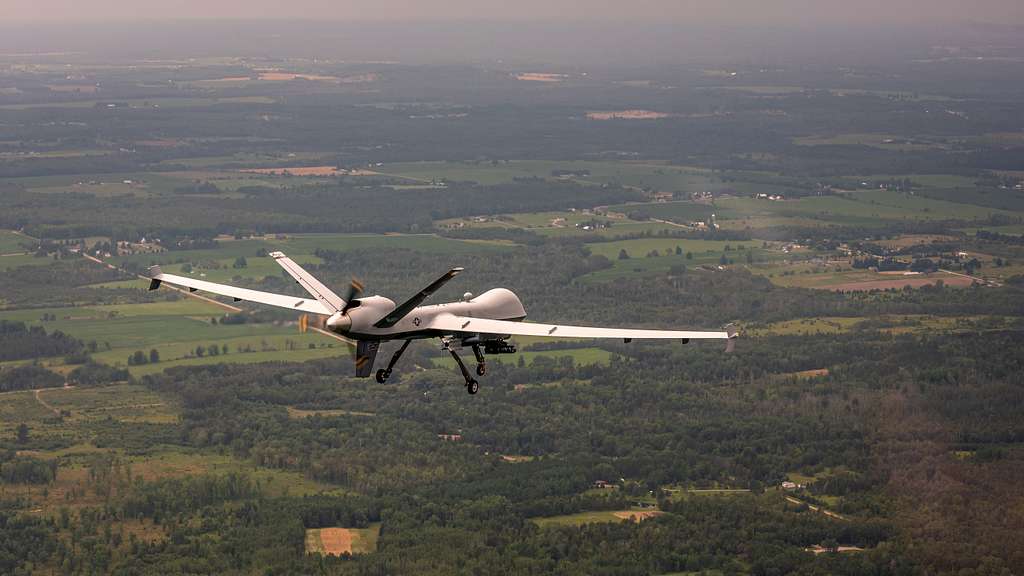
The prime minister stressed that the Hungarian government strongly condemns the Russian drone attack against Transcarpathia, a region also inhabited by Hungarians. He said that according to current information, the drone attack had ended, although Ukrainian authorities were still advising residents to remain on alert. Since the outbreak of the war, this was the most intense drone attack to reach Transcarpathia, he added.
Péter Magyar said Foreign Minister Anita Orbán had summoned Russia’s ambassador to the Foreign Ministry and would request information on when Russia plans to end the war it started more than four years ago.
He noted that Transport and Investment Minister Dávid Vitézy had been informed by the leadership of MÁV that Hungarian railway workers had also been sent to shelters because they were at the Chop railway station, but had since been brought back to Hungarian territory.
The prime minister announced that the government would initially hold two meetings per week and that the vast majority of state secretaries would be appointed later this week.
He said the cabinet would adopt the statute decree regulating the legal competences and responsibilities of the 16 ministries at the meeting, and that it “must appear in the Hungarian Gazette sometime before midnight.”
According to Péter Magyar, the formal government handover will take place at 3 p.m. on Thursday, when all ministers of the outgoing and incoming governments will meet. He added that Parliament would not sit next week, but the government was expected to hold meetings on both Monday and Friday, while in the intervening days he would make official visits to Poland and Austria.
The prime minister said he would first travel to Kraków and then — testing the high-speed railway built with Brussels funding — continue to Warsaw, where he would meet Polish Prime Minister Donald Tusk and likely President Karol Nawrocki. He will then meet former Polish president and former Solidarity movement leader Lech Wałęsa in Gdańsk.
Afterward, he will meet Austria’s head of state and government in Vienna and then participate in a forum in Wachau.
Speaking about the drought situation, Péter Magyar said that before the first government meeting they had consulted water conservation guards, experts, civil organisations and farmers in Marispuszta, before handing the floor to József Gacsályi, deputy director-general of the National Directorate General for Water Management.
The expert said the main problem with the current drought situation is that it is no longer an annual drought but one stretching over several years. Since 2021, Hungary’s groundwater reserves have decreased by an amount equal to seven Lake Balatons, with one year’s average rainfall missing from the system.
Outlining emergency measures, the deputy director-general said a national water management coordination centre would be established on Thursday to coordinate the work of the country’s 12 regional water directorates.
József Gacsályi said water retention measures would be introduced, meaning not only attempts to preserve local water reserves but also efforts to distribute available free water resources throughout the country so that larger water reserves accumulate in the landscape.
“The fundamental principle of our water management system is the introduction of landscape use based on water,” he added.
He also said there is a technical intervention plan for improving the efficiency of water service systems, which they expect to implement this year in coordination with the new ministry being established.
József Gacsályi stressed that irrigation alone cannot restore Hungary’s water management system, but it is important that these systems effectively expand the distribution of the country’s water reserves over a larger area. One of the most important tasks of the new coordination centre will be to ensure efficient servicing of water demands by coordinating the work of the different water management directorates.
He added that they had already agreed on immediate technical interventions worth approximately 2 billion forints. These measures aim to increase water reserves and support local water retention until the end of August. The current budget structure allows financing for these interventions, he said.
Following the expert’s briefing, Péter Magyar emphasised that thanks to European Union KEOP programmes, 257 billion forints in water management developments would be implemented, helping Hungary handle similar drought situations more effectively in the future.
He noted that most of these investments should already have been completed if the previous government had done its job. Péter Magyar promised that his government would strive to use the 257 billion forints effectively and on time together with water management experts.
The prime minister also announced that the minister responsible for agriculture and food management would declare a force majeure situation later this week because of the drought, which would provide relief for Hungarian farmers.
Hungary’s fuel and crude oil supply remains uninterrupted, the prime minister said on another topic.
Péter Magyar said the government had heard a briefing from Mol chairman and CEO Zsolt Hernádi, who stated firmly that fuel and crude oil supplies remain uninterrupted and that strategic reserves are sufficient for approximately 80 days.
Supply at protected prices remains guaranteed for all petrol station operators in Hungary.
The prime minister stressed that the new cabinet would ensure the legal framework necessary to maintain continuous protected-price fuel supply despite significant increases in world market prices.
He added that Hungary’s protected fuel prices remain somewhat lower than average prices in neighbouring countries and are expected to stay lower.
Responding to questions about previous proposals for 480-forint petrol prices, Péter Magyar suggested that those raising the issue should compare the world market price of crude oil during the campaign period with current prices.
He also said the government would adopt around 17 resolutions during the day. Cabinet members discussed the situation regarding the release of EU funds intended for companies, and he requested briefings from the foreign minister, economy minister, and transport and investment ministers. Continuous negotiations are taking place between leaders of European institutions and sworn-in members of the Hungarian government.
A high-level delegation from the European Commission will arrive in Budapest next week. The aim of the talks is to reach an agreement with the president of the Commission on EU funds during the week beginning May 25, Péter Magyar said.
The prime minister stated that negotiations with Ursula von der Leyen concern securing the return of more than 10 billion euros owed to the Hungarian people.
He argued that the previous government “left thousands of billions of forints intended for Hungarians on the table and instead plunged the country into debt,” leaving very limited time to use the funds, making “bridging solutions” necessary.
He stressed that it is in the interest of Hungary, EU member states and European institutions alike for the money to arrive and help restart the Hungarian economy. He said he was confident an agreement would be reached and the funds would be secured.
Responding to comments made earlier Wednesday by former prime minister Viktor Orbán in a video about his government’s achievements, Péter Magyar said Viktor Orbán had not brought home EU funds intended for Hungarians but instead increased Hungary’s national debt by 44 trillion forints over 16 years in nominal terms. He listed additional criticisms, saying 10,000 hospital beds had been eliminated, 900,000 Hungarians lack a family doctor, housing prices had tripled since 2010, and the population had fallen by 500,000 since that year.
He also claimed that “even conservative estimates suggest 20 trillion forints were stolen from the Hungarian people” or spent on unnecessary, overpriced investments. Three million people live in deep poverty, half the population survives on 300,000 forints a month or less, and Viktor Orbán’s “frontman,” Lőrinc Mészáros, accumulated a fortune worth 1.8 trillion forints, he said. He added that 400,000 Hungarian children live in deep poverty.
Péter Magyar noted that just over one quarter of the year had passed and already 91 percent of the planned annual budget deficit target had been reached.
The government will suspend and require finance ministerial approval for all commitments “beyond the scope of ordinary management,” including commitments exceeding 250 million forints and investments over 100 million forints, the prime minister announced.
Ordinary operations would continue, he said, adding that the measure was expected to remain in effect for one or two weeks until the Tisza government could fully understand “the exact figures that were concealed” from them. There are many budget commitments worth hundreds of billions of forints that do not appear in the budget, he claimed.
The prime minister also announced that Péter Tóth would join the government as national security chief adviser.
He recalled that Péter Tóth had served as campaign chief for his party and “led the Tisza community to a globally significant victory.” Péter Magyar said the adviser would coordinate the work of national security services and support effective cooperation among the relevant organisations.
He also said the government would decide at its first meeting to launch a full public investigation into the violations committed at the children’s home in Bicske, instruct the justice minister to release the files related to the pardon scandal, and order a comprehensive review of the child protection system.
In addition, he said he hoped the government could decide next week on opening the secret agent files.
The prime minister said the government was also discussing the immediate freezing and suspension of all government communication spending.
Péter Magyar justified the measure not only on budgetary grounds but also by saying: “We have said many times, and Hungarians gave us a mandate for this, that we do not need propaganda.”
The government has also ordered a review and, where possible, publication of classified international agreements and similarly classified government resolutions, he added.
Péter Magyar also said the government would discuss Hungary joining the European Public Prosecutor’s Office and halting the withdrawal process from the International Criminal Court initiated by the previous government. A decision would need to be made soon because of tight deadlines, he added.
He also reported that the government would decide on making public the summaries of government meetings held between 2010 and 2026.
The government will also decide on reviewing major investment projects, Péter Magyar said. Projects lacking final permits — whether brownfield or greenfield developments, residential parks or the Pázmány campus — will now be reviewed, modified if necessary, or abandoned based on financial or other considerations. He noted that this would affect a large number of projects.
According to him, the government will order a comprehensive review of the hospital cooling programme, conduct an extraordinary climate audit, and discuss conditions for the introduction of a planned wealth tax.
Asked what steps the government would take if constitutional office holders previously called upon to resign refused to do so, Péter Magyar said discussions were ongoing but the government would wait until the end-of-May deadline.
The prime minister expressed hope that, out of respect for the remnants of the rule of law and democracy and to preserve what remains of the prestige of the presidential office, the president would decide to step down. If not, the affected officials could and would be removed through constitutional amendments, he said.
Asked whether appointing former Tisza campaign chief Péter Tóth as national security adviser responsible for intelligence services raised concerns, Péter Magyar said Tóth was “just as much a Hungarian citizen as anyone else.” He added that previous national security advisers had been far more closely tied to Fidesz than Péter Tóth, who is not a member of Tisza, joined them only a year ago, and is undertaking a professional assignment.
His role had been to manage the campaign technically, which he carried out professionally. The national security adviser role requires preparedness, analytical skills, discretion, political judgment and talent, all of which he possesses, Péter Magyar said.
The laws themselves provide guarantees when someone serves the Hungarian nation, and failure to do so constitutes a very serious crime, he added. He asked critics not to confuse them with the previous government, which he said had used intelligence services for party-political purposes while undermining professionalism and seriously endangering Hungarian national security and the remnants of the rule of law.
Asked about the future of ministry buildings visited during the “night of ministries,” Péter Magyar said they were seeking the most optimal solution for properties such as the Carmelite Monastery and the Interior Ministry.
At present, the ministry from which “state hatred, division among Hungarians and the destruction of many Hungarian lives were directed” — referring to the ministry formerly led by Antal Rogán — would become the Ministry of Social and Family Affairs, he added.
Asked whether they were examining possibilities for reclaiming public-interest and public-benefit associations, he said preparatory work was naturally underway. Discussions are also taking place on establishing a National Asset Recovery Office, which Parliament would decide on.
Péter Magyar also said he had agreed with Zsolt Hernádi that Mol would release additional strategic reserves, although he added that there would still be no supply security issues.
Asked about restructuring public media, he said several options were being examined. Reports had reached the government that the leadership of MTVA and Duna Media Service were preparing to resign, he said. He added that several ministers — including those responsible for social relations and culture, the finance minister and the minister heading the Prime Minister’s Office — had been tasked with assessing the scale of the resignation wave.
He explained that if legal operation of public media could not be restored, there were several ways to suspend public media news services until balanced and objective service was guaranteed. A new Media Council could even be established, he said, adding that the process could take several weeks or even one or two months.
He noted that the complete suspension of propaganda spending would also contribute to “a kind of cleansing.”
Responding to questions about the pardon scandal, Péter Magyar said the file existed in two places: the Ministry of Justice and the Sándor Palace. The complete version may only exist at Sándor Palace, but the ministry’s file could be available as early as tomorrow or the day after, he said. He added that if the ministry’s file proved incomplete, they expected Tamás Sulyok to release the full dossier publicly.
He also said he would send a detailed letter to Ursula von der Leyen on Thursday outlining “where we can move a little” and what remains acceptable from the perspective of the Hungarian economy and Hungarian citizens. He believes the European Commission also feels its historical responsibility in ensuring Hungary and its people receive the funds they are entitled to.
Péter Magyar called on ministers and state secretaries of the previous government not to accept the benefits to which they are entitled at the end of their mandates.
The prime minister explained that under the law, state leaders receive benefits when their mandates end, depending on how long they served as ministers or state secretaries. “I call on ministers such as Antal Rogán, János Lázár and the others who ruined and indebted our country not to even consider accepting this money,” he declared.
He said he wanted a declaration from them that they did not intend to accept the payments. However, regardless of what they declared, they would not receive them because former ministers require the prime minister’s signature and former state secretaries require ministerial countersignatures, he explained. Given the condition in which they left the country, “the least they could do is not shamelessly demand tens of millions of forints in severance payments,” Péter Magyar said.
Asked whether he believed there was a connection between the formation of the government and the attack on Transcarpathia, the prime minister said he hoped there was none. He added that Foreign Minister Anita Orbán had already contacted Hungarian diplomats working in Transcarpathia and offered the Hungarian government’s assistance following the drone strike.
The prime minister stressed that the government did not want to escalate the situation and that its goal was to bring the Russia-Ukraine war to an end as soon as possible.
Regarding funds withdrawn from municipalities, he said consultations with local governments would begin after the government handover. There are many proposals under discussion, he noted, adding that the government understood the extremely difficult situation municipalities face, often struggling to fulfil even their legally mandated tasks, let alone carry out developments.
Responding to another question, he said the Tisza Party leadership would likely decide this week who would take over his and Zoltán Tarr’s European Parliament mandates.
Returning to the drought situation, Péter Magyar stressed that solving the problem could not wait. He described it as a vicious circle and an accelerating process in which the River Tisza, carrying ever less sediment, is “eating away its own riverbed.”
The prime minister concluded by saying the situation must be reconsidered conceptually and that in such circumstances certain obligations toward farmers could and should be waived.
Artificial intelligence was used for the translation of parts of the original Hungarian text.