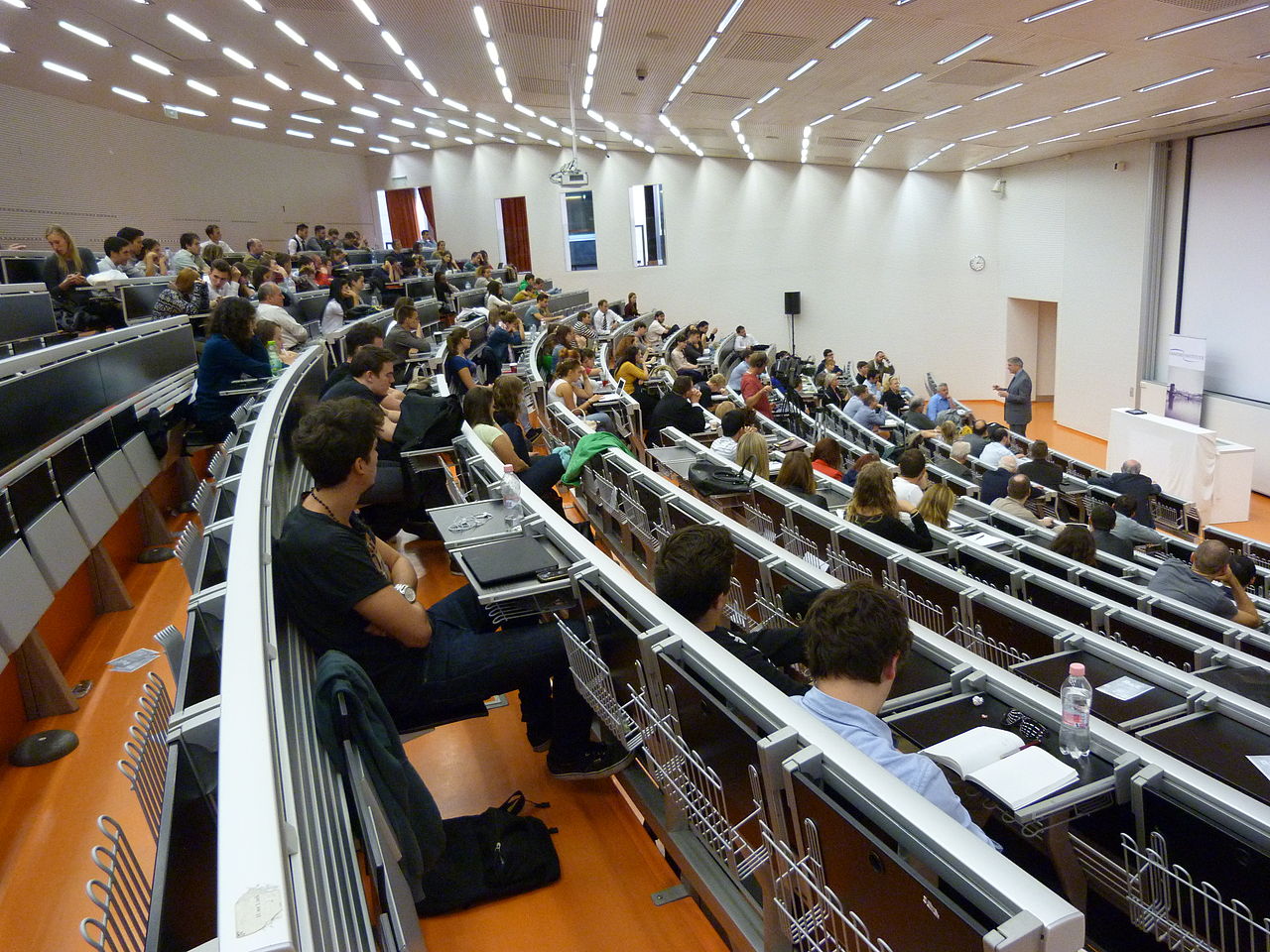
The Mathias Corvinus Collegium (MCC) was founded in 1996 as a private foundation and has developed in recent years into what is arguably the most significant institution for gifted education in Hungary.
It now offers free educational programmes to more than 8,000 pupils and students across the country. The MCC’s goal is to support talented young people regardless of their social or regional background, thereby reducing existing educational inequalities.
Nationwide gifted education
In structurally weak regions in particular, the Mathias Corvinus Collegium has in recent years created educational opportunities that were frequently unavailable before. Structured private gifted education was also barely or entirely absent in these regions previously. The MCC today offers nationwide continuing education opportunities, mentoring and scholarship programmes, as well as support with applications and the financial realisation of semesters abroad and research stays at renowned international universities. The nationwide rollout of gifted education and the expansion of the target group from students to younger age groups were only made possible through public funding.
To this end, the MCC was transferred in 2020 into the system of so-called KEKVA foundations (“non-profit foundations for the management of assets in the public interest”). This foundation model had been introduced by the then-government to, among other things, remove universities from direct state administration. The foundation model was intended to provide the affected educational institutions with long-term secured financing and greater institutional independence. The transfer into foundations was meant to create stable framework conditions, thereby enabling the institutions to develop over the long term, independent of short-term political changes.
For this purpose, the MCC received significant assets in the form of ten-percent shareholdings each in the mineral oil company MOL and the pharmaceutical company Gedeon Richter. These shares were not permitted to be sold, and the dividend income generated from them was designated exclusively for funding the gifted education programme. The proceeds financed the establishment and operation of educational centres, scholarships, dormitory places, study abroad stays and research trips, as well as conferences and training programmes.
KEKVA model under fire
The KEKVA model, however, faced increasing criticism. Critics objected in particular to the fact that public assets were permanently transferred to foundations, thereby removing them from the direct control of the state. Further objections were raised over the fact that the relevant boards of trustees were not subject to term limits and were in some cases staffed with active or former politicians.
The MCC, too, repeatedly found itself at the centre of political debate for these reasons. The main criticism was that the MCC was allegedly performing a (party-)political function financed by publicly owned assets. This impression was reinforced by the fact that Balázs Orbán, who resigned as chairman of the board of trustees on 19 June 2026, had simultaneously held senior positions in the former government. Against this backdrop, political opponents accused the MCC of being too close to the former government, and it acquired a reputation as a “Fidesz cadre forge.”
This reputation, however, does not withstand closer scrutiny. While the personal connections to the governing coalition of Fidesz-KDNP were undeniable, these political positions were nonetheless distinct from the work of the MCC. This important distinction, however, was one that Fidesz’s political opponents either could not or would not make. No party foundation!
It is important to emphasize, however, that the MCC never functioned as a party foundation. Students’ political affiliations may therefore not be inquired about, and were not inquired about. The MCC instead placed its emphasis on performance and excellence. Students were selected solely on the basis of their academic achievements.
The student body of the MCC accordingly reflects the full political and ideological spectrum of Hungarian society. Students at the MCC are neither politically trained nor indoctrinated, but are supported exclusively on the basis of performance and academic excellence in specific subject areas. The MCC was politically unaffiliated in its teaching activities, always operating on a civic values foundation. Nevertheless, it could now become a victim of political and social polarization.
KEKVA’s End — With Complications
Tisza had already announced the end of the KEKVA foundation model during the election campaign and had also enshrined this demand in its electoral programme. Following the formation of the government, the new government announced that it would abolish and nationalise the KEKVA foundations in order to reclaim the state assets transferred to them.
On Monday, 15 June, the Hungarian Parliament also passed the 16th amendment to the Basic Law. The amendment stipulates, among other things, that the assets of the KEKVA foundations form part of state property. It also guarantees the state the exercise of founding rights as well as the possibility of dissolving the foundations. In such a case, the assets of the foundation provided from state funds revert to the state.
Under the legislation that came into force on 30 June, all KEKVA foundations outside the higher education sector are to be dissolved by 31 August 2026; the university foundations are to follow the following year. Potential founders may take the institutions back over, however in such a case organisations such as the MCC, for example, risk being stripped of their financial basis. This would in all likelihood bring the support of talented individuals largely to a standstill. It would also entail a presumably lengthy separation of assets, as the MCC also holds private funds or had contributed these to the KEKVA foundation.
Uncertain Future
The legal successor to the KEKVA foundations will be the Hungarian state, which may continue the public-interest tasks previously carried out, should it not decide — alongside the dissolution — to fully discontinue the activities previously exercised by the foundation. The founding rights of the Mathias Corvinus Collegium have already been with the state since 30 June 2026, and the MCC has been prohibited from entering into any new financial obligations since 29 June 2026. Operations have therefore already largely ground to a halt — at least for now. However, regular salaries and rent are still being paid, and teaching activities are also continuing for the time being.
The current situation does not necessarily have to mean the permanent discontinuation of gifted education. Rather, the future of the flagship institution of Hungarian gifted education now lies in the hands of the Hungarian legislature. The new Hungarian government is now vested with the founding rights and thus has both the option of shutting down operations without replacement and the option of placing the MCC under state supervision and shaping it according to its own vision — for example, by appointing a new board of trustees.
It is currently uncertain which path the Hungarian government will choose. What is clear, however, is that a cessation of the Mathias Corvinus Collegium’s activities due to personal and political apathy would be a severe blow to the entire Hungarian system of talent promotion, as well as to the more than 8,000 pupils and students currently enrolled in the MCC.
The author is Research Coordinator at the German-Hungarian Institute for European Cooperation at the Mathias Corvinus Collegium (MCC).
Artificial intelligence was used for the translation of parts of the original German text.