The low water level of the Danube is forcing the operator of the Paks nuclear power plant to take drastic measures. For the first time in the plant’s history, a reactor unit has had to be taken completely off the grid due to a lack of water. Authorities say Hungary’s energy supply remains secure.
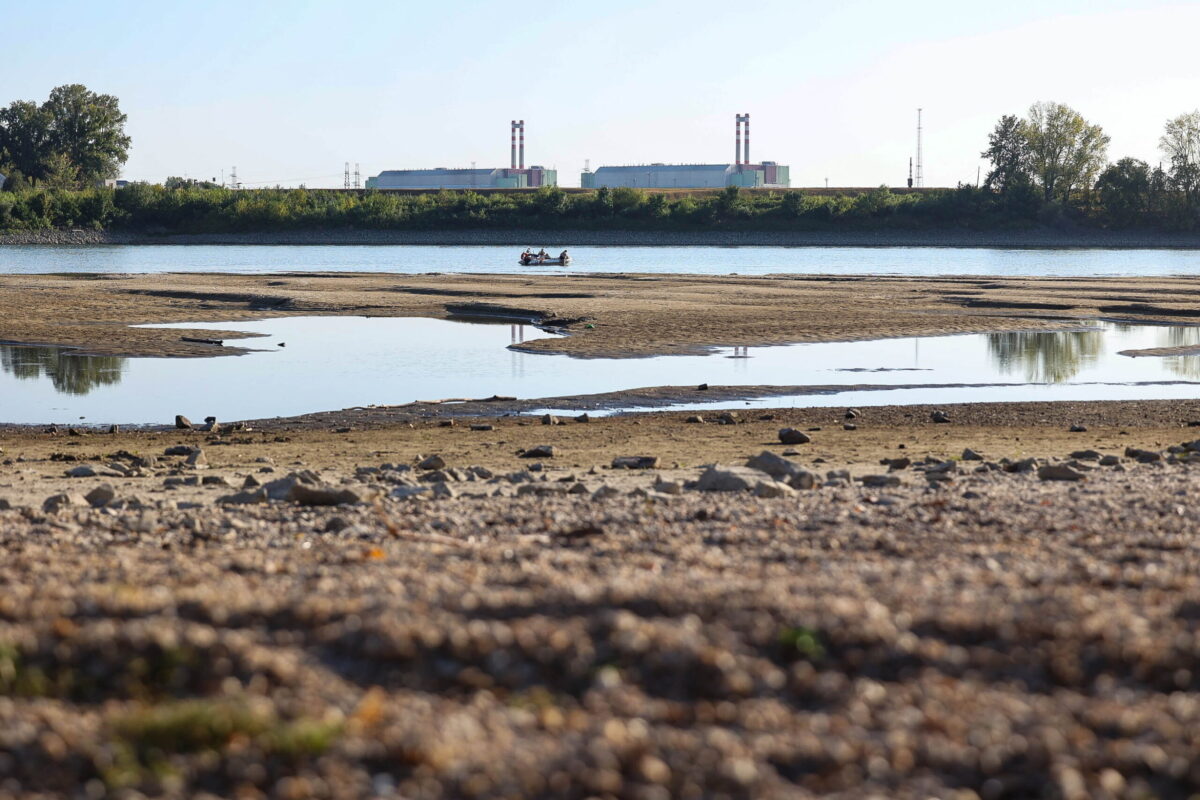
The persistently falling water level of the Danube has presented the Hungarian energy sector with an unprecedented challenge. As the Minister of Economy and Energy, István Kapitány, announced on his social media page on Wednesday, Unit 3 of the Paks nuclear power plant had to be shut down in a controlled manner. Prior to this, the river had reached a new historic low of -118 centimeters near Paks.
According to the Ministry and the operator, MVM Paksi Atomerőmű Zrt., the shutdown came as no surprise. It was based on strict, pre-defined regulations and forms part of a carefully drawn-up technical plan.
This is precisely what guarantees that every step is predictable and that operational safety is the top priority,”
emphasized István Kapitány. The Ministry is in constant communication with the power plant management, the operator MVM and the Hungarian transmission system operator MAVIR.
The shutdown took place in stages. On Monday, the output of Unit 1 was reduced by 254 megawatts (MW), followed by a reduction of 237 MW for Unit 3 on Tuesday. On Wednesday afternoon at 3.00 pm, the complete shutdown of Unit 3 began.
The nuclear power plant in paks, on July 29, 2026. Photo: MTI/Kiss Dániel
Energy expert Zsolt Hárfás pointed out that
while heat-related output reductions have occurred in recent years, a complete unit shutdown due to low water levels is a first.
Data from MAVIR at around 6.30 pm on Wednesday evening showed the following remaining reactor outputs:
- Unit 1: 247 MW
- Unit 2: 488 MW
- Unit 3: 0.5 MW (almost completely shut down)
- Unit 4: 484 MW
This meant that 40 percent of the power station’s total installed capacity (2,026 MW) was offline. In addition to the water shortage, environmental regulations also played a role in the shutdown. The cooling water returned to the Danube must not raise the river’s temperature by more than 30 degrees Celsius within a 500-meter radius of the discharge point – a threshold that is quickly reached when water levels are low and ambient temperatures are high.
Despite the significant drop in capacity, the government emphasized that Hungary’s electricity supply remains stable.
The shortfall is being offset by ramping up domestic gas-fired power stations, renewable energy sources and increased electricity imports.
This is a challenging task, as the grids are already under heavy strain during the summer. On 29 June, MAVIR recorded the highest summer consumption ever measured in Hungary, with a system load of 7,488 MW. To make matters worse, wind turbines provided hardly any electricity during the current heatwave (only around 20–25 MW out of 325 MW of installed capacity), and solar power generation had already dropped to around 1,000 MW by 6.00 pm. As a result, electricity imports rose sharply in the evening, approaching the 4,000-megawatt mark.
Related article
Danube Falls to Record Low in Budapest
The Danube dropped to just 31 centimeters in Budapest on Tuesday morning. Continue reading
Via MTI, Featured image: MTI/Kiss Dániel