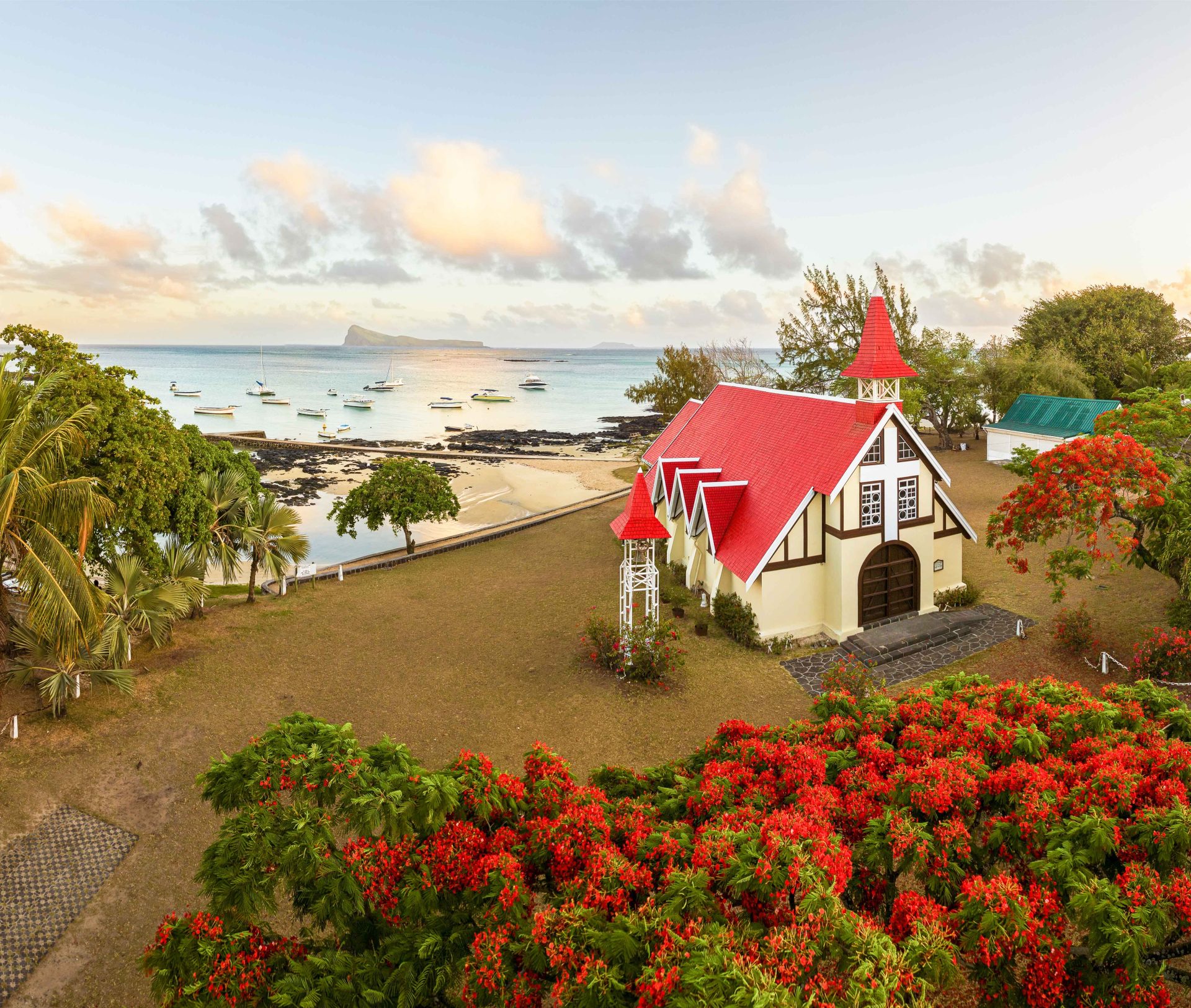
The island of Mauritius and its surrounding islets were formed by volcanic activity millions of years ago. The island is part of the Mascarenhas archipelago, which was formed as a result of volcanic eruptions. The island’s topography and features are the result of these geological processes and although the volcanic activity that created Mauritius is currently inactive, evidence of its volcanic past is still visible in the island’s landscape, which offers a distinctive and unmistakable view, even on the island’s interior plateaus and sometimes on the coast. It is wonderful to observe the present state of evolution of the island, as the coral reef ring around the volcanic island has created a dreamlike lagoon all the way to the island and as the ocean has gradually covered the beaches with sand from coral erosion, which is now covered with powdery sand everywhere. On the beach, volcanic rocks crawl in and out of the water, increasingly visible at low tide, once or twice a day. On the coral reef, the otherwise huge ocean waves break, so that the water to the shore is smooth, at best a pleasant ripple.
The Seven Coloured Earth National Park
The beautiful Seven Colours of the Earth National Park is currently a private property. If you drive into the Park, you can drive along an excellent road lined with dense jungle vegetation. A 3-kilometre access road takes you in picturesque surroundings to the highest waterfall in Mauritius, the Chamarel Falls, which you can see from a distance as it cascades down from the mountain opposite, some 100 metres above sea level. It is fed by the waters of three different streams flowing into the Saint Denis River, along a 6-kilometre-long path through tropical forests, before splashing down at a peak flow rate of over 40 000 m³ per minute, gushing into the valley below, into the Baie du Cap, an oval basin overhanging the ledge of a basalt cliff. It is a spectacular display of millions of years of volcanic activity. The dramatic landscape is formed by two lavas of different ages. A brecciated basalt layer near the bottom dates from between 10 and 8 million years ago, while a second layer at the top dates from an intermediate period between 3.5 and 1.7 million years ago.
We continue through the tropical forest on excellent roads and soon arrive at the geological wonder that gives the Park its name. You can walk around the enclosed area known as the “Land of Seven Colours”. It is a natural geological phenomenon on the Chamarel plain. It is often referred to as the ‘Seven-coloured Land of Chamarel’ or simply as the ‘Seven-coloured Land’. It is a visually stunning area, where the hummocky land surface is a riot of vibrant colours, including red, brown, purple, blue, green and yellow. The colours are caused by the uneven cooling of volcanic rock fragments, which later mineralised. The phenomenon is often considered a natural wonder and an excellent example of the island’s volcanic history and geological diversity.
Photo: Mauritius Tourism Promotion Authority
Rhumerie de Chamarel
The famous Rhumerie de Chamarel distillery is located in a fertile valley in the Chamarel region, close to the natural wonder of the Seven Coloured Earth, so we combined a visit to the two attractions. On the way there, we admired the vast sugar cane plantations dotted with tropical fruits such as pineapples.
The Chamarel distillery has a rich history, deeply rooted in the Mauritian tradition of rum production. The Chamarel distillery is one of the newest in Mauritius. In 1996, the Couacaud family bought the Domaine de l’Exil in Chamarel, where sugar cane cultivation on 220 hectares is the main activity. After several years of reflection, the family decided in 2008 to build the distillery from scratch, with the aim of producing pure rum exclusively from sugar cane juice from the estate’s plantations. The next generation soon joined the team and today the two eldest brothers are at the helm of the business. Thus was born the great passion for rum at the Chamarel distillery. The distillery produces high quality rums and offers guided tours, which we took part in, of course, and which were extremely interesting from the arrival of the cane to the rum-making process, usually ending with a tasting and great fun.
The Rhumerie de Chamarel is an example of how Mauritius combines its natural beauty, cultural heritage and agricultural resources to create a unique and memorable tourist experience.
When is the best time to visit Mauritius?
Mauritius can be visited all year round, however, the type of experience varies depending on the season, so it’s worth choosing carefully.
December–April (summer, hot and humid)
28–33°C, high humidity – ideal for sunbathing and diving, shark-free, safe waters.
Disadvantage: tropical cyclones can occur in February.
Best: January–March for diving and snorkeling – this is when the water is the clearest.
May–October (winter, drier, cooler) – the temperature is 22–27°C, so perfect for hiking, surfing, kite surfing
Good to know
When entering the country at the airport, you will have to stop at a health checkpoint after entering the country, where they will again check your passport and check which countries you have been to recently.
There is a compulsory form to fill in and print out and take with you when you arrive in the country, as you will be asked to fill it in when you enter the country. https://safemauritius.govmu.org/
You will also be given a code when filling it in, which will be checked there.
Local currency is useful to change or withdraw from a cash machine, it can be useful in the local markets.
The language spoken in Mauritius is largely Creole and French, although English is the official language – it is also spoken by everyone in the accommodation and travel trade.
Gallery
-
Photo: Mauritius Tourism Promotion Authority
-
Photo: Mauritius Tourism Promotion Authority
-
Photo: Mauritius Tourism Promotion Authority
-
Photo: Mauritius Tourism Promotion Authority
-
Photo: Mauritius Tourism Promotion Authority
-
Photo: Mauritius Tourism Promotion Authority
-
Photo: Mauritius Tourism Promotion Authority
-
Photo: Mauritius Tourism Promotion Authority
-
Photo: Mauritius Tourism Promotion Authority
-
Photo: Mauritius Tourism Promotion Authority