
A fresh military escalation in the Middle East, involving Iran, Israel and the United States, is raising fears not only of armed confrontation but of significant economic fallout that could ripple through the entire global economy. Analysts warn that energy markets are already pricing in higher geopolitical risk, pushing up oil prices and increasing uncertainty for investors worldwide.
According to reports cited by Reuters, traders had begun building a geopolitical premium into crude prices even before the latest strikes. Forecasts for 2026 suggest markets are factoring in an extra USD 4–10 per barrel, despite earlier expectations of oversupply that would have kept prices moderate.
Three channels pushing oil higher
According to Portfolio’s report, experts identify three main risks to oil prices.
First, simple uncertainty: even the threat of instability in the Middle East has already lifted Brent crude above USD 70 per barrel.
Second, potential disruption to Iranian exports. Although sanctions have long constrained Tehran, it remains an important supplier to China. Analysts at Barclays estimate that losing just one million barrels per day could erase the expected global surplus and push Brent towards USD 80.
Third, the most serious danger involves shipping routes. Any threat to traffic through the Strait of Hormuz, which carries roughly a fifth of global oil supplies, could trigger sharp spikes in transport and insurance costs. In extreme scenarios, prices might jump towards USD 90–100.
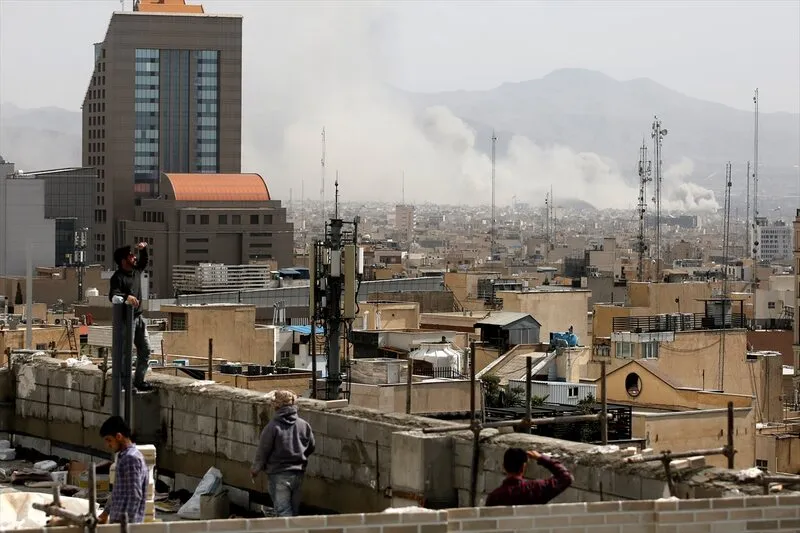
Israel launches attacks on Iran. Photo: Anadolu Agency
Safe-haven rush and inflation risks
Currency and commodity markets may also react strongly. In times of war, investors typically seek safer assets such as the US dollar and precious metals. Rising oil prices also feed into inflation, potentially delaying interest-rate cuts and strengthening the dollar further.
However, a prolonged conflict could hurt global growth enough to create volatile, two-way currency moves instead of a straightforward dollar rally.
Past estimates from the International Monetary Fund suggest that a 10% oil price rise could shave 0.1–0.2 percentage points off global GDP growth, while the World Bank puts the impact closer to 0.4 percentage points.
Hungary’s extra vulnerability to the Middle Eastern conflict
Hungary could feel the effects more sharply than many European countries. The shutdown of the Friendship pipeline has already reduced access to cheaper Russian crude, forcing refiners to rely more heavily on seaborne imports.
Hungarian energy group MOL now sources much of its supply via the Adriatic route, which involves higher logistics and transport costs. Since domestic fuel prices largely track Brent benchmarks, any sustained rise in global oil, combined with a stronger dollar, could translate quickly into more expensive petrol and diesel at Hungarian filling stations.
If tensions persist, households and businesses alike may soon notice that a distant conflict has very local consequences.
Photo: Anadolu Agency


