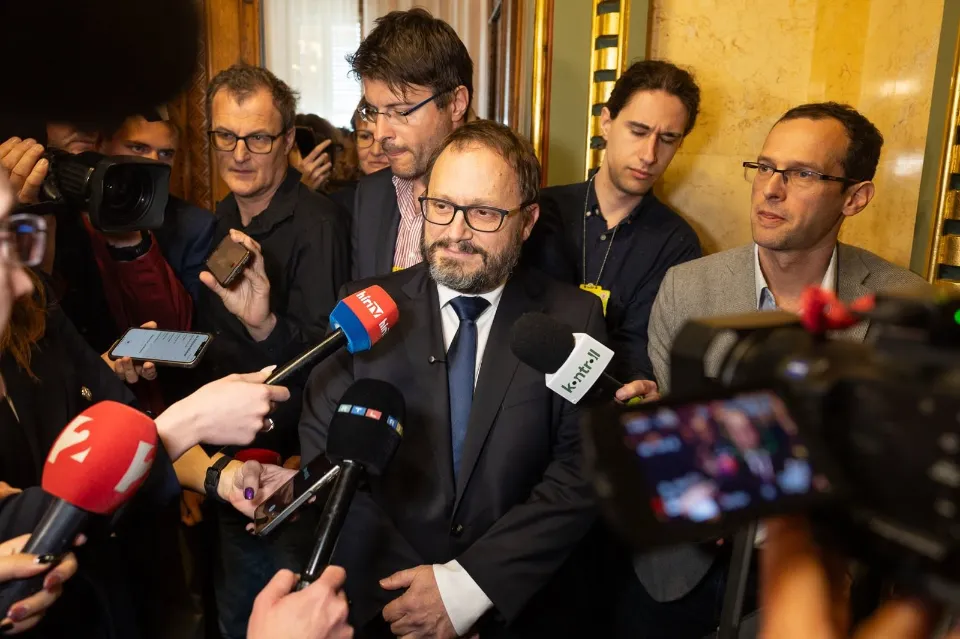
As fuel prices at filling stations are expected to fall 10–15 forints below the protected price level later this week, the government decided at its Wednesday meeting to initiate amendments to the relevant legislation in Parliament and phase out the protected fuel price system, Prime Minister Péter Magyar wrote in a Facebook post on Wednesday.
éter Magyar stressed that a Tisza government would maintain the reduced excise tax, while MOL would continue operating with reduced profit margins.
The prime minister noted that the protected price scheme had cost Hungarian taxpayers 50 billion forints per month.
“By the way, could someone ask the leaders of Fidesz and their recently sidelined propagandists where the 1,000-forint fuel price is that they used to scare people with before the election?” the prime minister asked.
The previous government introduced the so-called protected price on March 10 this year. Under the regulation, vehicles with Hungarian licence plates and registration documents can purchase 95-octane petrol at a maximum price of 595 forints per litre and diesel at a maximum price of 615 forints per litre.
According to holtankoljak.hu, from Thursday the wholesale price of petrol will fall by a gross 5 forints, while diesel will decrease by a gross 14 forints.
The portal noted that in the case of diesel, this is one of the most significant price reductions of recent weeks and could quickly be reflected in prices at filling stations.
Prices on the international oil market continue to decline, with Brent crude already falling below 80 dollars per barrel.
The market is currently being driven by the expected normalisation of Iranian oil exports and easing concerns about supply.
According to the portal, on Wednesday the average price of 95-octane petrol was 635 forints per litre, while diesel averaged 655 forints per litre.
The parliamentary group of Fidesz said that phasing out the protected fuel price would be a serious mistake because there is no guarantee that fuel prices will not rise rapidly again in the current fragile global economic environment.
In a statement sent to MTI on Wednesday, the parliamentary group proposed that instead of abolishing the protected fuel price system, it should be transformed so that the current protected price remains in place as a price ceiling.
According to the opposition faction, by ending the protected price scheme the government is breaking another campaign promise, since, as they wrote, “Péter Magyar campaigned on 480-forint fuel prices, promised a reduction in excise tax, but is now also abolishing the protected price introduced by the Orbán government.”
They emphasised that the protected fuel price had shielded millions of Hungarian families from significant expenses over the past four months, and that the decline in the global oil price to around 80 dollars per barrel in recent days is good news for Hungarian families and the Hungarian economy.
Artificial intelligence was used for the translation of parts of the original Hungarian text.