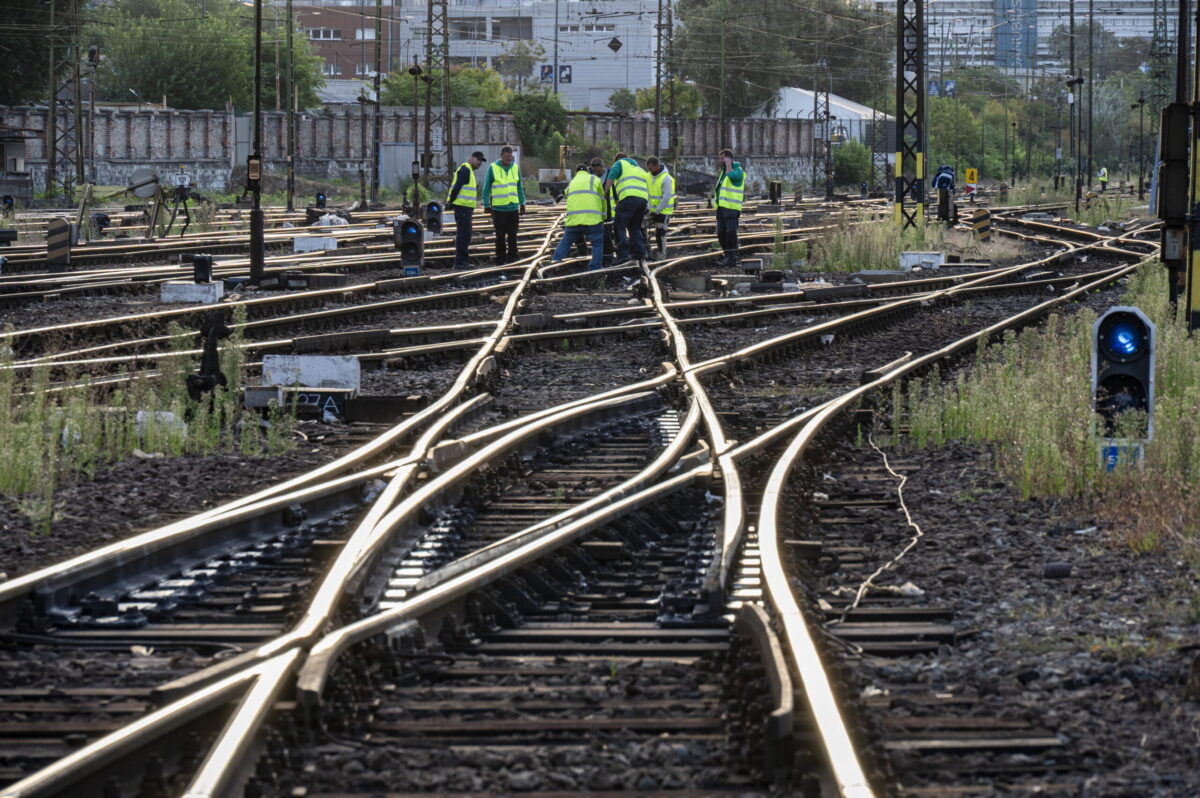
The Hungarian government has launched a comprehensive, ten-year railway development program with a total budget of almost 3,500 billion forints (9.6 billion euros), Prime Minister Péter Magyar announced on Wednesday at a joint press conference with the Minister of Transport and Investment, Dávid Vitézy, at Rákospalota-Újpest station in Budapest. The program, “unprecedented in a very long time”, was approved last week.
Péter Magyar emphasized that the modernization of the Hungarian railways is far more than just a transport issue. It is a project of national and strategic economic importance, he said. The quality of the rail network plays a decisive role in determining the competitiveness of the country and its rural regions, ensures the mobility of the workforce and strengthens Hungary’s overall economic performance as well as its international relations, the Prime Minister said.
Given the Europe-wide trend towards rail transport – which also plays a key role in EU funding – the railways must offer a fast, safe, environmentally friendly and climate-friendly alternative or complement to road transport.
There is demand from the public. “There is no shortage of passengers; rather, there is a constantly growing demand for this form of mobility,” explained the Prime Minister.
The new program, that is intended to ensure that Hungary keeps pace with its Central European competitors in a regional comparison, responds to a decades-long backlog in investment, according to the Prime Minister. As he said, the list of shortcomings in the Hungarian rail network is long. The average age of domestic rolling stock is 43 years. Almost half of all seats on trains have no air conditioning. Speed restrictions (so-called “slow sections”) currently apply to around 40 percent of the entire Hungarian rail network. A quarter of the rolling stock belonging to the state-owned railway company MÁV is currently out of service.
The aim of the program is therefore to significantly reduce the age of the rolling stock, speed up services on main lines, drive forward electrification and establish a reliable, passenger-focused service.
The reform project is based on six interlinked areas of development:
- Competitive connections to county seats: The introduction of a reliable, all-day InterCity service, faster main lines and the procurement of a new generation of InterCity multiple units. In the long term, the aim is to achieve an average speed of at least 100 km/h from station to station.
- Reliable regional network: Maintenance and modernization of branch lines, the procurement of modern hybrid vehicles, and seamless coordination between bus and train timetables.
- Strong suburban rail network: Expansion of local transport around Budapest and the major provincial cities through more frequent services, modern trains, the renewal of the suburban rail network (HÉV) and the deployment of tram-trains.
- Partnership with Budapest: As the capital is the country’s central hub, rail development there is classified as a matter of unified national interest. Plans include the expansion of rail links and close coordination with other urban projects.
- Strengthening rail freight transport: This is intended to significantly reduce congestion on motorways and expressways, protect the environment and improve Hungary’s logistics and competitiveness.
- Expansion of international connections: Preparations for an airport rail link, the assessment of high-speed routes and closer regional cooperation in passenger and freight transport – such as the planned high-speed network of the V4 countries.
The Prime Minister cited a renewed rolling stock fleet, involving the procurement of at least 35 new InterCity trains and 42 new HÉV trains, as a key pillar of the modernization program. In addition, preparations will begin for the comprehensive refurbishment of the country’s ten busiest stations.
The H5 HÉV stop on Tímár Street in Budapest. Photo: MTI/Balogh Zoltán
Alongside the rapid reduction of delays and speed restrictions, the plan focuses on digitalization, standardized timetables and the integration of local and national transport networks in line with 21st-century requirements. Ultimately, it is not a matter of simply stringing together individual investments, but of creating a modern, reliable integrated system that offers a genuine alternative to cars, Péter Magyar concluded.
Related article
New Public Transport Pass Restrictions for International Students in Budapest
The change affects all pupils and students holding foreign student IDs.Continue reading
Via MTI, Featured image: MTI/Szigetváry Zsolt