
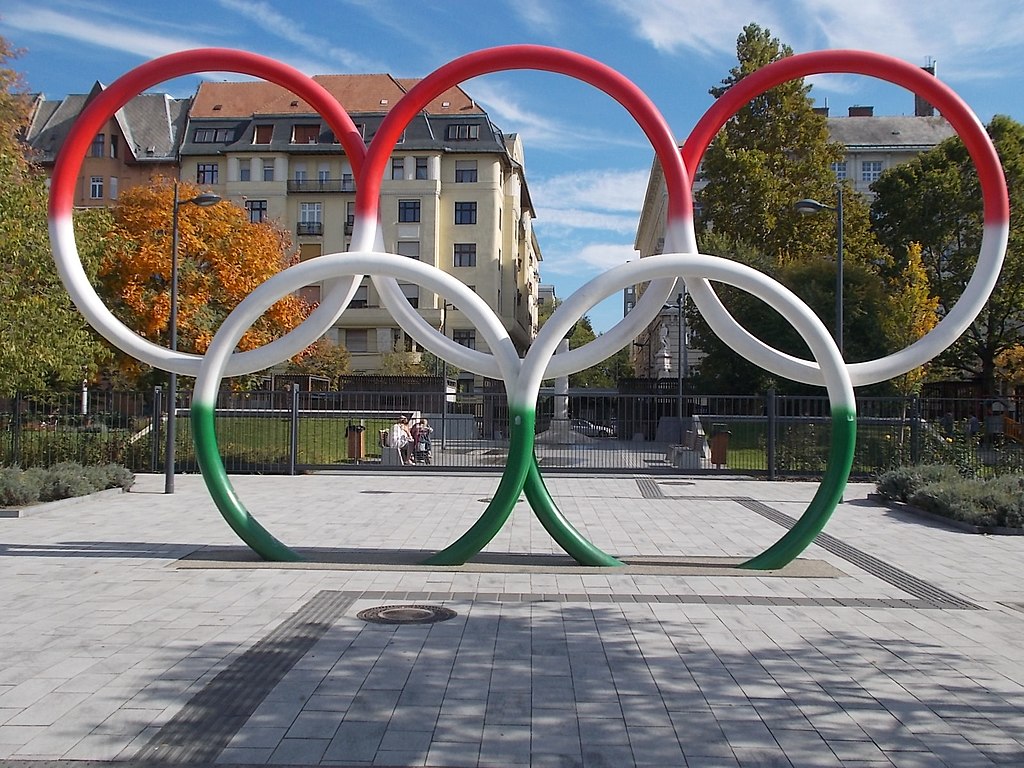
An expert has now said out loud what many have only been thinking: Hungary could realistically host the Olympic Games one day — but perhaps not alone.
Milan and Cortina paved the way
The XXV Milan–Cortina Winter Olympics came to a close on Sunday evening in Verona’s nearly 2,000-year-old amphitheatre — and they will be remembered for more than just the sporting performances.
The Italian Games marked a milestone not only in sporting terms. For the first time in Olympic history, the host role was officially shared by two locations — Milan and Cortina d’Ampezzo — rather than a single city. According to sports economist Gábor Szabados, this model could become a template for future Olympic Games.
The 2026 Winter Olympics Milano–Cortina 2026. Source: Anadolu
Why the Olympic bubble cannot keep expanding
There is a clear economic logic behind hosting the Games across multiple locations. The average budget of a Summer Olympics now stands at around 10 billion dollars, and that figure is unlikely to fall significantly. Technological requirements, media infrastructure and an increasingly dense competition programme all continue to drive costs upward.
At the same time, previous Olympic Games have almost without exception exceeded their planned budgets, often by a considerable margin.
According to Szabados, the solution is not necessarily spending less, but spending more intelligently. The key lies in limiting large-scale infrastructure investments and prioritising facilities that cities actually need — venues that can be used long after the Olympic flame has gone out.
Budapest: potential, but still some gaps
Hungary’s Olympic ambitions are not new. In 2017, Budapest withdrew its bid for the 2024 Games after the Momentum Movement collected more than 260,000 signatures in support of a referendum initiative.
Since then, however, the situation has changed significantly. The Puskás Arena has been built, the National Athletics Centre has opened, and the MVM Dome is now in operation. Hungarian Olympic Committee president Zsolt Gyulay has repeatedly pointed out that much of the core sports infrastructure is already in place.
The real shortcomings lie elsewhere — particularly in transport infrastructure, hotel capacity and airport logistics.
In 2019, the International Olympic Committee abolished the traditional, costly bidding process. Under the new system, interested cities can first take part in a non-binding dialogue phase, allowing them to explore the feasibility of hosting the Games without making immediate commitments.
The Hungarian Olympic Committee has invited the city of Budapest to join this consultation process. However, the current city leadership has so far taken a cautious position, emphasising that broad social consensus would be necessary before moving forward.
Budapest–Vienna: two capitals, one Olympics?
Szabados also outlined a more ambitious scenario: by the 2030s or 2040s, a joint Budapest–Vienna Olympic bid could become a realistic possibility. The strong transport connections between the two capitals — particularly if the planned high-speed rail link is realised — could provide a solid logistical foundation for a cross-border Games.
Zsolt Gyulay has also hinted at this possibility. In fact, Budapest mayor Gergely Karácsony raised a similar idea as early as 2019, suggesting potential cooperation between Budapest, Vienna and Bratislava.
However, the international competition is intensifying. Poland has recently begun preparing a potential Warsaw bid for the 2040 Olympic Games. India is also showing strong interest, and the International Olympic Committee has openly indicated that it would particularly welcome hosting the Games in India or Africa in the future.
2036, 2040 or 2044 — when could Budapest’s moment arrive?
Between 2027 and 2029, the IOC is expected to award the hosting rights for three Summer Olympics at once — the 2036, 2040 and 2044 Games. This creates a narrow but realistic window of opportunity for Hungary.
For Budapest to become a serious contender, however, three key conditions would be essential: political commitment, broad social support and a comprehensive infrastructure development programme — especially in the area of transport.
Still, Szabados remains optimistic. If the IOC remains committed to its sustainability agenda, smaller economies could gain a genuine opportunity to host the Olympic Games. In that scenario, Budapest — either on its own or together with a neighbouring capital — could very well be part of the picture.
Source: Hang.hu; Infostart.hu
If you missed it:


